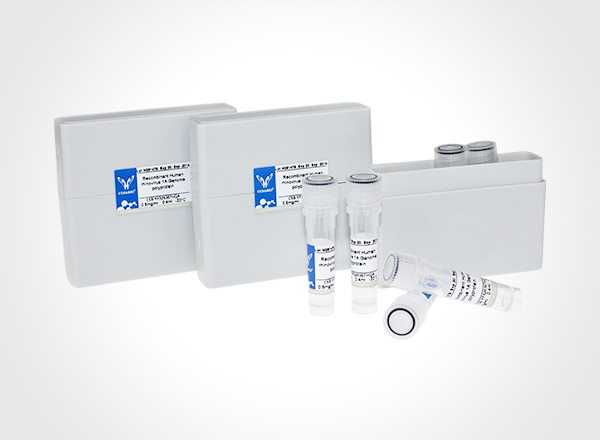
KCNK5; TASK2; Potassium channel subfamily K member 5; Acid-sensitive potassium channel protein TASK-2; TWIK-related acid-sensitive K(+ channel 2
Species
Homo sapiens (Human)
Source
in vitro E.coli expression system
Expression Region
1-499
Target Protein Sequence
MVDRGPLLTSAIIFYLAIGAAIFEVLEEPHWKEAKKNYYTQKLHLLKEFPCLGQEGLDKI LEVVSDAAGQGVAITGNQTFNNWNWPNAMIFAATVITTIGYGNVAPKTPAGRLFCVFYGL FGVPLCLTWISALGKFFGGRAKRLGQFLTKRGVSLRKAQITCTVIFIVWGVLVHLVIPPF VFMVTEGWNYIEGLYYSFITISTIGFGDFVAGVNPSANYHALYRYFVELWIYLGLAWLSL FVNWKVSMFVEVHKAIKKRRRRRKESFESSPHSRKALQVKGSTASKDVNIFSFLSKKEET YNDLIKQIGKKAMKTSGGGETGPGPGLGPQGGGLPALPPSLVPLVVYSKNRVPTLEEVSQ TLRSKGHVSRSPDEEAVARAPEDSSPAPEVFMNQLDRISEECEPWDAQDYHPLIFQDASI TFVNTEAGLSDEETSKSSLEDNLAGEESPQQGAEAKAPLNMGEFPSSSESTFTSTESELS VPYEQLMNEYNKANSPKGT
Note: The complete
sequence may include tag sequence, target protein sequence, linker sequence and extra sequence that is
translated with the protein sequence for the purpose(s) of secretion, stability, solubility, etc.
If the exact amino acid sequence of this recombinant protein is critical to your application,
please explicitly request the full and complete sequence of this protein before ordering.
Protein Length
Full length protein
Tag Info
N-terminal 10xHis-tagged
The tag type will be determined during production process. If you have specified tag type, please tell us and we will develop the specified tag preferentially.
Storage Condition
Store at -20°C, for extended storage, conserve at -20°C or -80°C.
Shelf Life
The shelf life is related to many factors, storage state, buffer ingredients, storage temperature and the stability of the protein itself.
Generally, the shelf life of liquid form is 6 months at -20°C/-80°C. The shelf life of lyophilized form is 12 months at -20°C/-80°C.
Notes
Repeated freezing and thawing is not recommended. Store working aliquots at 4°C for up to one week.
pH-dependent, voltage insensitive, outwardly rectifying potassium channel. Outward rectification is lost at high external K(+) concentrations.
Gene References into Functions
mutations in the promoter region of the TWIK-related acid-sensitive K(+) channel 2 (TASK-2) gene did not result in hypertension or primary aldosteronism (PA) during long-term follow-up in healthy participants thus they do not seem to be a factor in causing PA by themselves.PMID:29293917
As a novel finding, our study suggests a role for KCNK5 in the regulation of platelet size and maturity. Furthermore, our findings confirm an association between the SH2B3-locus and platelet count.PMID:28865245
In human aldosterone-producing adrenocortical cancer cell lines, roxithromycin inhibited KCNJ5MUT-induced induction of CYP11B2 (encoding aldosterone synthase) expression and aldosterone production.PMID:28604387
HLA-DQB1*06:02 does not seem to be associated with hypoxic ventilatory response or hypercapnic ventilatory response; however there are point wise, uncorrected significant associations between two TASK2/KCNK5 variants (rs2815118 and rs150380866) and hypercapnic ventilatory responsePMID:28045995
These results therefore provide further structural and functional insights into the possible pathophysiological effects of this missense variant in TASK-2.PMID:27228168
Results show that up-regulated KCNK5 in activated human T cells does not play a volume regulatory role, due to decreased Cl- permeability suggesting that the KCNK5 upregulation might play a role in hyperpolarization of the cell membrane leading to increased Ca2+ influx and proliferation of T cells.PMID:26909737
Potassium channel TASK2 drives human NK-cell proliferation and cytolytic function.PMID:26140335
Mutant genes (CELA1, HSPG2, and KCNK5) in Balkan endemic nephropathy patients encode proteins involved in basement membrane/extracellular matrix and vascular tone, tightly connected to process of angiogenesis.PMID:24949484
The TASK-2 channel lower expression represents a hallmark of aldosterone-producing adenoma causing aldosteronism and is associated with a higher expression of hsa-miR-23 and hsa-miR-34.PMID:24285684
Potassium channels, in particular K2P channels, are expressed and functional in the apical membrane of airway epithelial cellsPMID:21964404
Disease activity in rheumatoid arthritis patients correlates strongly with K(2P)5.1 expression levels in CD4+ T lymphocytes in the peripheral bloodPMID:21314928
17beta-estradiol induces the expression of KCNK5 via ERalpha(+) in breast cancer cells, and this channel plays a role in regulating proliferation in these cell lines.PMID:21680658
Data suggest that the cytokine receptor-coupled JAK/STAT pathway is upstream of the swelling-induced phosphorylation and activation of TASK-2 in Ehrlich ascites tumor cells.PMID:20631251
We here identify and characterize K2P5.1 as a critical player of T-cell effector function; selective targeting of K(2P)5.1 may hold therapeutic promise for multiple sclerosis and putatively other T-cell-mediated disorders.PMID:20582984
TASK-2 does not possess a histidine residue at homologous position. Inclusion of such a residue failed to produce expected increase in pH sensitivity; instead, a slight decrease was observedPMID:12634929
TASK-2 is not highly expressed in cerebellumPMID:15197476
KCNK5 is involved K(+)-channel in regulatory volume decrease in human spermatozoa, and channel activity is regulated beyond the extent of protein expression.PMID:18157847
Show
More
Hide
All
Subcellular Location
Membrane; Multi-pass membrane protein.
Protein Families
Two pore domain potassium channel (TC 1.A.1.8) family
Tissue Specificity
Abundant expression in kidney, also detected in liver, placenta and small intestine. In the kidney, expression is restricted to the distal tubules and collecting ducts. Not expressed in proximal tubules or glomeruli.