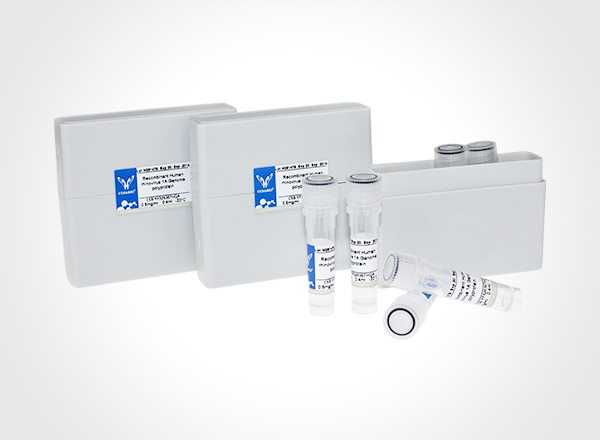
Aggrus; Glycoprotein 36 KD; Glycoprotein 36; gp 36; GP 38; GP 40; gp36; GP38; GP40; HT1A 1; HT1A1; hT1alpha 1; hT1alpha 2; hT1alpha1; hT1alpha2; Lung type I cell membrane associated glycoprotein; Lung type I cell membrane associated glycoprotein isoform a; Lung type I cell membrane associated glycoprotein T1A 2; OTS 8; OTS8; OTTHUMP00000009640; OTTHUMP00000044504; PA2.26; PA2.26 antigen; Pdpn; PDPN_HUMAN; Podoplanin; PSEC0003; PSEC0025; T1 alpha; T1 ALPHA GENE; T1-alpha; T1A 2; T1A; TI1A; TIA 2; TIA2
Species
Homo sapiens (Human)
Source
in vitro E.coli expression system
Expression Region
23-162
Target Protein Sequence
ASTGQPEDDTETTGLEGGVAMPGAEDDVVTPGTSEDRYKSGLTTLVATSVNSVTGIRIEDLPTSESTVHAQEQSPSATASNVATSHSTEKVDGDTQTTVEKDGLSTVTLVGIIVGVLLAIGFIGAIIVVVMRKMSGRYSP
Note: The complete
sequence may include tag sequence, target protein sequence, linker sequence and extra sequence that is
translated with the protein sequence for the purpose(s) of secretion, stability, solubility, etc.
If the exact amino acid sequence of this recombinant protein is critical to your application,
please explicitly request the full and complete sequence of this protein before ordering.
Protein Length
Full Length of Mature Protein
Shelf Life
The shelf life is related to many factors, storage state, buffer ingredients, storage temperature and the stability of the protein itself.
Generally, the shelf life of liquid form is 6 months at -20°C/-80°C. The shelf life of lyophilized form is 12 months at -20°C/-80°C.
Mediates effects on cell migration and adhesion through its different partners. During development plays a role in blood and lymphatic vessels separation by binding CLEC1B, triggering CLEC1B activation in platelets and leading to platelet activation and/or aggregation. Interaction with CD9, on the contrary, attenuates platelet aggregation induced by PDPN. Through MSN or EZR interaction promotes epithelial-mesenchymal transition (EMT) leading to ERZ phosphorylation and triggering RHOA activation leading to cell migration increase and invasiveness. Interaction with CD44 promotes directional cell migration in epithelial and tumor cells. In lymph nodes (LNs), controls fibroblastic reticular cells (FRCs) adhesion to the extracellular matrix (ECM) and contraction of the actomyosin by maintaining ERM proteins (EZR; MSN and RDX) and MYL9 activation through association with unknown transmembrane proteins. Engagement of CLEC1B by PDPN promotes FRCs relaxation by blocking lateral membrane interactions leading to reduction of ERM proteins (EZR; MSN and RDX) and MYL9 activation. Through binding with LGALS8 may participate in connection of the lymphatic endothelium to the surrounding extracellular matrix. In keratinocytes, induces changes in cell morphology showing an elongated shape, numerous membrane protrusions, major reorganization of the actin cytoskeleton, increased motility and decreased cell adhesion. Controls invadopodia stability and maturation leading to efficient degradation of the extracellular matrix (ECM) in tumor cells through modulation of RHOC activity in order to activate ROCK1/ROCK2 and LIMK1/LIMK2 and inactivation of CFL1. Required for normal lung cell proliferation and alveolus formation at birth. Does not function as a water channel or as a regulator of aquaporin-type water channels. Does not have any effect on folic acid or amino acid transport.
Gene References into Functions
Our results suggest that podoplanin expression by cancer associated fibroblasts could predict poor patient outcome in breast carcinomaPMID:30173230
The mRNA high expression levels of both podoplanin and LYVE-1 genes had a statistically significantly higher rate of LN metastasis (p<0.01) and histological grade (p<0.01 for podoplanin, p<0.05 for LYVE-1).PMID:30396932
It participates in tumorigenesis of odontogenic t umors.PMID:29577431
expression as a predictive marker of dysplasia in oral leukoplakiaPMID:29588189
Lymphatic vessels were identified by the expression of podoplaninPMID:29678517
Study provided evidence that high clonal expansion capacity of podoplanin-positive tumor initiating cells populations was the result of reduced cell death by podoplanin-mediated signaling.PMID:28059107
TGF-beta release from platelets is necessary for podoplanin-mediated tumor invasion and metastasis in lung cancer.PMID:28176852
this study suggests that podoplanin can be used as a prognostic marker to determine the malignant potential in oral leukoplakiasPMID:27153448
High PDPN expression is associated with Inflammatory Rheumatoid Synovial Tissues.PMID:29377768
Podoplanin expression in cancer-associated fibroblasts could be an independent predictor of increased risk of recurrence in patients with p-stage IA lung adenocarcinoma.PMID:28881047
Studies found that PDPN is expressed by many types of tumor cells and cancer associated fibroblasts. Moreover, high levels of PDPN expression is associated with reduced survival and cancer aggression. [review]PMID:29575529
Gastric tumor cells revealed no expression of PDPN. However, PDPN was expressed in some cases in spindle-shaped stromal cells within the tumor microenvironment, except for lymphatic vessels. PDPN expression was detected in neither tumor cells nor stromal cells of metastatic regions, such as lymph node and peritoneal metastases.PMID:29715091
PDPN contributes to the malignant potential of hepatocellular carcinoma.PMID:28871005
In lung adenocarcinoma, the presence of podoplanin-positive cancer-associated fibroblasts (CAFs) was associated with higher numbers of single nucleotide variants (SNVs) in cancer cells.PMID:29511884
The prevalence of Oct-3/4 and D2-40-(podoplanin) positive staining of germ cells in testicular biopsies of boys with cryptorchidism were in age groups less than 6 months, 100% and 50%; 6-12 months, 60% and 17%; and 1-2 years, 12% and 4%. In all cases, the Oct-3/4 and D2-40 positive germ cells turned negative and the histological pattern normalized completely with age.PMID:27606906
The presence of podoplanin expression in peritumoral keratinocytes correlates with aggressive behavior in extramammary Paget's disease (EMPD).PMID:28381343
PDPN was induced by hypoxia and its overexpression undergoes a reduction of adhesion, making it an anti-adhesion molecule in the absence of CCL21, in the tumor.PMID:28416768
PDPN acts as an oncogene to promote hypopharyngeal cancer cell viability, migration and invasion. miR-203 directly targets PDPN to suppress its expression, thus exerting inhibitory effects on cancer metastasis.PMID:27775879
podoplanin expression in cancer-related fibrotic tissues is associated with a poor prognosis, especially in patients with large tumors or lymph node metastases.PMID:28702871
Data show that podoplanin (PDPN), CD106 (VCAM-1) and CD248 protein were increased in diseased compared to healthy tendon cells.PMID:28122639
Increased expression of twist/podoplanin in ductal breast carcinoma was associated with shorter patient survival.PMID:28982860
Study showed that podoplanin increases the motility of fibroblasts and facilitates their interaction with endothelial cells. This, respectively, favors movement of fibroblasts into the breast tumor stroma and affects tumor angiogenesis, what creates a favorable microenvironment for breast cancer progression.PMID:28938000
Data suggest that podoplanin (PDPN) might be a pathogenetic determinant of malignant pleural mesothelioma (MPM) dissemination and aggressive growth and may thus be an ideal therapeutic target.PMID:28182302
high podoplanin expression in primary brain tumors induces platelet aggregation, correlates with hypercoagulability, and is associated with increased risk of VTEPMID:28073783
This article provides evidence supporting the implication of podoplanin expression as a marker of bad prognosis of cutaneous squamous cell carcinomaPMID:27859466
A possible crosstalk between epithelial and stromal tumor cells in hepatocellular carcinoma tumor microenvironment may be mediated by podoplaninPMID:28348421
interest, LpMab-17 did not bind to monkey PDPN, whereas the homology is 94% between human PDPN and monkey PDPN, indicating that the epitope of LpMab-17 is unique compared with the other anti-PDPN mAbs. The combination of different epitope-possessing mAbs could be advantageous for the PDPN-targeting diagnosis or therapyPMID:26937552
podoplanin expression is significantly associated with malignant transformation of chronic lip discoid lupus erythematosus into lip squamous cell carcinomaPMID:27240861
the epitope of PMab-21 was identified as Leu44-Glu48, which is corresponding to platelet aggregation-stimulating (PLAG) domain, indicating that Ser61-Ala68 of rabbit PDPN is a more appropriate epitope for immunohistochemistry compared with PLAG domain. PMab-32 could be useful for uncovering the function of rabbit PDPNPMID:26977704
NZ-1 inhibits the hPDPN-CLEC-2 interaction and is also useful for anti-PA tag MAb.The minimum epitope of LpMab-13 was identified as Ala42-Asp49 of hPDPN using Western blot and flow cytometry. The combination of different epitope-possessing MAbs could be advantageous for the hPDPN-targeting diagnosis and therapyPMID:27328060
Low PDPN expression is associated with Uterine Cervical Squamous Intraepithelial Lesions.PMID:27313335
high tumoral podoplanin expression could independently predict an adverse clinical outcome for ccRCC patients, and it might be useful in future for clinical decision-making and therapeutic developments.PMID:27389969
the present results also suggest that podoplanin+ cells can function as stromal cells for blast cell retention in the AML tumor microenvironment.PMID:27035421
We revealed that podoplanin expression in Cancer-associated Fibroblasts was an independent indicator of worse prognosis, irrespective of the expression status of the tumor cells in patients with squamous cell carcinoma of the lung.PMID:28011493
High podoplanin expression is associated with lymphatic spread of the breast cancer.PMID:26881521
High podoplanin expression is associated with lung metastasis.PMID:26684030
In esophageal squamous cell carcinoma, high p-mTOR expression was significantly associated with high podoplanin expression and high tumor gradePMID:26722465
These data support a role of podoplanin as an antiapoptotic prosurvival factor in angiotensin II-induced injury of human podocytes.PMID:26867059
podoplanin membrane expression, not only its localization, is a useful prognostic indicator of lung squamous cell carcinomaPMID:26700593
this study uncovers a unique molecular mechanism of lymphangiogenesis in which galectin-8-dependent crosstalk among VEGF-C, podoplanin and integrin pathways plays a key role.PMID:27066737
Expression of Podoplanin in Non-melanoma Skin Cancers and Actinic KeratosisPMID:27069135
Almost all anti-PDPN MAbs recognize a platelet aggregation-inducing (PLAG) domain.PMID:26492618
LpMab-12 could serve as a new diagnostic tool for determining whether hPDPN possesses the sialylation on Thr52, a site-specific post-translational modification critical for the hPDPN association with CLEC-2.PMID:27031228
podoplanin may be considered as a predictor marker in assessing malignant transformation of premalignancies and prognosis of oral malignancyPMID:25098985
Data show that the CHO cell line with the stable and high expression of recombinant podoplanin (PDPN)-enhanced green fluorescent protein (EGFP) was constructed successfully, and it could induce platelet aggregation.PMID:26728373
PDPN-positive/EpCAM-positive CTC ratio is a prognostic factor and defining the ratio in patients with HNSCC might be valuable to clinical managementPMID:24844673
Podoplanin increased migration of tumor cells and enhanced tube formation activity in endothelial cells independent from VEGF.PMID:26339454
Podoplanin overexpression is associated with osteosarcoma.PMID:26090592
high podoplanin expression is associated with aggressive tumor behavior, poor prognosis and metastatic regulation through interaction with VEGF-C.PMID:26081937
Podoplanin mediates extracellular matrix degradation by squamous carcinoma cells through control of invadopodia stability.PMID:25486435
Show
More
Hide
All
Subcellular Location
[Podoplanin]: Membrane; Single-pass type I membrane protein. Cell projection, lamellipodium membrane; Single-pass type I membrane protein. Cell projection, filopodium membrane; Single-pass type I membrane protein. Cell projection, microvillus membrane; Single-pass type I membrane protein. Cell projection, ruffle membrane; Single-pass type I membrane protein. Membrane raft. Apical cell membrane. Basolateral cell membrane. Cell projection, invadopodium.; [29kDa cytosolic podoplanin intracellular domain]: Cytoplasm, cytosol.
Protein Families
Podoplanin family
Tissue Specificity
Highly expressed in placenta, lung, skeletal muscle and brain. Weakly expressed in brain, kidney and liver. In placenta, expressed on the apical plasma membrane of endothelium. In lung, expressed in alveolar epithelium. Up-regulated in colorectal tumors a