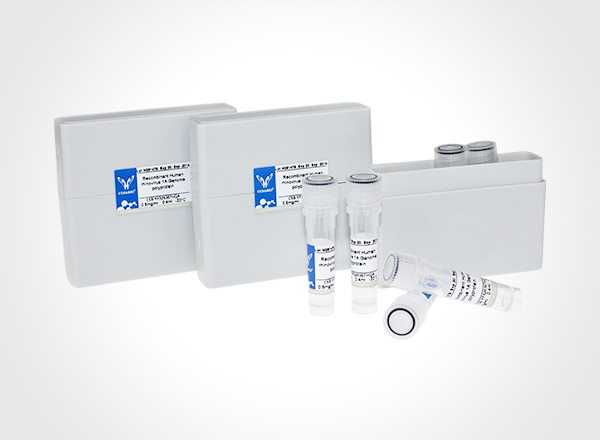
BCS1L; BCS1; Mitochondrial chaperone BCS1; h-BCS1; BCS1-like protein
Species
Homo sapiens (Human)
Source
in vitro E.coli expression system
Expression Region
1-419
Target Protein Sequence
MPLSDFILALKDNPYFGAGFGLVGVGTALALARKGVQLGLVAFRRHYMITLEVPARDRSY AWLLSWLTRHSTRTQHLSVETSYLQHESGRISTKFEFVPSPGNHFIWYRGKWIRVERSRE MQMIDLQTGTPWESVTFTALGTDRKVFFNILEEARELALQQEEGKTVMYTAVGSEWRPFG YPRRRRPLNSVVLQQGLADRIVRDVQEFIDNPKWYTDRGIPYRRGYLLYGPPGCGKSSFI TALAGELEHSICLLSLTDSSLSDDRLNHLLSVAPQQSLVLLEDVDAAFLSRDLAVENPVK YQGLGRLTFSGLLNALDGVASTEARIVFMTTNHVDRLDPALIRPGRVDLKEYVGYCSHWQ LTQMFQRFYPGQAPSLAENFAEHVLRATNQISPAQVQGYFMLYKNDPVGAIHNAESLRR
Note: The complete
sequence may include tag sequence, target protein sequence, linker sequence and extra sequence that is
translated with the protein sequence for the purpose(s) of secretion, stability, solubility, etc.
If the exact amino acid sequence of this recombinant protein is critical to your application,
please explicitly request the full and complete sequence of this protein before ordering.
Protein Length
full length protein
Tag Info
N-terminal 10xHis-tagged
The tag type will be determined during production process. If you have specified tag type, please tell us and we will develop the specified tag preferentially.
Storage Condition
Store at -20°C, for extended storage, conserve at -20°C or -80°C.
Shelf Life
The shelf life is related to many factors, storage state, buffer ingredients, storage temperature and the stability of the protein itself.
Generally, the shelf life of liquid form is 6 months at -20°C/-80°C. The shelf life of lyophilized form is 12 months at -20°C/-80°C.
Notes
Repeated freezing and thawing is not recommended. Store working aliquots at 4°C for up to one week.
Chaperone necessary for the assembly of mitochondrial respiratory chain complex III. Plays an important role in the maintenance of mitochondrial tubular networks, respiratory chain assembly and formation of the LETM1 complex.
Gene References into Functions
The BCSIL gene mutation is responsible for GRACILE syndrome, Bjornstad syndrome and complex III deficiency. Bjomstad syndrome is characterized by sensorineural hearing loss and abnormal flat twisted hair shafts. The case is GRACILE syndrome with Bjomstad phenotype in neonatal period due to BCSL1 gene mutation.PMID:30226971
We report the first Italian patients with Bjornstad syndrome, two siblings with pili torti and sensorineural hearing loss, in whom we detected two novel compound heterozygous mutations in BCS1LPMID:28322498
* Description of a novel homozygous mutation in BCS1L with transient neonatal acidosis and persistent de Toni-Debre-Fanconi-type tubulopathy. * The long survival of patients with phenotypic presentation of severe complex III deficiency is uncommon.PMID:26563427
Extensive statistical and cluster analyses revealed a protein profile characteristic for the BCS1L mutant fibroblasts that included alterations in energy metabolism, cell signaling and gene expression regulation, cytoskeleton formation and maintenance.PMID:25239759
Exome sequencing revealed novel BCS1L mutations in two siblings with Bjornstad syndrome characterized by hearing loss and hypotrichosis.PMID:25895478
A novel behavioral and psychiatric phenotype associated with a p.Gly129Arg BCS1L mutation.PMID:22991165
This region encompasses the BCS1L gene.PMID:24172246
These results provide new insights into the role of pathogenic BCS1L mutations in mitochondrial function and dynamics.PMID:20518024
GRACILE syndrome, a lethal metabolic disorder with iron overload, is caused by a point mutation in BCS1LPMID:12215968
a function of BCS1L is to promote the maturation of complex III and the incorporation of the Rieske iron-sulfur protein into the nascent complex. Defective BCS1L leads to the formation of a catalytically inactive, structurally unstable complex III.PMID:17403714
assessed whether 232A-->G or other BCS1L mutations were present in infants (n = 21) of Finnish origin with severe, lethal disease compatible with mitochondrial disorderPMID:18386115
BCS1L stimulates the assembly of the LETM1 complex. BCS1L knockdown caused disassembly of the respiratory chains as well as LETM1 downregulation and induced distinct changes in mitochondrial morphology.PMID:18628306
The severity of the complex III enzyme defect correlated with decreased amounts of BCS1L and respiratory chain complex III. This supports a pathogenic role for the novel BCS1L mutation in a patient with a singular clinical phenotype.PMID:19162478
The g.1181A>G mutation generated an alternative splicing site in the BCS1L transcript, causing a 19-nucleotides deletion in its 5'UTR region and Complex III deficiency.PMID:19389488
mitochondrial complex III deficiency caused by mutations in the BCS1L genePMID:19508421