MDLHLFDYSEPGNFSDISWPCNSSDCIVVDTVMCPNMPNKSVLLYTLSFIYIFIFVIGMIANSVVVWVNIQAKTTGYDTHCYILNLAIADLWVVLTIPVWVVSLVQHNQWPMGELTCKVTHLIFSINLFGSIFFLTCMSVDRYLSITYFTNTPSSRKKMVRRVVCILVWLLAFCVSLPDTYYLKTVTSASNNETYCRSFYPEHSIKEWLIGMELVSVVLGFAVPFSIIAVFYFLLARAISASSDQEKHSSRKIIFSYVVVFLVCWLPYHVAVLLDIFSILHYIPFTCRLEHALFTALHVTQCLSLVHCCVNPVLYSFINRNYRYELMKAFIFKYSAKTGLTKLIDASRVSETEYSALEQSTK
Note: The complete
sequence may include tag sequence, target protein sequence, linker sequence and extra sequence that is
translated with the protein sequence for the purpose(s) of secretion, stability, solubility, etc.
If the exact amino acid sequence of this recombinant protein is critical to your application,
please explicitly request the full and complete sequence of this protein before ordering.
Tag Info
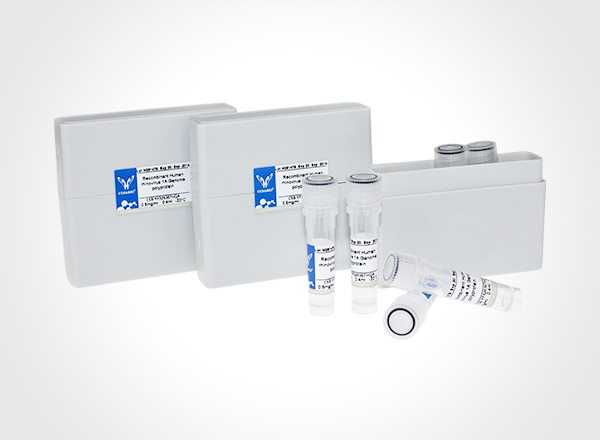
C-terminal 10xHis-tagged If you have specified tag type, please tell us and we will check if it’s possible to develop.
The tag type will be determined during production process. If you have specified tag type, please tell us and we will develop the specified tag preferentially.
Atypical chemokine receptor that controls chemokine levels and localization via high-affinity chemokine binding that is uncoupled from classic ligand-driven signal transduction cascades, resulting instead in chemokine sequestration, degradation, or transcytosis. Also known as interceptor (internalizing receptor) or chemokine-scavenging receptor or chemokine decoy receptor. Acts as a receptor for chemokines CXCL11 and CXCL12/SDF1. Chemokine binding does not activate G-protein-mediated signal transduction but instead induces beta-arrestin recruitment, leading to ligand internalization and activation of MAPK signaling pathway. Required for regulation of CXCR4 protein levels in migrating interneurons, thereby adapting their chemokine responsiveness. In glioma cells, transduces signals via MEK/ERK pathway, mediating resistance to apoptosis. Promotes cell growth and survival. Not involved in cell migration, adhesion or proliferation of normal hematopoietic progenitors but activated by CXCL11 in malignant hemapoietic cells, leading to phosphorylation of ERK1/2 (MAPK3/MAPK1) and enhanced cell adhesion and migration. Plays a regulatory role in CXCR4-mediated activation of cell surface integrins by CXCL12. Required for heart valve development. Acts as coreceptor with CXCR4 for a restricted number of HIV isolates.
Gene References into Functions
this study shows an essential role of CXCR7, together with CXCR4, in the control of normal and malignant hematopoietic cell migration and homing induced by CXCL12.PMID:29433559
Expression of CXCR7 associates with increased survival in CXCR4+ but not in CXCR4- DLBCL patients. CXCR7 overexpression in vitro is able to diminish DLBCL cell survival and increase their sensitivity to antitumor drugs.PMID:29920526
Residues 2-6 of ACKR3 form an antiparallel beta-sheet with the beta1 strand (residues 25-29) of CXCL12.PMID:28098154
These findings suggest that the manipulation of miR-539-5p/CXCR7 levels may have important therapeutic implications in choroidal neovascularization-associated diseasesPMID:29146732
CXCR7 is an oncogene in PCa that can promote aggressive progression of PCa through enhancing proliferation and migration of the tumor cells.PMID:30047547
Study shows that overexpression of CXCR7 in different cellular populations of endometriosis microenvironment may play a role in the pathogenesis and represent a novel target for treatment.PMID:29587613
CXCR7 silencing inhibits the migration and invasion of human tumor endothelial cells derived from hepatocellular carcinoma by suppressing STAT3.PMID:29901083
Hetero-oligomerization of a1B/D-adrenergic receptor with the chemokine (C-X-C motif) receptor 4:atypical chemokine receptor 3 heteromeric complex is required for a1B/Dadrenergic receptor functionPMID:28862946
This work demonstrates distinct roles for the SDF-1/CXCR4 or CXCR7 network in human induced pluripotent stem cell-derived ventricular cardiomyocyte specification, maturation and function.PMID:28711757
A role for CXCR7 in bladder cancer [review]PMID:29022185
CXCR7-small hairpin RNA inhibits tumour invasion and metastasis.PMID:28429395
Chemokine receptor CXCR7 may involve in the clinical glioblastoma (GBM) progression, and CXCR7 could be a valuable prognostic marker in the treatment of GBM.PMID:28759950
Therefore, CXCR7 may be associated with peritoneal metastasis in gastric cancer.PMID:27941339
CXCL12-CXCR7 axis accelerates migration and invasion of pancreatic cancer cells through mTOR and Rho/ROCK pathways, and predicts poor prognosis of pancreatic cancerPMID:27542220
The CXCR7/CXCL12 axis is involved in lymph node and liver metastasis of gastric cancer.PMID:28533662
Among 479 individuals affected with clear cell renal cell carcinoma, only synonymous variants were found in COPS8 and one of the missense variants in ACKR3:c.892C>T, was observed in 4/479 individuals screenedPMID:28063109
Results show that CXCR7 is highly expressed in metastatic lymph node (MNL) of non-small cell lung neoplasm (NSCLC) and is associated with poor prognosis.PMID:29032612
While the potencies of all proteins in ACKR3 Presto-Tango assays were comparable, the efficacy of CXCL12(3-68) to activate ACKR3 was significantly reducedPMID:29125867
CXCR7 mediates CD14(+)CD16(+) monocyte transmigration across the blood brain barrier, and is a potential therapeutic target for neuro AIDS.PMID:28754798
CXCR7 signaling could not be detected using impedance measurements. However, increasing levels of CXCR7 expression significantly reduced the CXCR4-mediated impedance readout, suggesting a regulatory role for CXCR7 on CXCR4-mediated signaling.PMID:28945785
CXCR7 expression in gastric cancer tissues was significantly higher than that in adjacent non-cancer tissues and associated with tumor size, TNM stage and lymph node metastasis. CXCR7 was identified as a novel promoter in gastric cancer initiation and progression.PMID:28281844
the data identified the pivotal role of the receptor CXCR7 in pulmonary inflammation with a predominant effect on the pulmonary epithelium and polymorphonuclear neutrophilsPMID:28188248
SDF-1/CXCR7 plays a positive role in the proliferation and invasion of endometrial carcinoma cells.PMID:28239742
our study demonstrates that the upregulation of CXCR7 signaling contributes to increased vasculogenic capacity of EOCs from CAD patients, indicating that CXCR7 signaling may be a novel therapeutic vasculogenic target for CAD.PMID:27612090
CXCR7 expression in the tumor cells and stromal cells from the metastatic foci was significantly more common in the group of male patients treated with cytotoxic drugs according to the FOLFOX6 regimenPMID:28295006
hypoxia and CXCL12-CXCR7 axis appeared to be advantageous microenvironments to CD20(-) CD138(-) cells in lymphoplasmacytic lymphomaPMID:26878134
suppressing CXCR4 is not enough to impede osteosarcoma invasion in bone marrow microenvironment since CXCR7 is activated to sustain invasion. Therefore, inhibiting both CXCR4 and CXCR7 could be a promising strategy in controlling osteosarcoma invasion.PMID:28468584
This short review intends to provide a concise summary of current knowledge with regards to cell-specific functions of CXCL12 and its receptors CXCR4 and CXCR7 with potential implications for the initiation and progression of atherosclerosis. [review]PMID:25586789
CXCR7 overexpression is associated with gastric cancer.PMID:27716367
CXCL12 may be an effective diagnostic marker for papillary thyroid carcinoma, and CXCL12/CXCR4/CXCR7 axis may contribute to thyroid cancer development by regulating cancer cell migration and invasion via AKT and ERK signaling and MMP-2 activation.PMID:27082011
Our study suggested that CXCR7 plays an important proangiogenic role in hepatocellular carcinoma (HCC). via activation of the AKT pathway. So CXCR7 may be a potential target for antiangiogenic therapy in HCCPMID:27572688
CXCR7 is a direct downstream target of miR-100, and overexpression of miR-100 efficiently suppresses CXCR7 expression.PMID:27035873
Overexpression of CXCR7 is associated with breast cancer.PMID:27460092
High CXCR7 expression is associated with endometrial cancer.PMID:26678890
the current study revealed that CXCL12 which combined its receptors CXCR4 and CXCR7 together could promote cell migration and cell invasion of OSCC.PMID:26232325
Increased CXCR7 expression is associated with invasion in nasopharyngeal carcinoma.PMID:26715277
Up-regulation of miR-218 expression in renal cell carcinoma under hypoxia can result in significant and targeted down-regulation of CXCR7 expression.PMID:27133059
CXCR7 may play a role in the progression, metastasis and angiogenesis of otorhinolaryngologic tumours.PMID:26996902
CXCR4 was co-expressed with all investigated neural and embryonic stem cell markers in both primary and recurrent tissues, whereas CXCR7 was mostly found on stem cell marker-negative cells, but was co-expressed with KLF-4 on a distinct GBM cell subpopulationPMID:26821357
Expression levels of CXCR4 and CXCR7 in breast cancer tissues were significantly higher than that in adjacent normal tissues and patients with high CXCR4 and CXCR7 expression had a shorter survival time compared with those with low expression.PMID:26722521
Data shows the relative expression of CXCR4 and CXCR7 in platelets, their dynamic trafficking, how they differentially mediate the functional and survival response to some chemokines, and their prognostic value in coronary artery disease. [review]PMID:26551719
CXCR7 expression in colorectal carcinoma was correlated with tumor development and poor prognosis of patients.PMID:26722500
TGFbeta1-CXCR7 axis may be a prognostic marker and may provide novel targets for combinational therapies to be used in the treatment of advanced lung cancer in the futurePMID:26212008
Evidences suggest an indispensable role of GLI1 in the migration and metastasis of breast cancer cells through CXCL12/CXCR4 signaling enhancement.PMID:26413813
Developmental expression patterns of chemokines CXCL11, CXCL12 and their receptor CXCR7 in testesPMID:25810367
STAT3 signaling downstream of CXCR7 is involved in miR-101 regulation of breast cancer cell behaviors.PMID:26360780
CXCR7 is expressed on NogoA- and Nkx2.2-positive oligodendroglial cells in human multiple sclerosis brains.PMID:26741980
This study found that elevated mRNA levels for CXCR7 (+29%; p<.0001) and CXCR4 (+14%, p=.052) in schizophrenia subjects.PMID:25464914
the roles of CXCR4, CXCR7, and CXCL12 are associated with trophoblastic cells apoptosis and may be linked to the occurrence and development of severe preeclampsiaPMID:26721717
Show
More
Hide
All
Subcellular Location
Cell membrane; Multi-pass membrane protein. Cytoplasm, perinuclear region. Early endosome. Recycling endosome. Note=Predominantly localizes to endocytic vesicles, and upon stimulation by the ligand is internalized via clathrin-coated pits in a beta-arrestin-dependent manner. Once internalized, the ligand dissociates from the receptor, and is targeted to degradation while the receptor is recycled back to the cell membrane.
Expressed in monocytes, basophils, B-cells, umbilical vein endothelial cells (HUVEC) and B-lymphoblastoid cells. Lower expression detected in CD4+ T-lymphocytes and natural killer cells. In the brain, detected in endothelial cells and capillaries, and in