Recombinant Rabbit Apolipoprotein E (APOE), partial

In Stock
Code: CSB-EP001936RBb7
Size:
20μg
20μg100μg1mg(1mg*1 or 500ug*2)
US$388
Quantity:
Express system: E.coli
Species: Oryctolagus cuniculus (Rabbit)
Tag Info: N-terminal 10xHis-B2M-tagged and C-terminal Myc-tagged
For inquiries on large quantities or another requirements
Send an Inquiry
Start an on-line Chat
Online ordering is currently available for U.S. customers only. For orders outside the U.S., please kindly submit an inquiry or start a chat with us.

Product Details

Purity
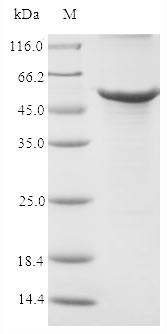
Greater than 90% as determined by SDS-PAGE.
Target Names
APOE
Uniprot NO.
Research Area
Cardiovascular
Alternative Names
APOEApolipoprotein E; Apo-E
Species
Oryctolagus cuniculus (Rabbit)
Source
E.coli
Expression Region
20-311aa
Target Protein Sequence
TEQEVEVPEQARWKAGQPWELALGRFWDYLRWVQSLSDQVQEELLSSQVTQELTMLMEETMKEVKAYKSELEEQLSPMAQEHRARLSKELQVAGALEADMEDVCNRLAQYRGEAQAMLGQSTEELARAFSSHLRKLRKRLLRDAEDLQKRMAVYGAGAREGAERGVSAVRERLGSRLERGRLRVATVGTLAGRPLRERAQAWGERLRGHLEEVGSRARDRLNEVREQVEEVRVKVEEQAPQMRLQAEAFQARLKSWFEPLVEDMQRQWAGLVEKLQAAMPSKAPAAAPIENQ
Note: The complete sequence may include tag sequence, target protein sequence, linker sequence and extra sequence that is translated with the protein sequence for the purpose(s) of secretion, stability, solubility, etc.
If the exact amino acid sequence of this recombinant protein is critical to your application, please explicitly request the full and complete sequence of this protein before ordering.
Mol. Weight
50.6kDa
Protein Length
Partial
Tag Info
N-terminal 10xHis-B2M-tagged and C-terminal Myc-tagged
The tag type will be determined during production process. If you have specified tag type, please tell us and we will develop the specified tag preferentially.
Reconstitution
We recommend that this vial be briefly centrifuged prior to opening to bring the contents to the bottom. Please reconstitute protein in deionized sterile water to a concentration of 0.1-1.0 mg/mL.We recommend to add 5-50% of glycerol (final concentration) and aliquot for long-term storage at -20°C/-80°C. Our default final concentration of glycerol is 50%. Customers could use it as reference.
Storage Condition
The shelf life is related to many factors, storage state, buffer ingredients, storage temperature and the stability of the protein itself. Generally, the shelf life of liquid form is 6 months at -20°C/-80°C. The shelf life of lyophilized form is 12 months at -20°C/-80°C.
Shelf Life
The shelf life is related to many factors, storage state, buffer ingredients, storage temperature and the stability of the protein itself.
Generally, the shelf life of liquid form is 6 months at -20°C/-80°C. The shelf life of lyophilized form is 12 months at -20°C/-80°C.
Lead Time
3-7 business days
Note: All of our proteins are default shipped with normal blue ice packs, if you request to ship with dry ice, please communicate with us in advance and extra fees will be charged.
Notes
Repeated freezing and thawing is not recommended. Store working aliquots at 4°C for up to one week.
Troubleshooting and FAQs
Datasheet & COA
Please contact us to get it.
Images
  • (Tris-Glycine gel) Discontinuous SDS-PAGE (reduced) with 5% enrichment gel and 15% separation gel.

Description

PCR primers are designed to obtain the gene sequence of 20-311 amino acids of the rabbit APOE protein according to the total sequence of the rabbit APOE gene. The 10xHis-B2M-tag gene and the Myc tag gene are added to the N-terminal and C-terminal of the gene of interest, respectively, obtaining the target gene. The target gene is amplified by PCR. The amplified target genes are cloned into expression vectors and then transformed into E.coli cells. The transformed E.coli cells are cultured in a suitable medium containing corresponding antibiotics, and IPTG is added to induce protein expression. The expressed cells are harvested by centrifugation and then lysed to release the APOE protein. Affinity chromatography is used to purify the collected supernatant to obtain pure rabbit APOE protein. The purity of recombinant rabbit APOE is greater than 90% as measured by SDS-PAGE.

Apolipoprotein E (APOE) is a critical protein involved in lipid metabolism and cardiovascular health, particularly in the context of atherosclerosis. APOE is a glycoprotein that plays a significant role in the transport and clearance of lipoproteins, including chylomicrons and very low-density lipoproteins (VLDL) from circulation. Its primary function is to facilitate the binding of lipoproteins to hepatic receptors, thereby regulating cholesterol homeostasis and lipid metabolism [1]. In rabbits, the APOE gene exhibits a high degree of homology with the human APOE ε3 isoform, the most prevalent in humans, sharing approximately 80% sequence similarity [2].

Research has demonstrated that the absence of APOE in knockout rabbit models leads to significant alterations in lipid profiles and a predisposition to atherosclerosis. Studies involving APOE knockout rabbits have shown that these animals develop atherosclerotic lesions similar to those observed in humans, making them valuable models for studying cardiovascular diseases [3][4][5].

APOE is also implicated in neurodegenerative diseases. APOE in the brain is associated with clearing amyloid-beta, a peptide that accumulates in Alzheimer's disease. The structural similarities between rabbit and human APOE suggest that rabbit models can be effectively utilized to study the pathophysiology of Alzheimer's disease and related cognitive deficits [2]. Furthermore, alterations in APOE expression have been linked to conditions such as diabetes, where insulin deficiency can downregulate APOE mRNA expression, further complicating lipid metabolism [6].

References:
[1] F. Simon, A. Larena‐Avellaneda, & S. Wipper, Experimental atherosclerosis research on large and small animal models in vascular surgery, Journal of Vascular Research, vol. 59, no. 4, p. 221-228, 2022. https://doi.org/10.1159/000524795
[2] C. Weiss, N. Bertolino, D. Procissi, Q. Smith, K. Viola, S. Bartley, et al., Diet‐induced alzheimer's‐like syndrome in the rabbit, Alzheimer S & Dementia Translational Research & Clinical Interventions, vol. 8, no. 1, 2022. https://doi.org/10.1002/trc2.12241
[3] J. McNally, A. Havenon, S. Kim, C. Wang, S. Wang, M. Zabriskie, et al., Rabbit models of intracranial atherosclerotic disease for pathological validation of vessel wall mri, The Neuroradiology Journal, vol. 34, no. 3, p. 193-199, 2020. https://doi.org/10.1177/1971400920980153
[4] M. Zabriskie, C. Wang, S. Wang, & M. Alexander, Apolipoprotein e knockout rabbit model of intracranial atherosclerotic disease, Animal Models and Experimental Medicine, vol. 3, no. 2, p. 208-213, 2020. https://doi.org/10.1002/ame2.12125
[5] S. Wang, T. Yu, C. Hung, C. Yang, M. Lin, C. Su, et al., Inhibition of semicarbazide-sensitive amine oxidase reduces atherosclerosis in cholesterol-fed new zealand white rabbits, Scientific Reports, vol. 8, no. 1, 2018. https://doi.org/10.1038/s41598-018-27551-6
[6] C. Phillips, C. Madigan, D. Owens, P. Collins, & G. Tomkin, Defective chylomicron synthesis as a cause of delayed particle clearance in diabetes?, Journal of Diabetes Research, vol. 3, no. 3, p. 171-178, 2002. https://doi.org/10.1080/15604280214277

Customer Reviews and Q&A

 Customer Reviews

Target Background

Function(From Uniprot)
APOE is an apolipoprotein, a protein associating with lipid particles, that mainly functions in lipoprotein-mediated lipid transport between organs via the plasma and interstitial fluids. APOE is a core component of plasma lipoproteins and is involved in their production, conversion and clearance. Apoliproteins are amphipathic molecules that interact both with lipids of the lipoprotein particle core and the aqueous environment of the plasma. As such, APOE associates with chylomicrons, chylomicron remnants, very low density lipoproteins (VLDL) and intermediate density lipoproteins (IDL) but shows a preferential binding to high-density lipoproteins (HDL). It also binds a wide range of cellular receptors including the LDL receptor/LDLR and the very low-density lipoprotein receptor/VLDLR that mediate the cellular uptake of the APOE-containing lipoprotein particles. Finally, APOE has also a heparin-binding activity and binds heparan-sulfate proteoglycans on the surface of cells, a property that supports the capture and the receptor-mediated uptake of APOE-containing lipoproteins by cells.
Gene References into Functions
  1. we report the efficient creation of an APOE knockout rabbit by using zinc finger nucleases. The knockout rabbits had drastically elevated cholesterol and moderately increased triglyceride levels, mimicking symptoms in human heart disease. PMID:25216764
  2. These differentially expressed proteins associated with key mechanisms involved in atherosclerosis and signaling mechanisms related with vitamin E. PMID:23796494
  3. The molar ratio ApoE/ApoA-I is negatively correlated with the enzyme activity, and positively correlated with increases in the intima-media thickness of common carotid wall and cardiac dysfunction signs. PMID:22562159
  4. ApoE mimetic peptide reduces plasma lipid hydroperoxide content with a concomitant increase in HDL paraoxonase activity PMID:20221865
  5. The identification of disulphide-linked apoE dimers in cortical and hippocampal tissues represents a distinct structural difference between the apoE3 and apoE4 isoforms that may have functional consequences. PMID:20170526

Show More

Hide All

Subcellular Location
Secreted. Secreted, extracellular space. Secreted, extracellular space, extracellular matrix.
Protein Families
Apolipoprotein A1/A4/E family
Database Links

UNIGENE: Ocu.6224

KEGG: ocu:100009337

icon of phone
Call us
301-363-4651 (Available 9 a.m. to 5 p.m. CST from Monday to Friday)

icon of address
Address
No. 269, Shendun 5th Road, Donghu Hi-Tech Development Area, Hubei Province, 430206, P.R.China
icon of social media
Join us with

Subscribe newsletter

Leave a message

* To protect against spam, please pass the CAPTCHA test below.
CAPTCHA verification
© 2007-2025 CUSABIO TECHNOLOGY LLC All rights reserved. 鄂ICP备15011166号-1
Select 0 Products