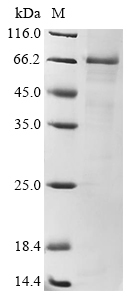
Purity
Greater than 85% as determined by SDS-PAGE.
Research Area
Cardiovascular
Alternative Names
ARMD10; CD284; CD284 antigen; ESOP 1; ESOP1; Homolog of Drosophila toll; hToll; LY 96; LY96; Lymphocyte antigen 96; md 2; MD 2 protein; MD2 protein; Myeloid differentiation protein 2; Protein MD 2; Protein MD2; TLR 4; TLR4; TLR4_HUMAN; TOLL; Toll like receptor 4; Toll-like receptor 4
Species
Homo sapiens (Human)
Expression Region
27-631aa
Target Protein Sequence
EPCVEVVPNITYQCMELNFYKIPDNLPFSTKNLDLSFNPLRHLGSYSFFSFPELQVLDLSRCEIQTIEDGAYQSLSHLSTLILTGNPIQSLALGAFSGLSSLQKLVAVETNLASLENFPIGHLKTLKELNVAHNLIQSFKLPEYFSNLTNLEHLDLSSNKIQSIYCTDLRVLHQMPLLNLSLDLSLNPMNFIQPGAFKEIRLHKLTLRNNFDSLNVMKTCIQGLAGLEVHRLVLGEFRNEGNLEKFDKSALEGLCNLTIEEFRLAYLDYYLDDIIDLFNCLTNVSSFSLVSVTIERVKDFSYNFGWQHLELVNCKFGQFPTLKLKSLKRLTFTSNKGGNAFSEVDLPSLEFLDLSRNGLSFKGCCSQSDFGTTSLKYLDLSFNGVITMSSNFLGLEQLEHLDFQHSNLKQMSEFSVFLSLRNLIYLDISHTHTRVAFNGIFNGLSSLEVLKMAGNSFQENFLPDIFTELRNLTFLDLSQCQLEQLSPTAFNSLSSLQVLNMSHNNFFSLDTFPYKCLNSLQVLDYSLNHIMTSKKQELQHFPSSLAFLNLTQNDFACTCEHQSFLQWIKDQRQLLVEVERMECATPSDKQGMPVLSLNITCQMNK
Note: The complete
sequence may include tag sequence, target protein sequence, linker sequence and extra sequence that is
translated with the protein sequence for the purpose(s) of secretion, stability, solubility, etc.
If the exact amino acid sequence of this recombinant protein is critical to your application,
please explicitly request the full and complete sequence of this protein before ordering.
Tag Info
N-terminal 10xHis-tagged
The tag type will be determined during production process. If you have specified tag type, please tell us and we will develop the specified tag preferentially.
Buffer
Tris-based buffer,50% glycerol
Storage Condition
The shelf life is related to many factors, storage state, buffer ingredients, storage temperature and the stability of the protein itself.
Generally, the shelf life of liquid form is 6 months at -20°C/-80°C. The shelf life of lyophilized form is 12 months at -20°C/-80°C.
Shelf Life
The shelf life is related to many factors, storage state, buffer ingredients, storage temperature and the stability of the protein itself.
Generally, the shelf life of liquid form is 6 months at -20°C/-80°C. The shelf life of lyophilized form is 12 months at -20°C/-80°C.
Lead Time
3-7 business days
Note: All of our proteins are default shipped with normal blue ice packs, if you request to ship with dry ice, please communicate with us in advance and extra fees will be charged.
Notes
Repeated freezing and thawing is not recommended. Store working aliquots at 4°C for up to one week.
Datasheet & COA
Please contact us to get it.
Description
Amino acids 27-631 form the expressed segment for recombinant Human TLR4. The expected molecular weight for the TLR4 protein is calculated to be 72.4 kDa. Expression of this TLR4 protein is conducted in e.coli. The TLR4 coding gene included the N-terminal 10xHis tag, which simplifies the detection and purification processes of the recombinant TLR4 protein in following stages of expression and purification.
Toll-like receptor 4 (TLR4) is a crucial member of the Toll-like receptor family, playing a central role in the innate immune system. TLR4 is primarily expressed on the surface of immune cells, such as macrophages and dendritic cells, and recognizes specific molecular patterns associated with pathogens, particularly lipopolysaccharides (LPS) found in the outer membrane of gram-negative bacteria. Upon ligand binding, TLR4 undergoes conformational changes, leading to the activation of downstream signaling pathways, including the MyD88-dependent and TRIF-dependent pathways. This activation results in the production of pro-inflammatory cytokines, type I interferons, and the upregulation of co-stimulatory molecules, essential for coordinating immune responses against infections. TLR4 is not only involved in host defense against pathogens but is also implicated in the pathogenesis of various inflammatory diseases. Research on TLR4 focuses on understanding its signaling mechanisms, identifying novel ligands, and exploring its potential as a therapeutic target for modulating immune responses in infectious and inflammatory conditions.