Purity
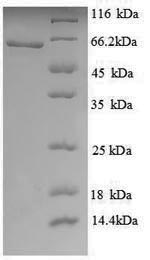
Greater than 90% as determined by SDS-PAGE.
Alternative Names
60 kDa Tat interactive protein; 60 kDa Tat-interactive protein; cPLA(2) interacting protein; cPLA(2)-interacting protein; cPLA2; cPLA2 interacting protein; ESA1; Histone acetyltransferase HTATIP; Histone acetyltransferase KAT5; HIV 1 Tat interactive protein; HIV 1 Tat interactive protein, 60kDa; HIV-1 Tat interactive protein; HTATIP; HTATIP1; K(lysine) acetyltransferase 5; K-acetyltransferase 5; KAT5; KAT5_HUMAN; Lysine acetyltransferase 5; PLIP; Tat interacting protein, 60kDa; TIP; Tip60
Species
Homo sapiens (Human)
Expression Region
3-513aa
Target Protein Sequence
EVGEIIEGCRLPVLRRNQDNEDEWPLAEILSVKDISGRKLFYVHYIDFNKRLDEWVTHERLDLKKIQFPKKEAKTPTKNGLPGSRPGSPEREVPASAQASGKTLPIPVQITLRFNLPKEREAIPGGEPDQPLSSSSCLQPNHRSTKRKVEVVSPATPVPSETAPASVFPQNGAARRAVAAQPGRKRKSNCLGTDEDSQDSSDGIPSAPRMTGSLVSDRSHDDIVTRMKNIECIELGRHRLKPWYFSPYPQELTTLPVLYLCEFCLKYGRSLKCLQRHLTKCDLRHPPGNEIYRKGTISFFEIDGRKNKSYSQNLCLLAKCFLDHKTLYYDTDPFLFYVMTEYDCKGFHIVGYFSKEKESTEDYNVACILTLPPYQRRGYGKLLIEFSYELSKVEGKTGTPEKPLSDLGLLSYRSYWSQTILEILMGLKSESGERPQITINEISEITSIKKEDVISTLQYLNLINYYKGQYILTLSEDIVDGHERAMLKRLLRIDSKCLHFTPKDWSKRGKW
Note: The complete
sequence may include tag sequence, target protein sequence, linker sequence and extra sequence that is
translated with the protein sequence for the purpose(s) of secretion, stability, solubility, etc.
If the exact amino acid sequence of this recombinant protein is critical to your application,
please explicitly request the full and complete sequence of this protein before ordering.
Tag Info
N-terminal 6xHis-tagged
The tag type will be determined during production process. If you have specified tag type, please tell us and we will develop the specified tag preferentially.
Reconstitution
We recommend that this vial be briefly centrifuged prior to opening to bring the contents to the bottom. Please reconstitute protein in deionized sterile water to a concentration of 0.1-1.0 mg/mL.We recommend to add 5-50% of glycerol (final concentration) and aliquot for long-term storage at -20°C/-80°C. Our default final concentration of glycerol is 50%. Customers could use it as reference.
Storage Condition
The shelf life is related to many factors, storage state, buffer ingredients, storage temperature and the stability of the protein itself.
Generally, the shelf life of liquid form is 6 months at -20°C/-80°C. The shelf life of lyophilized form is 12 months at -20°C/-80°C.
Shelf Life
The shelf life is related to many factors, storage state, buffer ingredients, storage temperature and the stability of the protein itself.
Generally, the shelf life of liquid form is 6 months at -20°C/-80°C. The shelf life of lyophilized form is 12 months at -20°C/-80°C.
Lead Time
3-7 business days
Note: All of our proteins are default shipped with normal blue ice packs, if you request to ship with dry ice, please communicate with us in advance and extra fees will be charged.
Notes
Repeated freezing and thawing is not recommended. Store working aliquots at 4°C for up to one week.
Datasheet & COA
Please contact us to get it.
Images
-
(Tris-Glycine gel) Discontinuous SDS-PAGE (reduced) with 5% enrichment gel and 15% separation gel.
-
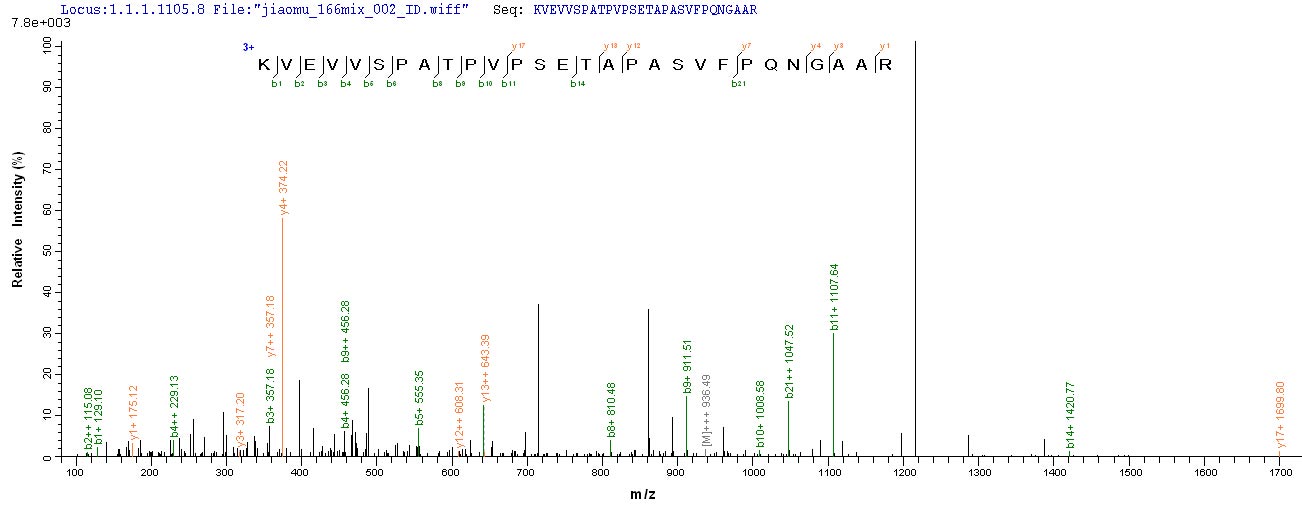
Based on the SEQUEST from database of E.coli host and target protein, the LC-MS/MS Analysis result of CSB-RP178494h could indicate that this peptide derived from E.coli-expressed Homo sapiens (Human) KAT5.
-
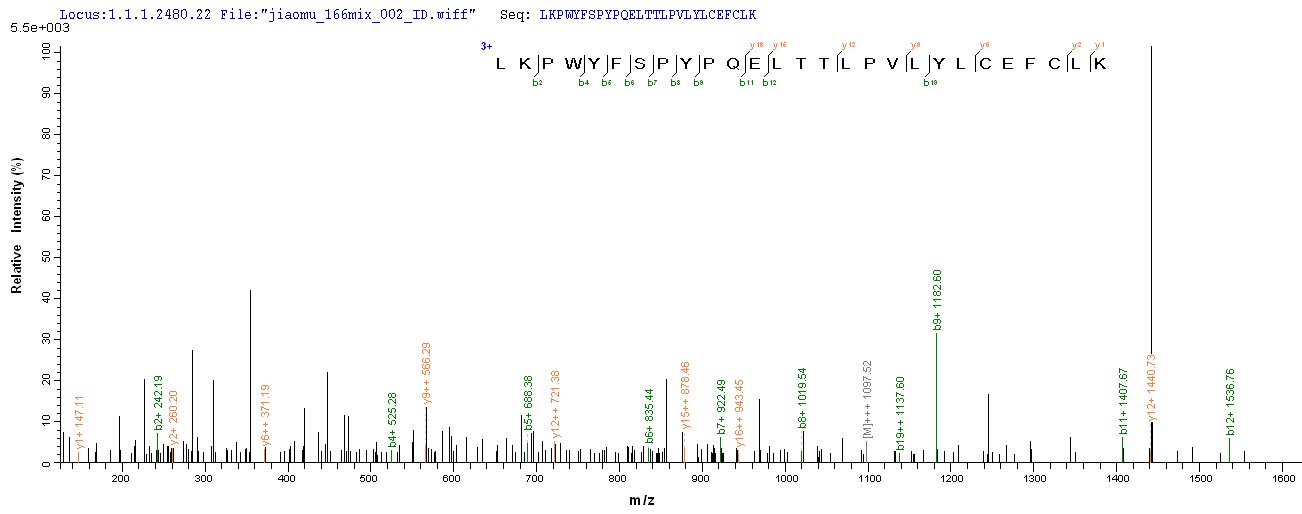
Based on the SEQUEST from database of E.coli host and target protein, the LC-MS/MS Analysis result of CSB-RP178494h could indicate that this peptide derived from E.coli-expressed Homo sapiens (Human) KAT5.
Description
To prepare this Recombinant Human KAT5 protein, the recombinant DNA was required, which was generated by fusing the KAT5 gene with N-terminal 6xHis tag sequence. Once the recombinant DNA was amplified and purified, a protein expression system, E.coli, was needed for this KAT5 protein production. After purification, a premium KAT5 recombinant proteinwas obtained. According to SDS-PAGE, its purity turns out to be 90%+.
KAT5 (also called HTATIP or TIP60) is a gene encoding a protein named histone acetyltransferase KAT5 or 60 kDa Tat-interactive protein (short name is Tip60). The protein encoded by this gene belongs to a member of MYST acetyltransferase family and is an important component of an evolutionarily conserved complex, NuA4. KAT5 protein has been discovered multiple functions as transcriptional regulation factor together with or without nuclear receptors, such as activating or inhibiting downstreamgene expression; or acetylating a series of proteins to regulate their activities and stability.