Recombinant Heteroscodra maculata Delta-theraphotoxin-Hm1a

In Stock
Code: CSB-EP351577HGUa3
Size:
20ug
20ug100ug1mg(1mg*1 or 500ug*2)
US$388
Quantity:
Express system: E.coli
Species: Heteroscodra maculata (Togo starburst tarantula)(Togo starburst baboon spider)
Tag Info: N-terminal 6xHis-SUMO-tagged and C-terminal Myc-tagged
For inquiries on large quantities or another requirements
Send an Inquiry
Start an on-line Chat
Online ordering is currently available for U.S. customers only. For orders outside the U.S., please kindly submit an inquiry or start a chat with us.

Product Details

Purity
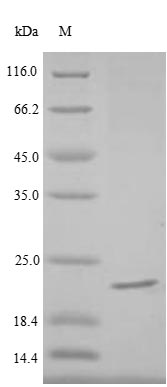
Greater than 85% as determined by SDS-PAGE.
Uniprot NO.
Research Area
others
Alternative Names
; Delta-theraphotoxin-Hm1a; Delta-TRTX-Hm1a; Heteroscodratoxin-1; HmTx1; Kappa-theraphotoxin-Hm1a; Kappa-TRTX-Hm1a
Species
Heteroscodra maculata (Togo starburst tarantula)(Togo starburst baboon spider)
Source
E.coli
Expression Region
1-35aa
Target Protein Sequence
ECRYLFGGCSSTSDCCKHLSCRSDWKYCAWDGTFS
Note: The complete sequence may include tag sequence, target protein sequence, linker sequence and extra sequence that is translated with the protein sequence for the purpose(s) of secretion, stability, solubility, etc.
If the exact amino acid sequence of this recombinant protein is critical to your application, please explicitly request the full and complete sequence of this protein before ordering.
Mol. Weight
21.5 kDa
Protein Length
Full Length
Tag Info
N-terminal 6xHis-SUMO-tagged and C-terminal Myc-tagged
The tag type will be determined during production process. If you have specified tag type, please tell us and we will develop the specified tag preferentially.
Reconstitution
We recommend that this vial be briefly centrifuged prior to opening to bring the contents to the bottom. Please reconstitute protein in deionized sterile water to a concentration of 0.1-1.0 mg/mL.We recommend to add 5-50% of glycerol (final concentration) and aliquot for long-term storage at -20°C/-80°C. Our default final concentration of glycerol is 50%. Customers could use it as reference.
Storage Condition
The shelf life is related to many factors, storage state, buffer ingredients, storage temperature and the stability of the protein itself. Generally, the shelf life of liquid form is 6 months at -20°C/-80°C. The shelf life of lyophilized form is 12 months at -20°C/-80°C.
Shelf Life
The shelf life is related to many factors, storage state, buffer ingredients, storage temperature and the stability of the protein itself.
Generally, the shelf life of liquid form is 6 months at -20°C/-80°C. The shelf life of lyophilized form is 12 months at -20°C/-80°C.
Lead Time
3-7 business days
Note: All of our proteins are default shipped with normal blue ice packs, if you request to ship with dry ice, please communicate with us in advance and extra fees will be charged.
Notes
Repeated freezing and thawing is not recommended. Store working aliquots at 4°C for up to one week.
Troubleshooting and FAQs
Datasheet & COA
Please contact us to get it.
Images
  • (Tris-Glycine gel) Discontinuous SDS-PAGE (reduced) with 5% enrichment gel and 15% separation gel.


Customer Reviews and Q&A

 Customer Reviews

Target Background

Function(From Uniprot)
Gating-modifier toxin that potently inhibits inactivation of the mammalian Nav1.1/SCN1A sodium channel (EC(50)=38 nM). Also moderately inhibits inactivation of Nav1.2/SCN2A (EC(50)=236 nM) and Nav1.3/SCN3A (EC(50)=220 nM) when the channels are expressed in oocytes without the beta-1 auxiliary subunit. Does not inhibit inactivation of Nav1.2/SCN2A when the channel is coexpressed with the beta-1 auxiliary subunit. When tested on Nav1.1/SCN1A channel, it enhances peak current amplitude and potently delays channel inactivation in a dose-dependent manner, leading to a large sustained current. It has no effect on the voltage-dependence of steady-state activation, and induces a depolarizing shift in the voltage dependence of inactivation. In addition, it does not modify the recovery from fast inactivation in Nav1.1/SCN1A. The binding affinity and subtype selectivity of the toxin towards Nav1.1/SCN1A channel is determined by residues within both the S1-S2 and S3-S4 loops of the domain IV voltage sensor of the channel. This toxin also weakly inhibits several subtypes of voltage-gated potassium channels. It moderately blocks Kv2.1/KCNB1 (23% inhibition at 100 nM), Kv2.2/KCNB2 (19.7% at 100 nM and 51% at 300 nM), Kv4.1/KCND1 (IC(50)=280 nM), Kv4.2/KCND2 (39% at 300 nM) and Kv4.3/KCND3 (43% at 300 nM). In vivo, intracerebroventricular injection into mice elicits convulsions, spasms, tremors and rapid death. When injected into mouse hindpaw, the toxin elicits an immediate and robust response to pain. However, intraplantar injection of toxin does not cause neurogenic inflammation or alter sensitivity to heat, indicative of a modality-specific effect on mechanosensitive neurons. In Dravet syndrome mice model, intracerebroventricular infusion of this peptide rescues mice from seizures and premature death.
Subcellular Location
Secreted.
Protein Families
Huwentoxin-1 family, HaTx subfamily
Tissue Specificity
Expressed by the venom gland.
icon of phone
Call us
301-363-4651 (Available 9 a.m. to 5 p.m. CST from Monday to Friday)
icon of address
Address
No. 269, Shendun 5th Road, Donghu Hi-Tech Development Area, Hubei Province, 430206, P.R.China
icon of social media
Join us with

Subscribe newsletter

Leave a message

* To protect against spam, please pass the CAPTCHA test below.
CAPTCHA verification
© 2007-2025 CUSABIO TECHNOLOGY LLC All rights reserved. 鄂ICP备15011166号-1
Select 0 Products