
Call us
301-363-4651 (Available 9 a.m. to 5 p.m. CST from Monday to Friday)

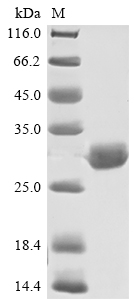
Recombinant Bovine Apolipoprotein A-I (APOA1) comes from E. coli expression and includes an N-terminal 6xHis-tag, which makes purification and detection much simpler. The protein represents a partial sequence—specifically amino acids 25-265 of bovine APOA1. SDS-PAGE analysis indicates purity levels above 85%. This product is strictly for research purposes and should not be used for therapeutic or diagnostic applications.
Apolipoprotein A-I (APOA1) appears to be central to lipid metabolism. It's the main protein found in high-density lipoprotein (HDL) circulating in plasma. The protein seems particularly important for reverse cholesterol transport—moving cholesterol from tissues back to the liver where it can be eliminated. Cardiovascular researchers often focus on APOA1 because of its apparent role in maintaining lipid balance and its potential effects on heart health.
Potential Applications
Note: The applications listed below are based on what we know about this protein's biological functions, published research, and experience from experts in the field. However, we haven't fully tested all of these applications ourselves yet. We'd recommend running some preliminary tests first to make sure they work for your specific research goals.
Bovine APOA1 is a lipid-binding protein that requires precise folding, proper amphipathic helix formation, and specific oligomerization for its functional activity in HDL particle assembly and lipid transport. The structure of APOA1 is relatively simple, mainly composed of amphiphilic α-helices. In Escherichia coli, if the expression conditions are properly optimized, it is possible to form the correct helical structure. The N-terminal 6xHis-tag may sterically interfere with the protein's lipid-binding domains or oligomerization interfaces. For APOA1, its N-terminal is relatively flexible, so adding labels may not significantly affect its functionality, but experimental verification is needed.
1. In Vitro Lipid Binding and HDL Reconstitution Studies
This application carries a significant risk without proper folding validation. APOA1's lipid-binding and HDL reconstitution functions require precise amphipathic helix formation and tertiary structure. If correctly folded and active (verified through lipid-binding assays), the protein may be suitable for functional studies. If misfolded/inactive (unverified), lipid-binding experiments will yield biologically meaningless results due to impaired helix formation and lipid interaction capabilities.
2. Comparative Protein Structure and Function Analysis
Meaningful comparative studies require native protein conformation and functional activity. If correctly folded and active (verified), the protein enables valid evolutionary comparisons of lipid-binding properties and structural features across species. If misfolded/inactive (unverified), comparative analyses would yield misleading evolutionary insights about APOA1 conservation and divergence.
3. Antibody Development and Immunoassay Applications
This application is highly suitable as antibody development relies on antigenic sequence recognition rather than functional protein folding. The partial protein (25-265aa) provides comprehensive epitope coverage for generating antibodies against bovine APOA1. The high purity (>85%) ensures minimal contamination-related issues during immunization protocols.
4. Protein-Protein Interaction Studies
This application requires proper folding validation. APOA1 interactions with other lipid metabolism proteins require precise tertiary structure and native conformation. If correctly folded (verified), the protein may identify physiological interaction partners. If misfolded/unverified, there is a high risk of non-specific binding or failure to replicate genuine protein interactions in lipid transport pathways.
Final Recommendation & Action Plan
The E. coli expression system is fundamentally limited for producing a functional version of this complex lipid-binding protein due to its inability to support proper amphipathic helix formation and oligomerization. Begin with biochemical characterization to assess folding quality through circular dichroism spectroscopy (helix content analysis) and size-exclusion chromatography (oligomerization state). Validate lipid-binding capability using phospholipid binding assays before considering functional applications. Applications 1, 2, and 4 require rigorous folding and functional validation. Application 3 (antibody development) can proceed immediately. For reliable APOA1 research requiring native functionality, use mammalian expression systems that support proper protein folding and lipid interactions.


Email: support@cusabio.com
Distributors Worldwide



