Zap70 Antibody

Code: CSB-PA026303LA01MO
Size:
20μg
20μg50μg100μg
US$83
Quantity:
Species Reactivity: Mouse, Human
Raised in: Rabbit
Application: ELISA, WB, IF
For inquiries on large quantities or another requirements
Send an Inquiry
Start an on-line Chat
Online ordering is currently available for U.S. customers only. For orders outside the U.S., please kindly submit an inquiry or start a chat with us.

Product Details

Uniprot NO.
Target Names
Zap70
Alternative Names
Zap70 antibody; Srk antibody; Zap-70 antibody; Tyrosine-protein kinase ZAP-70 antibody; EC 2.7.10.2 antibody; 70 kDa zeta-chain associated protein antibody; Syk-related tyrosine kinase antibody
Raised in
Rabbit
Species Reactivity
Mouse, Human
Immunogen
Recombinant Mouse Tyrosine-protein kinase ZAP-70 protein (253-325AA)
Immunogen Species
Mus musculus (Mouse)
Conjugate
Non-conjugated
Clonality
Polyclonal
Isotype
IgG
Purification Method
>95%, Protein G purified
Concentration
It differs from different batches. Please contact us to confirm it.
Buffer
Preservative: 0.03% Proclin 300
Constituents: 50% Glycerol, 0.01M PBS, pH 7.4
Form
Liquid
Note: We will preferentially ship the format that we have in stock, however, if you have any special requirement for the format, please remark your requirement when placing the order, we will prepare according to your demand.
Tested Applications
ELISA, WB, IF
Recommended Dilution
ApplicationRecommended Dilution
WB1:500-1:5000
IF1:50-1:200
Storage
Upon receipt, store at -20°C or -80°C. Avoid repeated freeze.
Lead Time
Basically, we can dispatch the products out in 1-3 working days after receiving your orders. Delivery time maybe differs from different purchasing way or location, please kindly consult your local distributors for specific delivery time.
Note: All of our proteins are default shipped with normal blue ice packs, if you request to ship with dry ice, please communicate with us in advance and extra fees will be charged.
Usage
For Research Use Only. Not for use in diagnostic or therapeutic procedures.
Datasheet & COA
Images
  • Western Blot
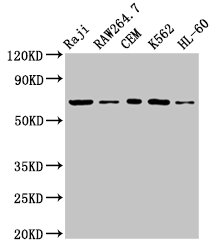
    Positive WB detected in: Raji whole cell lysate, RAW264.7 whole cell lysate, CEM whole cell lysate, K562 whole cell lysate, HL60 whole cell lysate
    All lanes: Zap70 antibody at 3.2µg/ml
    Secondary
    Goat polyclonal to rabbit IgG at 1/50000 dilution
    Predicted band size: 71, 36 kDa
    Observed band size: 71 kDa

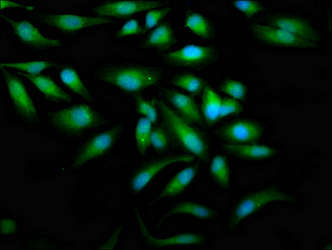
  • Immunofluorescence staining of Hela cells with CSB-PA026303LA01MO at 1:100, counter-stained with DAPI. The cells were fixed in 4% formaldehyde, permeabilized using 0.2% Triton X-100 and blocked in 10% normal Goat Serum. The cells were then incubated with the antibody overnight at 4°C. The secondary antibody was Alexa Fluor 488-congugated AffiniPure Goat Anti-Rabbit IgG(H+L).

Customer Reviews and Q&A

 Customer Reviews

Target Background

Function(From Uniprot)
Tyrosine kinase that plays an essential role in regulation of the adaptive immune response. Regulates motility, adhesion and cytokine expression of mature T-cells, as well as thymocyte development. Contributes also to the development and activation of primary B-lymphocytes. When antigen presenting cells (APC) activate T-cell receptor (TCR), a serie of phosphorylations lead to the recruitment of ZAP70 to the doubly phosphorylated TCR component CD3Z through ITAM motif at the plasma membrane. This recruitment serves to localization to the stimulated TCR and to relieve its autoinhibited conformation. Release of ZAP70 active conformation is further stabilized by phosphorylation mediated by LCK. Subsequently, ZAP70 phosphorylates at least 2 essential adapter proteins: LAT and LCP2. In turn, a large number of signaling molecules are recruited and ultimately lead to lymphokine production, T-cell proliferation and differentiation. Furthermore, ZAP70 controls cytoskeleton modifications, adhesion and mobility of T-lymphocytes, thus ensuring correct delivery of effectors to the APC. ZAP70 is also required for TCR-CD3Z internalization and degradation through interaction with the E3 ubiquitin-protein ligase CBL and adapter proteins SLA and SLA2. Thus, ZAP70 regulates both T-cell activation switch on and switch off by modulating TCR expression at the T-cell surface. During thymocyte development, ZAP70 promotes survival and cell-cycle progression of developing thymocytes before positive selection (when cells are still CD4/CD8 double negative). Additionally, ZAP70-dependent signaling pathway may also contribute to primary B-cells formation and activation through B-cell receptor (BCR).
Gene References into Functions
  1. hypomorphic alleles of Zap70 or chemical inhibition of Zap70 catalysis leads to an increase of IFN-gamma-producing invariant natural killer T cells. PMID:29980684
  2. RanBP2 expression was regulated by Zap70. PMID:28745977
  3. disruption of normal Zap70 autoinhibition engaged negative feedback mechanisms by which negative selection and inhibitory receptors restrain TCR signaling to enforce both central and peripheral tolerance. PMID:28159798
  4. in this study, authors discovered a cycle of recruitment, activation and release for Zap70 kinases at phosphorylated T-cell antigen receptors, which turned them into a 'catalytic unit' that amplified antigenic stimuli PMID:27869819
  5. was significantly increased in 22-month AEW mice compared with 5-month AEW mice. ELISA data showed that secretions of IL-2 and NGF in 22-month AEW mice were higher than 5-month AEW mice. Our results indicate that increased ZAP70 is involved in dry skin in elderly pruritus. Increased secretion of IL-2 and NGF may induce dry skin itch. PMID:27195291
  6. this study shows that ZAP-70 mutation has a strong impact on T cell-driven arthritis in SKG model regardless of the genetic background PMID:27040161
  7. These findings establish Otud7b as a positive regulator of T cell receptor-proximal signaling and T cell activation, highlighting the importance of deubiquitination in regulating Zap70 function. PMID:26903241
  8. Data suggest that ring finger protein 41 Nrdp1 terminates T cell antigen receptors (TCRs) signaling by inactivating Zap70 kinase. PMID:26390156
  9. Zap70 as a structural protein regulates integrin-mediated control of actin and with its catalytic activity regulates T cell receptor-mediated control of actin and membrane remodelling during formation of the immunological synapse. PMID:24596147
  10. Blockade of CXCR7 suppressed MIF-mediated ERK- and zeta-chain-associated protein kinase (ZAP)-70 activation PMID:26139098
  11. mediates the CD4 lineage differentiation in response to Class II selecting ligands PMID:25601273
  12. In mice with spondylarthritis, microbiota content varied according to whether T cell receptor signal strength was normal or was impaired due to the ZAP-70(W163C) mutation. PMID:25048686
  13. expression of Zap70 protein was essential for both long-term survival of naive T cells and for their proliferation in response to lymphopenia. PMID:25092893
  14. ZAP-70 enhances the migration of malignant B-cells into the supportive microenvironment found in the bone marrow mainly by enhancing signaling and migration after CXCR4 stimulation. PMID:24312539
  15. Titration of Zap70 activity resulted in graded reductions in positive and negative selection but did not decrease the cumulative TCR signals integrated by positively selected OT-I cells PMID:24908390
  16. MIF promotes the migration of B cells through a ZAP-70-dependent pathway mediated by cooperative engagement of CXCR4 and CD74. PMID:24760155
  17. Report role of ZAP-70 kinase mutation/deletion on thymocyte-positive selection via CD69 signaling. PMID:24266404
  18. The forced intrathymic administration of histocompatible hematopoietic stem cells can sustain long-term thymopoiesis in ZAP-70-immunodeficient mice. PMID:23305740
  19. ZAP70 recruitment to the TCR and ZAP70 activation, revealed by its phosphorylation at tyrosine residues 292 and 319, were inhibited in T cells with a mutation in the proline-rich sequence of CD3 epsilon. PMID:23267019
  20. that CD3zeta mediates the ZAP-70/Syk kinase activation triggered by ephrinA-activated pathway to regulate early neuronal morphogenesis PMID:21895656
  21. Data observed a significant upregulation and phosphorylation of ZAP-70, protein kinase C theta;, nuclear factor of activated T cells, and glycogen synthase kinase 3beta in Tregs prepared from injury-site-draining lymph nodes. PMID:20720513
  22. Sts-2 is a phosphatase that negatively regulates zeta-associated protein (ZAP)-70 and T cell receptor signaling pathways. PMID:21393235
  23. Results suggest that RhoH regulates TCR signaling via recruitment of ZAP-70 and Lck to CD3zeta in the immunological synapse. PMID:21103055
  24. These data provide evidence that a burst of ZAP-70 activity initiates the signaling pathways for negative selection. PMID:20945976
  25. conventional naive, effector and memory T cells were dependent on the kinase activity of Zap70 for their activation, which demonstrated a nonredundant role for Zap70 in signals induced by the T cell antigen receptor PMID:21037577
  26. temporal gradient in the amount of Zap70 protein enabled the selection of CD4(+) and CD8(+) repertoires in separate temporal windows and at different TCR signaling thresholds PMID:20332428
  27. These ZAP-70-deficient mice that received an intrathymic transplant had a significantly increased prothymocyte niche compared with their untreated counterparts. PMID:20040762
  28. ZAP-70 plays a role in the transition of pro-B to pre-B cells in the bone marrow. PMID:12705855
  29. spontaneous point mutation of the gene encoding an SH2 domain of ZAP-70, a key signal transduction molecule in T cells, causes chronic autoimmune arthritis in mice that resembles human RA in many aspects PMID:14647385
  30. ZAP-70 plays a distinct role in T cell activation and activation-induced cell death that involves the Fas/Fas ligand, caspase-8 and caspase-3 pathways. PMID:14734724
  31. ZAP-70 is essential for T-cell receptor signaling which induces the proliferation and the final maturation of dendritic epidermal T cells in the epidermis. PMID:15740591
  32. novel role for ZAP-70, which replaces SYK for continued t cell receptor signaling PMID:17606633
  33. A novel biochemical signature in memory CD4 T cells enables efficacious responses through increased Zap70 expression and reduced accumulation of downstream signaling events. PMID:17785805
  34. The pleiotropic functions of ZAP-70 and their differential response to graded variation provide a paradigm for understanding the complex outcomes of human genetic variation. PMID:18093540
  35. The thymic electro-gene transfer of the pCMV-ZAP-70-IRES-EGFP vector in these mice resulted in rapid T cell differentiation in the thymus with mature lymphocytes detected by three weeks in secondary lymphoid organs. PMID:18446234
  36. Zap70 can rescue the defective positive selection of immature B cells into the recirculating pool in Syk-deficient mice, demonstrating functional redundancy between these two kinases. PMID:18465772
  37. ZAP-70 mutations appear to skew the T Cell receptor repertoire in ways that differentially influence propensity to autoimmunity versus autoimmune disease susceptibility. PMID:19841086

Show More

Hide All

Subcellular Location
Cytoplasm. Cell membrane; Peripheral membrane protein. Note=In quiescent T-lymphocytes, ZAP70 is cytoplasmic. Upon TCR activation, it is recruited at the plasma membrane by interacting with CD3Z. Colocalizes together with RHOH in the immunological synapse. RHOH is required for its proper localization to the cell membrane and cytoskeleton fractions in the thymocytes.
Protein Families
Protein kinase superfamily, Tyr protein kinase family, SYK/ZAP-70 subfamily
Tissue Specificity
Isoform 1 and isoform 2 are expressed in thymus, spleen and lymph nodes.
Database Links

UNIGENE: Mm.8038

KEGG: mmu:22637

STRING: 10090.ENSMUSP00000027291

icon of phone
Call us
301-363-4651 (Available 9 a.m. to 5 p.m. CST from Monday to Friday)

icon of address
Address
No. 269, Shendun 5th Road, Donghu Hi-Tech Development Area, Hubei Province, 430206, P.R.China
icon of social media
Join us with

Subscribe newsletter

Leave a message

* To protect against spam, please pass the CAPTCHA test below.
CAPTCHA verification
© 2007-2025 CUSABIO TECHNOLOGY LLC All rights reserved. 鄂ICP备15011166号-1
Select 0 Products