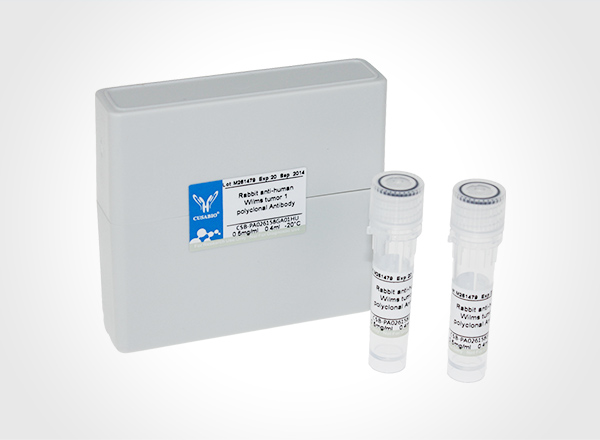
Liquid
Note: We will preferentially ship the format that we have in stock, however, if you have any special requirement for the format, please remark your requirement when placing the order, we will prepare according to your demand.
Upon receipt, store at -20°C or -80°C. Avoid repeated freeze.
Lead Time
Basically, we can dispatch the products out in 1-3 working days after receiving your orders. Delivery time maybe differs from different purchasing way or location, please kindly consult your local distributors for specific delivery time.
Note: All of our proteins are default shipped with normal blue ice packs, if you request to ship with dry ice, please communicate with us in advance and extra fees will be charged.
Usage
For Research Use Only. Not for use in diagnostic or therapeutic procedures.
Binds to WNT proteins and inhibits their activities. May be involved in mesoderm segmentation.
Gene References into Functions
WIF1 methylation may serve as a potential prognostic marker for patients with chondrosarcoma.PMID:28484252
our findings indicate that HOXC6 plays an important role in the progress and prognosis of human glioma and promotes glioma U87 cell growth through the WIF-1/Wnt signaling pathwayPMID:30228024
Data revealed that the upregulation of WIF1 induced autophagy in non-small cell lung cancer (NSCLC) cells. WIF1-mediated autophagy was demonstrated to inhibit Wnt/betacatenin signaling by downregulating Dvl2, which contributed to the inhibition of the proliferation and the promotion of the apoptosis of NSCLC cells.PMID:29916529
WIF-1 gene methylation is associated with pathogenesis of multiple human tumors.PMID:29970693
the expression of WIF-1 was low in GBC cells due to aberrant hypermethylation of its promoter region. Additionally, an alternative pathogenesis of GBC was indicated in which c-Jun causes hypermethylation of the WIF-1 promoter region, and represses the expression of WIF-1 through transcriptional regulation and interaction with DNMT1 as an early event in the tumorigenesis of GBC.PMID:29693707
miR-590-3p regulates colon cancer progression via WIF1 and DKK1, which suggests that miR-590-3p may be a promising candidate for therapeutic applications in colon cancer treatmentPMID:29164578
We identify a loss-of-function mutation in WIF1 (NM_007191 p.W15*), which is involved in mesoderm segmentation, as the suspected cause of the Nail-Patella-like disorder observed in this family.PMID:28383544
the results of our study show that down-regulated INTS6 expression is associated with a poorer prognosis in hepatocellular carcinoma (HCC) patients. This newly identified INTS6/WIF-1 axis indicates the molecular mechanism of HCC and may represent a therapeutic target in HCC patients.PMID:28899352
the promoters of WIF1, NLK, and APC are highly methylated in the nasopharyngeal cancers (NPC) and gastric carcinoma (GC) cell lines, and the 3 genes are also regulated by miR-BART19-3p expressed by Epstein-Barr virus (EBV); expression of the WIF1, APC, and NLK genes is strongly affected by hypermethylation, and in EBV-associated tumors, the 3 genes are also affected by miR-BART19-3pPMID:28543390
Data show the frequency of WIF-1 hypermethylation significantly increased in non-small cell lung cancer (NSCLC) specimens compared with normal lung tissue. WIF-1 hypermethylation is predominant in squamous cell carcinoma (SCC), suggesting that WIF-1 methylation contributes to the development of NSCLC, especially SCC. [review]PMID:27911280
Study supported the hypothesis that Wnt inhibitory factor 1 (WIF1) is crucial as a negative regulator of the functions of endothelial cells in angiogenesis and that hypoxia plays an important role in controlling WIF1 expression and angiogenesis.PMID:26994065
Our data suggests that total cellular b-catenin levels decrease in the presence of secreted frizzled-related protein 1 and Wnt inhibitory factor 1, and a significant increase in cell death after tyrosine kinase inhibitor treatment is observed. On the contrary, when secreted frizzled-related protein 1 is suppressed, total b-catenin levels increase in the cell and the cells become resistant to tyrosine kinase inhibitors.PMID:28468589
Gallbladder cancer patients with hypermethylated WIF-1 exhibited worse overall survival than those with hypomethylated WIF-1.PMID:28438695
In astrocytoma specimens, tumor areas with numerous single cells were identified which strongly express Wif-1.PMID:28040794
Hypermethylation of WIF1 (WNT inhibitory factor 1) and NPY (neuropeptide Y) genes was significantly higher in tumor tissue compared to normal tissue, independently of tumor stage.PMID:27251038
the expression levels of WIF-1 were low in gallbladder cancer tumor tissues and the GBC-SD, SGC-996 and NOZ gallbladder cancer cell lines. This low expression was associated with the methylation status of the WIF-1 gene promotor.PMID:27430608
Promoter hypermethylation WIF1 play an important role in the carcinogenesis of lung cancer.PMID:27930522
HOTAIR can affect the radiosensitivity of pancreatic ductal adenocarcinoma (PDAC) cells partly via regulating the expression of WIF-1, and HOTAIR-WIF-1 axis is a potential target for PDAC radiotherapy.PMID:26482614
beta-catenin expression may also be a poor prognostic factor for cervical cancer (CC) while WIF1 could be a potential drug target for treatment of advanced CC.PMID:27843945
Reduced expression of Wif-1 and increased expression of beta-catenin may be involved in the pathogenesis of childhood acute lymphoblastic leukemia (ALL).PMID:27655540
Results provide evidence that WIF1 is frequently methylated in oral squamous cell carcinoma (OSCC), but not in oral submucous fibrosis tissues, which results in reduced expression. This epigenetic biomarker can be used for the early detection of OSCC.PMID:26352791
WIF-1 down-regulation may promote tumor cells invasion and metastasis in salivary gland adenoid cystic carcinoma.PMID:26405993
Loss of WIF1 enhances the migratory potential of glioblastoma through WNT5A that activates the WNT/Ca(2+) pathway and MALAT1.PMID:25772239
WIF1 has a role in breast neoplasms: its inhibition significantly relieves the cancer stem cell-limiting effects of dietary compound isoliquiritigeninPMID:25918249
Data show that the WIF domain of Wnt Inhibitory Factor 1 (WIF1) is bound by C-terminal domains of Wnt proteins Wnt5a and Wnt7a at two sites.PMID:26342861
detection of methylated Wif-1 in either S or U has a higher performance accuracy compared to guaiac FOBT for advanced colorectal neoplasia screeningPMID:25025467
miR-603 regulates glioma development via Wnt-beta-cateninn signaling pathway and its WIF1 and CTNNBIP1 targets.PMID:25681036
Further evaluation of the methylation of DACH1, DKK1, and WIF1 in a clinical patient group confirmed the frequent methylation of WIF1 and intermediate or low frequency of methylation of DACH1 or DKK1, respectively.PMID:25487617
Altered expression of genes associated with telomere maintenance and cell function of human vascular endothelial cell at elevated temperature.PMID:25142166
Aberrant methylation of APC gene was statistically significant associated with age over 50, DDK3 with male, SFRP4, WIF1, and WNT5a with increasing tumor stage SFRP4 and WIF1 with tumor differentiation and SFRP2 and SFRP5 with histological typePMID:25107489
Coexpression of SFRP1 and WIF1, rather than SFRP1 or WIF1 alone, could be used, together with low TNM stage, as a prognostic predictor of favorable outcomes in CRC.PMID:24949429
MicroRNA-181a promotes tumor growth and liver metastasis in colorectal cancer by targeting the tumor suppressor WIF-1.PMID:24755295
WIF-1 is frequently methylated and that Wnt5a acts as a tumor suppressor gene in colorectal carcinoma.PMID:24833087
genetic alterations of beta-catenin and epigenetics-related Wif-1 promoter hypermethylation may be important mechanisms underlying adrenocortical tumor formationPMID:24755523
WIF1 downregulation is a frequent event in salivary gland carcinoma ex-pleomorphic adenoma.PMID:24853424
melanocytes express WIF-1 constitutively in vivo and in vitro and that WIF-1 promotes melanogenesis in normal human melanocytes.PMID:24131586
WIF-1 is downregulated and functions as a tumor suppressor by antagonizing Wnt/beta-catenin signaling in neuroblastoma.PMID:24561119
Wif1 methylation showed an association with unfavorable prognosis of adenocarcinoma (AC) patients with EGFR mutation.PMID:23686431
Promoter methylation of WIF1, PENK and NPY is associated with colorectal adenocarcinoma (CRC) diagnosis and can be used to CRC from other cancers.PMID:24289328
HOTAIR directly decreased WIF-1 expression by promoting its histone H3K27 methylation in the promoter region and then activated the Wnt/beta-catenin signaling pathway.PMID:24118380
Significantly higher methylation was observed in genes NTKR1, GATA4 and WIF1 in the ovarian cancer group compared with the control group.PMID:23746174
WIF1 expression is downregulated by promoter methylation and is an important mechanism of aberrant WNT/beta-catenin pathway activation in astrocytoma pathogenesisPMID:23328978
The miR-29 family (miR-29a, -29b, and -29c) suppresses the Wnt signaling pathway through demethylation of WIF-1 in non-small-cell lung cancer.PMID:23939044
These in vivo data support the involvement of Wnt signaling in the development of aortic stenosis and suggest that circulating Wnt modulators such as WIF1 should be further investigated as risk markers in larger aortic stenosis populations.PMID:23316316
WIF1 is a marker of interfollicular keratinocyte stem cells and inhibits their cell cycle progression even with Wnt3 signaling.PMID:23358094
Loss of WIF-1 expression due to methylation is related to aggressiveness of sporadic breast cancer.PMID:23417837
It was shown that WIF-1 downregulation is involved in melasma development due to the stimulation of melanogenesis and melanosome transfer through upregulation of the canonical and the noncanonical Wnt signaling pathway.PMID:22951732
This study demonistrated that Wnt inhibitory factor-1 regulates glioblastoma cell cycle and proliferation.PMID:22901505
Epigenetic inactivation of Wnt inhibitory factor-1 is associated with esophageal squamous cell carcinoma.PMID:23193918
A Wnt-binding site of the WIF-domain of WIF1 was localized. Substitution of some residues of WIF resulted in an increased affinity for Wnt5a, but decreased affinity for Wnt3a, suggesting that these residues may define the specificity of WIF for Wnts.PMID:22986341