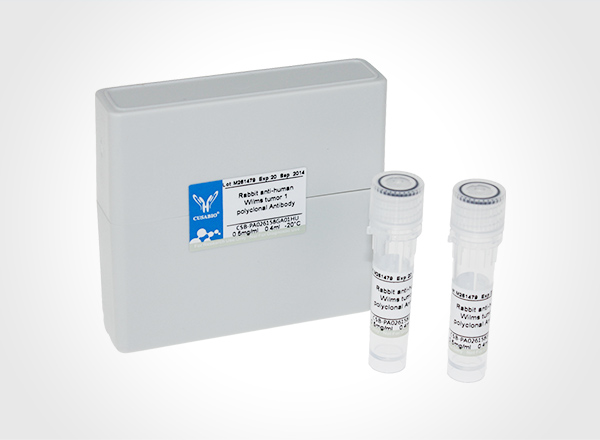
Liquid
Note: We will preferentially ship the format that we have in stock, however, if you have any special requirement for the format, please remark your requirement when placing the order, we will prepare according to your demand.
Upon receipt, store at -20°C or -80°C. Avoid repeated freeze.
Lead Time
Basically, we can dispatch the products out in 1-3 working days after receiving your orders. Delivery time maybe differs from different purchasing way or location, please kindly consult your local distributors for specific delivery time.
Note: All of our proteins are default shipped with normal blue ice packs, if you request to ship with dry ice, please communicate with us in advance and extra fees will be charged.
Usage
For Research Use Only. Not for use in diagnostic or therapeutic procedures.
Plays an important role in the regulation of different protein degradation mechanisms and pathways including ubiquitin-proteasome system (UPS), autophagy and the endoplasmic reticulum-associated protein degradation (ERAD) pathway. Mediates the proteasomal targeting of misfolded or accumulated proteins for degradation by binding (via UBA domain) to their polyubiquitin chains and by interacting (via ubiquitin-like domain) with the subunits of the proteasome. Plays a role in the ERAD pathway via its interaction with ER-localized proteins FAF2/UBXD8 and HERPUD1 and may form a link between the polyubiquitinated ERAD substrates and the proteasome. Involved in the regulation of macroautophagy and autophagosome formation; required for maturation of autophagy-related protein LC3 from the cytosolic form LC3-I to the membrane-bound form LC3-II and may assist in the maturation of autophagosomes to autolysosomes by mediating autophagosome-lysosome fusion. Negatively regulates the endocytosis of GPCR receptors: AVPR2 and ADRB2, by specifically reducing the rate at which receptor-arrestin complexes concentrate in clathrin-coated pits (CCPs).
Gene References into Functions
The genome of Drosophila contains a single UBQLN homolog (dUbqn) that shows high similarity to UBQLN1 and UBQLN2; therefore, the fly is a useful model for characterizing the role of UBQLN in vivo in neurological disorders affecting locomotion and learning abilities.PMID:29247619
Its PXX domain missense mutations linked to amyotrophic lateral sclerosis and atypical hereditary spastic paraplegia phenotype through defective HSP70-mediated proteolysis.PMID:28716533
Its mutation is a cause of amyotrophic lateral sclerosis in New Zealand.PMID:27480424
Ubiquilins are a family of chaperones for cytosolically exposed transmembrane domains and use ubiquitin to triage clients for degradation via coordinated intra- and intermolecular interactions.PMID:27345149
We analyzed mutations in the UBQLN2 gene in a Chinese cohort with sporadic ALS (sALS). A novel missense mutation was detected in one sALS patient. The p.M392V mutation substitutes a highly conserved residue, has not been reported in the population databases, and previously, at the same residue, a missense mutation p.M392I was detected in two Turkey ALS patients and was considered to be pathogenic.PMID:28125704
Frontotemporal dementia -linked mutations in gene ubiquilin 2 encoding autophagy adaptor proteins , indicate that impaired autophagy might cause Frontotemporal dementia.PMID:27166223
excess UBQLN2 is toxic rather than protective to neurons and that uncontrolled enhancement of UBQLN2 function is involved in UBQLN2 pathogenesisPMID:27456931
Ubiquilin-2 immunostaining - a new marker as a diagnostic supplement in urine cytology?PMID:27168037
UBQLN2 is specifically expressed in the urine of urothelial carcinoma patients.PMID:26303000
Results showed that UBQLN2 is selectively recruited to nuclear inclusions in Huntington's disease but not spinocerebellar ataxia type 3PMID:26141599
These findings provide a molecular basis for the development of ALS/FTD-associated proteinopathy and establish novel therapeutic targets for ALS.PMID:26944018
Mutations in UBQLN2 gene cause dominant inheritance of amyotrophic lateral sclerosis due to Defective Proteasome Delivery.PMID:26075709
UBQLN2 may be a new molecular target for chemotherapeutics and a useful clinicopathological marker in human osteosarcoma.PMID:25672654
ALS-linked mutations in ubiquilin-2 or hnRNPA1 reduce interaction between ubiquilin-2 and hnRNPA1PMID:25616961
A single putative mutation of UBQLN2 in a cohort of patients with front temporal lobar degeneration was found.PMID:25179229
Data indicate cognitive deficits in mutant ubiquilin 2 protein UBQLN2P497H transgenic mice.PMID:25246588
Causative mutation in the UBQLN2 gene is rare in Korean patients with either familial or sporadic ALS.PMID:24684794
As ubiquilin-2-positive inclusions are identified in brain, this mutant peptide predisposes to protein misfolding and accumulation.PMID:24771548
The P506S mutation in UBQLN2 can affect both males and females with frontotemporal dementia/amyotrophic lateral sclerosis (FTD/ALS).PMID:23944734
no evidence for involvement of ubiquilin 2 in tau pathologyPMID:24086754
The dtat of study suggest that UBQLN2 is generally involved in the pathogenesis of ALS.PMID:24085347
Its mutations are not frequent cause of amyotrophic lateral sclerosis in Ireland.PMID:23973441
results were confirmed by similar findings for ubiquilin-1 and -2 in human brain tissue sections, where accumulation was observed in huntingtin inclusionsPMID:23774650
Genetic variations in UBQLN2 in a predominantly Flanders-Belgian cohort of frontotemporal lobar degeneration patients are extremely rare.PMID:23312802
Its mutations related to ALS/FTLD are extremely rare in French FTLD and FTLD-ALS patients.PMID:23582661
No causative mutations within the PXX domain of the UBQLN2 gene are found in familial frontotemoral dementia patients.PMID:22729385
data support the role of the UBQLN2 gene in the pathogenesis of FALS, being conversely a rare genetic cause in SALS even when complicated by FTD.PMID:23138764
This study reported 3 novel UBQLN2 mutations, accounting for 1.2% (2/161) ALS and 2.2% (1/45) FTD patients, including a patient with pure FTD.PMID:22892309
A novel missense UBQLN2 mutation (c.1460C>T, p.T487I) was identified in 2 apparently unrelated multigenerational amyotrophic lateral sclerosis families with no evidence of frontotemporal dementia. This mutation segregated with the disease.PMID:22717235
The results of this study support support a causative role of the UBQLN2 gene in the pathogenesis of ALS and suggest that UBQLN2 mutations are rare in the French and French-Canadian population.PMID:22560112
The results of this study suggested that UBQLN2 was not found to be a cause of familial ALS in the Netherlands.PMID:22676852
Found a pathophysiological link between C9ORF72 expansions and ubiquilin-2 (UBQLN) proteins in amyotrophic lateral sclerosis and frontotemporal lobar degeneration that is associated with a highly characteristic pattern of UBQLN pathology.PMID:22426854
The results of this study suggested that UBQLN2 gene mutations are rare in French amyotrophic lateral sclerosis.PMID:22169395
findings link abnormalities in ubiquilin 2 to defects in the protein degradation pathway, abnormal protein aggregation and neurodegeneration, indicating a common pathogenic mechanism that can be exploited for therapeutic interventionPMID:21857683
solution structure of the ubl domain of hPLIC-2PMID:11827521
hPLIC-2 interferes with the ubiquitin-mediated proteolysis of p53 and interacts with proteasomesPMID:12972570
Ubiquilin is capable of forming dimers. Dimerization requires the central region of ubiquilin, but not its UBL or the UBA domains. Monomeric ubiquilin is likely to be the active form that is involved in binding presenilin proteins.PMID:16813565
hHR23a and hPLIC2 interact via UBL/UBA domain interactionsPMID:17098253
Ubiquitin-like protein PLIC-2 is identified as a negative regulator of G protein-coupled receptor endocytosis.PMID:18199683
siRNA-mediated UBQLN2 depletion made cells more susceptible to starvation-induced cell death. UBQLN2 regulates cell survival during starvation.PMID:19148225