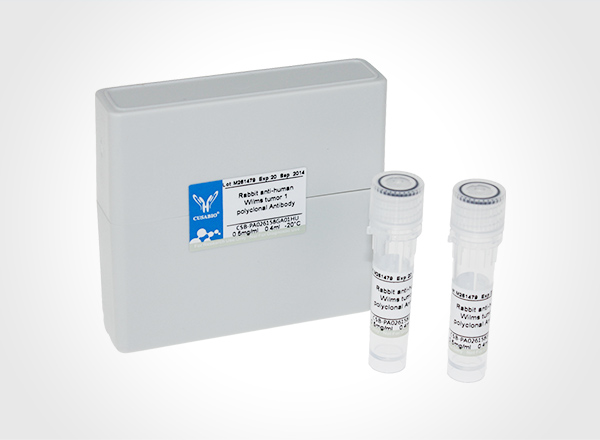
Liquid
Note: We will preferentially ship the format that we have in stock, however, if you have any special requirement for the format, please remark your requirement when placing the order, we will prepare according to your demand.
Upon receipt, store at -20°C or -80°C. Avoid repeated freeze.
Lead Time
Basically, we can dispatch the products out in 1-3 working days after receiving your orders. Delivery time maybe differs from different purchasing way or location, please kindly consult your local distributors for specific delivery time.
Note: All of our proteins are default shipped with normal blue ice packs, if you request to ship with dry ice, please communicate with us in advance and extra fees will be charged.
Usage
For Research Use Only. Not for use in diagnostic or therapeutic procedures.
E3 ubiquitin-protein ligase which accepts ubiquitin from an E2 ubiquitin-conjugating enzyme in the form of a thioester and transfers it to its substrates. Several substrates have been identified including the ARNTL/BMAL1, ARC, RAD23A and RAD23B, MCM7 (which is involved in DNA replication), annexin A1, the PML tumor suppressor, and the cell cycle regulator CDKN1B. Additionally, may function as a cellular quality control ubiquitin ligase by helping the degradation of the cytoplasmic misfolded proteins. Finally, UBE3A also promotes its own degradation in vivo. Plays an important role in the regulation of the circadian clock: involved in the ubiquitination of the core clock component ARNTL/BMAL1, leading to its proteasomal degradation. Acts as transcriptional coactivator of progesterone receptor PGR upon progesterone hormone activation. Acts as a regulator of synaptic development by mediating ubiquitination and degradation of ARC. Synergizes with WBP2 in enhancing PGR activity.; (Microbial infection) Catalyzes the high-risk human papilloma virus E6-mediated ubiquitination of p53/TP53, contributing to the neoplastic progression of cells infected by these viruses.
Gene References into Functions
UBE3A regulates an imprinted gene network involving DNA methylation and H2A.Z deposition.PMID:28925810
ANCR overexpression inhibited NSCLC cell migration and invasion and downregulated TGF-beta1 expression, while TGF-beta1 treatment showed no significant effects on ANCR expression but promoted NSCLC cell migration and invasion.PMID:30154397
Results from a study on gene expression variability markers in early-stage human embryos shows that UBE3A is a putative expression variability marker for the 3-day, 8-cell embryo stage.PMID:26288249
The divergence of E6 proteins from either MAML1 or E6AP binding preference is a major event in papillomavirus evolution.PMID:29281732
Data report the establishment and thorough characterization of a new iPSC line from a patient with Angelman syndrome, harboring a defined three-base pair deletion within the maternally inherited UBE3A allele. Using computer modeling of the mutant protein, a local destabilization around the catalytic cleft of UBE3A was proposed, likely impairing the binding of substrates.PMID:27484051
We demonstrate that E6AP regulates p27 expression by inhibiting its transcription in an E2F1-dependent manner. Concomitant knockdown of E6AP and p27 partially restores PC cell growth, supporting the contribution of p27 to the overall effect of E6AP on prostate tumorigenesis.PMID:28477016
novel IVS15-1G>C and c.2540 C>T mutations of the UBE3A gene probably underlie the AS in the two familiesPMID:29188609
Findings show neuronal overexpression of Ube3a isoform 2 causes phenotypes translatable to neurodevelopmental disorders.PMID:29016856
This study demonstrate the importance of the N-terminal domain of full length E6AP for diubiquitin chain specificity.PMID:29288669
our data demonstrates that E6AP facilitates ubiquitination and subsequent degradation of G-CSFR leading to attenuation of its downstream signaling and inhibition of granulocytic differentiation.PMID:28578910
Novel intragenic deletions within the UBE3A gene have been reported in two unrelated patients with Angelman syndrome.PMID:29162042
Data suggest ordered binding of UBCH7-ubiquitin to E6AP Site 1 (for E6AP-Cys820/ubiquitin thioester formation) and E6AP Site 2 (for subsequent chain elongation); proximal indexation accounts for symmetric structure of E6AP, requirement for oligomerization in polyubiquitin chain formation, and mechanistic rationale for Cys820-ubiquitin thioester as platform in chain assembly. (UBCH7 = ubiquitin-conjugating enzyme UBCH7)PMID:28924046
E6AP (UBE3A) abundance is down-regulated in a proportion of NSCLC (non-small cell lung cancer) patients, and this correlates with low p16INK4a in tumors and worse overall survival.PMID:28074012
study has broad implications for human disorders associated with UBE3A gain or loss of function and suggests that dysfunctional UBE3A might affect additional proteins and pathways that are sensitive to proteasome activityPMID:28559284
We found that KD of E6AP attenuates cancer cell growth by promoting cellular senescence in vivo, which correlates with restoration of tumor suppression by PML.PMID:27641331
HCV core protein inhibits E6AP expression via DNA methylation to protect itself from ubiquitin-dependent proteasomal degradation and stimulate virus propagation.PMID:27317649
E6AP suppresses breast cancer metastasis by regulating actin cytoskeleton remodeling through the control of ECT2 and Rho GTPase activity.PMID:27231202
Dube3a is neither imprinted nor preferentially expressed from the maternal allele in fly neurons.PMID:27599063
The ubiquitylation of beta-catenin by E6AP was dependent on its E3 ubiquitin ligase activity, but it was proteasome-independent and did not require HPV16-E6.PMID:27902311
All patients with Angelman syndrome based on a deletion had epilepsy. Epilepsy was present in 3/4 children with UBE3A mutation. Laughter-induced postural muscle tone loss occurred only among deletion casesPMID:27323320
The results of Trans-well and cell scratch tests showed that when ANCR expression was decreased, the invasion and migration abilities of SW620 cells significantly declined (both P < 0.05). In conclusion, these results suggest that lncRNA-ANCR could influence the invasion and migration of CRC cells by specifically binding to EZH2.PMID:27983539
There were total 55 molecularly confirmed Angelman syndrome(AS) between January 1995 to September 2015 for review. 65.5% of them were caused by maternal microdeletion, 10.9% by paternal uniparental disomy, 3.6% by imprinting center defect and 14.5% by UBE3A gene mutationPMID:27174604
The observation of Dup15q syndrome in individuals with maternally but not paternally inherited duplications of chromosome 15q11-q13, suggest that UBE3A drives the Angelman syndrome phenotype in this disorder. (Review)PMID:26585570
our results indicate that CSN6 is a positive regulator of E6AP and is important for cervical cancer development.PMID:26318036
Stable over-expression of E6-AP increases the proliferation and invasion of prostate tumor cells.PMID:26261538
Impairments in both synaptic plasticity and fear conditioning memory in UBE3A-deficient mice are significantly ameliorated by blocking SK2. These results elucidate a mechanism by which UBE3A directly influences cognitive function.PMID:26166566
Study describes an upstream regulatory mechanism for UBE3A and provides a comprehensive understanding of how missense mutations linked to Angelman syndrome and autism affect UBE3A protein function.PMID:26255772
The miR-375-UBE3A axis is important in modulating radiosensitivity of HR-HPV (+) cervical cancer.PMID:26224081
UBE3A dampens ERK pathway signalling in HPV E6 transformed HeLa cellsPMID:25815718
crystal structure of a ternary complex comprising full-length human papilloma virus type 16 (HPV-16) E6, the LxxLL motif of E6AP and the core domain of p53PMID:26789255
UBE3A may regulate the expression of annexin A2, resulting in promotion of proliferation and invasion and suppression of apoptosis in breast cancer cells.PMID:25816213
The activity of E6AP is controlled by noncovalent interactions with ubiquitin and allosteric activators such as the HPV E6 oncoprotein.PMID:26216987
E6-AP Lys(847) is required for the formation of Lys(48)-linked polyubiquitin chains.PMID:26161728
Mutated catalytically inactive forms of UBE3A may cause defects in overall proteasome function.PMID:25633294
Semirhythmic myoclonus is common in patients with Angelman syndrome caused by UBE3A mutations, and such myoclonic events are often life disablingPMID:24796722
study identifies E6AP and PML as potential prognostic markers in localized prostate carcinoma and supports a role for E6AP in driving the downregulation or loss of PML expression in prostate carcinomasPMID:25231954
111 (4.41%) probands had a nucleotide change classified as pathogenic or strongly favored to be pathogenic, 29 (1.15%) had a VUS, and 126 (5.0%) had a UBE3A nucleotide change classified as benign or strongly favored to be benignPMID:25212744
Identification of 50 proteins in the Drosophila brain that respond to changes in expression levels of the Drosophila ortholog of UBE3A, Dube3a, in neurons. Some of these genes responded at the transcription level.PMID:23626758
Since maternal interstitial duplications result in ASD but paternals do not consistently cause ASD this study implicates the maternally expressed UBE3A gene as the driving force behind the ASD phenotype in 15q Duplication syndrome.PMID:23495136
This study identified E6AP as a novel regulator of the Wnt signaling pathway, capable of cooperating with E6 in stimulating or augmenting Wnt/beta-catenin signaling, thereby possibly contributing to HPV carcinogenesis.PMID:25262469
Within all subgroups, expressive language performance was significantly reduced when compared to the receptive performance.PMID:24656292
The data suggest that UBE3A imprinting in neurons only requires UBE3A-ATS expression, and no other neuron-specific factors.PMID:24363065
In this review, a role for E6AP is defined in the pathobiology of neuro-developmental and neuro-aging diseases.PMID:24091829
The results of this study indicate the efficiency of the data integration and the significant interrelation between Ube3a and p53 in myocardial cells during apoptosis.PMID:24337433
DAta indicate that E6-associated protein (E6AP)/UBE3A oligomerization is required for polyubiquitin degradation signal assembly and that changes in oligomerization regulates such activity.PMID:24273172
pro-IL-1beta is degraded in a proteasome-dependent manner in E6-positive cells which is mediated via the ubiquitin ligase E6-AP and p53.PMID:23935506
This study screening UBE3A was performed in 43 patients who were referred for Angelman Syndrome but whom previous molecular diagnostic tests failed to provide a diagnosis.PMID:23416059
E6AP targeted C/EBPalpha protein degradation may provide a possible explanation for both loss of expression and/or functional inactivation of C/EBPalpha in myeloid leukemia.PMID:23598402
E6AP is an important regulator of ROS-mediated cellular senescence and cell death.PMID:22986523
Arc protein levels are controlled by E6AP at the transcriptional rather than at the posttranslational level.PMID:23671107