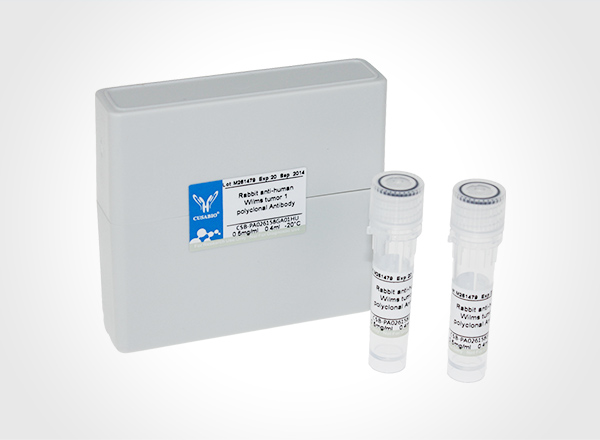
Liquid
Note: We will preferentially ship the format that we have in stock, however, if you have any special requirement for the format, please remark your requirement when placing the order, we will prepare according to your demand.
Upon receipt, store at -20°C or -80°C. Avoid repeated freeze.
Lead Time
Basically, we can dispatch the products out in 1-3 working days after receiving your orders. Delivery time maybe differs from different purchasing way or location, please kindly consult your local distributors for specific delivery time.
Note: All of our proteins are default shipped with normal blue ice packs, if you request to ship with dry ice, please communicate with us in advance and extra fees will be charged.
Usage
For Research Use Only. Not for use in diagnostic or therapeutic procedures.
Troponin T is the tropomyosin-binding subunit of troponin, the thin filament regulatory complex which confers calcium-sensitivity to striated muscle actomyosin ATPase activity.
Gene References into Functions
Cardiac troponin T at the NMJ region contributes to NMJ functional decline with ageing mainly in the fast-twitch skeletal muscle through interfering with PKA signalling.PMID:28419739
Hypertrophic cardiomyopathy pathophysiology is "mutation specific" in mice models carrying TNNT2 E163R and R92Q mutations.PMID:28735292
TnTA30V mutation attenuated Ca(2+)-activated maximal tension and length-mediated cross-bridge recruitment against alpha-myosin heavy chain but augmented these parameters against beta-myosin heavy chain, suggesting divergent contractile phenotypes.PMID:27769999
The shift from cTnT exon 5 inclusion to exclusion during development was delayed in the heart of Ts65Dn mice due to Dyrk1A overexpression.PMID:27049307
for hypertrophic cardiomyopathy (HCM)-causing mutations in TnT, Ca(2+)-sensitisation together with uncoupling in vitro is the usual response and both factors may contribute to the HCM phenotypePMID:27036851
cardiomyopathy mutation (R97L) in mouse cardiac troponin T has an effect on the muscle length-mediated recruitment of crossbridges and is modified divergently by alpha- and beta-myosin heavy chainPMID:26792537
Data indicate that high-sensitivity troponin T (hs-TnT) levels are influenced by myocardial dysfunction/heart failure (HF) in acute exacerbation of chronic obstructive lung disease (AECOPD), but provide independent prognostic information.PMID:26754170
cTnT elevation emerged as a strong, independent predictor of 30-day mortality and remained a modest, but significant, predictor throughout 2 years post transcatheter aortic valve implantation.PMID:26896474
MBPC and troponin-I phosphorylation modulate myofilament length-dependent activationPMID:26453301
Data indicate that the troponin T Tnnt2(MerCreMer/+) mouse model also provides a useful tool to trace myocardial lineage during development.PMID:26010701
TnT mutation F72L leads to contractile changes that are linked to dilated cardiomyopathy in the presence of MYH6 and hypertrophic cardiomyopathy in the presence of MYH7.PMID:26342069
TNT increases slightly during low flux-hemodialysis. High-flux hemodialysis eliminates the biomarker and can mask increases caused by cardiac disease.PMID:25744196
Mice carrying the Delta160E or E163R mutations exhibit sarcomeric disruption.PMID:24480310
Cardiac muscle activation blunted by a mutation to the regulatory component, troponin T.PMID:23897817
Study is the first to show that the interplay between the N terminus of cTnT and the overlapping ends of contiguous Tm effectuates different states of Tm on the actin filament.PMID:23748972
We conclude that the observed clinical severity of the cTnT Delta160E mutation is caused by a combination of direct sarcomeric disruption coupled to a profound dysregulation of Ca(2+) homeostasisPMID:23434821
Report two distinct functional regions within the N-terminus of cTnT with divergent roles in mediating cardiac contractile activation.PMID:23207592
findings provide new evidence to demonstrate that R92 mutation effects on cardiac contractile function and dynamics are influenced by myosin heavy chain isoformPMID:22884844
role of N-terminal extension of cardiac troponin T in cardiac thin filamentPMID:23009843
results showed dominantly negative effects of the coexistence of fast skeletal muscle TnT and cardiac TnT on contractile kinetics absent the influence of extracellular matrix; a dilatative remodeling at the cellular level was observed, supporting a pathological significancePMID:22538236
Data sugget that knockdown or downregulation of CYP2E1 might be a therapeutic strategy to control the development of dilated cardiomyopathy (DCM) after mutations of cTnT(R141W) or other factors.PMID:22665122
Correlation of molecular and functional effects of mutations in cardiac troponin T linked to familial hypertrophic cardiomyopathyPMID:22334656
Pak1-knockout hearts have reduced recovery of myocardial performance after global I/R injury concomitant with changes in troponin-T and MLC2 phosphorylation and protein association.PMID:22037191
One major and two minor alternatively spliced isoforms of troponin T have been purified from wild-type healthy adult mouse heart.PMID:21639091
TCDD represses the expression of the cardiac development-specific Nkx2.5 homeobox transcription factor, of cardiac troponin-T and of alpha- and beta-myosin heavy chains.PMID:20130022
Results indicated a pathogenic mechanism in which the coexistence of functionally different cTnT variants in cardiac muscle reduces myocardial efficiency due to desynchronized thin filament activation.PMID:20418479
Cardiomyopathy-causing deletion K210 in cardiac troponin T alters phosphorylation propensity of sarcomeric proteins.PMID:20079745
Studies show that the rat Tnnt2-rtTA;TetO-Cre mice transgenic line a valuable genetic tool for analysis of spatiotemporal gene function and cardiomyocyte lineage tracing during developmental and postnatal period.PMID:20014345
Identification of a functionally critical protein kinase C phosphorylation residuePMID:12832403
Transgenic mouse models expressing a missense mutation (R92Q) or a splice donor site mutation (trunc) in the cardiac troponin T (cTnT) showed that hypertrophic signaling is differentially affected by distinct mutations in cTnT.PMID:15466629
Changes in thin filament structure caused by single amino acid substitutions lead to differences in the biophysical properties of cTnT and alter cardiomyopathy pathogenesis.PMID:16326803
The mu-calpain-mediated proteolytic modification of TnT may act as an acute mechanism to adjust muscle contractility under stress conditions.PMID:16981728
the hypervariable NH2-terminal region modulates the conformation and function of the TnT core structure to fine-tune muscle contractility.PMID:17260966
Independent FHC-relted Tnt mutations exhibit specific alterations in myocellular and calcium kinetics.PMID:17490679
R-92L and R-92W mutations in the TM-binding domain of cardiac TnT alter thin filament structure and flexibility sufficiently to cause severe defects in both whole heart energetics and contractile performancePMID:17526570
Transgenic mice expressing chicken TNNT3 and cTNT in myocardium showed ventricular dysfunction and chronic myocardial hypertrophy and degeneration.PMID:17959729
Plasma troponin T was at a similar level in beta1(-/-), beta1(+/+) and beta1(-/-) BM mice treated with 30 min ischaemia and 3 h reperfusion.PMID:18296493
Differential interactions among the sarcomeric proteins containing cTnT-Q92 or cTnT-W141 are responsible for the contrasting phenotypes of hypertrophic cardiomyopathy or dilated cardiomyopathy, respectively.PMID:18349139
Data found that fTnT normally associated with fast twitch skeletal muscle were present at significant levels in the thoracic aorta, and that fTnT transcripts were expressed in the smooth muscle layer of mouse blood vessels of all sizesPMID:18548613
Absence of one Tnnt2 allele leads to a mild deficit in transcript but not protein, leading to a normal cardiac phenotype.PMID:18612386
These findings indicate cTnT plays a critical role in sarcomere assembly during myofibrillogenesis in the embryonic heart, and that the membrane excitation and intracellular Ca(2+) handling systems develop independently of the contractile system.PMID:18671960
The direct repeat and overlapping Troponin T GATA site are critical for the expression level and cardiac specificity.PMID:18951515
Data indicate that UT-B deletion caused the dynamic expression regulation of TNNT2 and ANP, and these proteins may provide new clues to investigate the molecular events involved in cardiac conduction.PMID:19132680
peak releases of TnT or TnT fragments from decomposition of a large number of myofibrils in acute myocardial infarction may breach the cellular protection of proteolytic degradationPMID:19395545
cTnT mutations in the TNT1 domain result in mutation-specific effects and a different temporal onset of altered myocellular mechanics, Ca(2+) kinetics, and Ca(2+) homeostasis; may contribute to clinical variability in familial hypertrophic cardiomyopathyPMID:19502551
Results describe the functional effects of N-terminal deletion and phosphorylation in cardiac troponin T on Ca(2+) dependence of myofilament isometric force production, isometric ATPase rate, and thin filament sliding speed.PMID:19586048