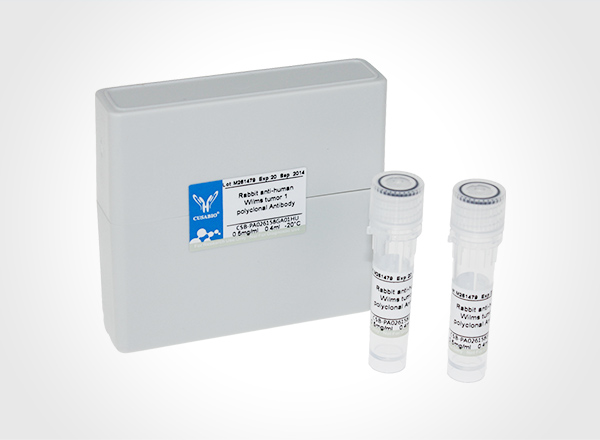
Liquid
Note: We will preferentially ship the format that we have in stock, however, if you have any special requirement for the format, please remark your requirement when placing the order, we will prepare according to your demand.
Storage
Upon receipt, store at -20°C or -80°C. Avoid repeated freeze.
Lead Time
Basically, we can dispatch the products out in 1-3 working days after receiving your orders. Delivery time maybe differs from different purchasing way or location, please kindly consult your local distributors for specific delivery time.
Note: All of our proteins are default shipped with normal blue ice packs, if you request to ship with dry ice, please communicate with us in advance and extra fees will be charged.
Usage
For Research Use Only. Not for use in diagnostic or therapeutic procedures.
Putative receptor-activated non-selective calcium permeant cation channel. It is activated by innocuous (warm) temperatures and shows an increased response at noxious temperatures greater than 39 degrees Celsius. Activation exhibits an outward rectification. May associate with TRPV1 and may modulate its activity. Is a negative regulator of hair growth and cycling: TRPV3-coupled signaling suppresses keratinocyte proliferation in hair follicles and induces apoptosis and premature hair follicle regression (catagen).
Gene References into Functions
Data suggest that Thr264 in TRPV3 is key ERK1 phosphorylation site mediating EGFR-induced sensitization of TRPV3 to stimulate signaling pathways involved in regulating skin homeostasis. (TRPV3 = transient receptor potential cation channel subfamily V member-3; ERK1 = extracellular signal-regulated kinase-1; EGFR = epidermal growth factor receptor)PMID:29084846
This study identified a direct regulatory effect of MBTPS2 on TRPV3 which can partially contribute to the overlapping clinical features of IFAP and Olmsted syndromes under a common signaling pathway.PMID:28717930
TRPV3 may contribute to pruritus in burn scars through TSLP.PMID:29140280
the expression of transient receptor potential vanilloid-1 (TRPV1), transient receptor potential vanilloid-2 (TRPV2) and transient receptor potential vanilloid-3 (TRPV3) channels in native human odontoblasts, was examined.PMID:28905239
TRPV3 was highly expressed in the infiltrating eosinophils and mucosal epithelium of the nasal polyps of ECRS, and further that the more severe the refractoriness was after surgery, the higher the TRPV3 expression was in nasal polyps.PMID:28462829
Data indicate that the restoration of a single residue that is apparently missing in the use-dependent homologs could largely eliminate the use dependence of heat sensitivity of vanilloid receptor transient receptor potential 3 (TRPV3).PMID:28154143
*We describe two cases of Olmsted-like syndrome in a Mongolian family. *The underlying cause was a previously undescribed G573V point mutation in TRPV3.PMID:27273692
The results of the present study show that polymorphism of TRPV3 contributed towards symptom severity in FM.PMID:27079220
A novel mutation in TRPV3 gene causes atypical familial Olmsted syndrome in a Chinese family.PMID:26902751
High Transient receptor potential vanilloid 3 protein expression could promote the proliferation of lung cancer cells. Transient receptor potential vanilloid 3 inhibition decreased [Ca2+]i of lung cancer cells and cell cycle arrest at the G1/S boundary.PMID:27023518
these data suggest that TRPV3 sparklets cause dilation of cerebral parenchymal arterioles by activating IK and SK channels in the endotheliumPMID:26453324
TRPV3 missense mutation identified as a cause of the rare Olmsted syndrome.PMID:26067147
TPRV3 was significantly elevated in the epidermis of burn scars with pruritus.PMID:24695993
Study illustrates the antiadipogenic role of TRPV3 in the adipocytes.PMID:25774551
this study provides powerful tools to broaden our understanding of ligand interaction with TRPV channels, and the availability of purified human TRPV3 opens up perspectives for further structural and functional studiesPMID:25829496
A mutation in TRPV3 causes focal palmoplantar keratoderma in a Chinese family.PMID:25285920
Demonstrate similarities but also notable differences in TRPV3 pharmacology between recombinant and native systems.PMID:23848361
a TRPV3 mutation has a role in Olmsted syndrome [case report]PMID:24463422
TRPV3 missense mutation found in patient with Olmsted syndrome.PMID:24452206
TRPV3-ARD with characteristic finger 3 loop likely plays an important role in channel function and pharmacology.PMID:24248473
TRPV3 has roles in skin physiology and in certain skin diseases [review]PMID:23800054
The Olmsted syndrome patient was found to harbour a previously undescribed 1718G-C transversion in TRPV3, causing a G573A point mutation with immunological dysregulation function.PMID:23692804
Nucleotide sequencing of five additional affected individuals also revealed missense mutations in TRPV3.PMID:22405088
Nominal association was confirmed for TRPV3 rs7217270 in migraine with aura and TRPV1 rs222741 in the overall migraine group.PMID:22162417
It was concluded that the sensitization of TRPV3 is intrinsic to the channel itself and occurs as a result of hysteresis of channel gating.PMID:22006988
TRPV3 channel is expressed in skin, its likely role is to detect noxious cold temperatures.PMID:21490957
PI(4,5)P(2)-dependent modulation of TRPV3 activity represents an attractive mechanism for acute regulation of keratinocyte signaling cascades that control cell proliferation and the release of autocrine and paracrine factors.PMID:21321070
Farnesyl pyrophosphate is the firstly identified endogenous TRPV3 activator that causes nociceptionPMID:20395302
A multiligand binding site for ATP and calmodulin previously identified in the TRPV1 ankyrin repeat domain is conserved in TRPV3 and TRPV4, but not TRPV2.PMID:19864432
member of the vanilloid channel family that is expressed in skin, tongue, dorsal root ganglion, trigeminal ganglion, spinal cord and brain; a calcium-permeable temperature-sensitive cation channelPMID:12077604
temperature-sensitive (but capsaicin-insensitive) vanilloid receptor-like protein; may represent an additional vanilloid receptor subunit involved in the formation of heteromeric vanilloid receptor channelsPMID:12077606
Ca(2+) inhibits TRPV3 from both the extracellular and intracellular sides. The inhibition is sequentially reduced, appearing as sensitization to repetitive stimulations.PMID:18178557
vanilloid type 3 (TRPV3) channel is crucially involved in pruritic dermatitis [review]PMID:19209153
Abundantly expressed in CNS. Widely expressed at low levels. Detected in dorsal root ganglion (at protein level). Expressed in the keratinocyte layers of the outer root sheath and, to lesser extent, to the matrix of the hair follicles (at protein level).