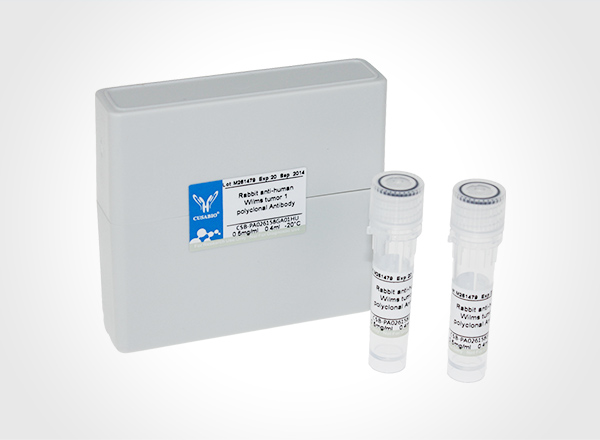
Liquid
Note: We will preferentially ship the format that we have in stock, however, if you have any special requirement for the format, please remark your requirement when placing the order, we will prepare according to your demand.
Upon receipt, store at -20°C or -80°C. Avoid repeated freeze.
Lead Time
Basically, we can dispatch the products out in 1-3 working days after receiving your orders. Delivery time maybe differs from different purchasing way or location, please kindly consult your local distributors for specific delivery time.
Note: All of our proteins are default shipped with normal blue ice packs, if you request to ship with dry ice, please communicate with us in advance and extra fees will be charged.
Usage
For Research Use Only. Not for use in diagnostic or therapeutic procedures.
Calcium channel mediating constitutive calcium ion entry. Its activity is increased by reduction in extracellular osmolarity, by store depletion and muscarinic receptor activation. In addition, forms heteromultimeric ion channels with TRPM1 which are permeable for calcium and zinc ions.
Gene References into Functions
this study shows that differential expression of TRPM3 and Ca2+ flux between NK cell subtypes may provide evidence for their role in the pathomechanism involving NK cell cytotoxicity activity in chronic fatigue syndrome/myalgic encephalomyelitisPMID:27727448
rs10780946 TRPM3 polymorphism is associated with asthma-exacerbated respiratory disease susceptibility.PMID:26891941
Activation of TRPM3 channels increases the transcriptional activation potential of c-Fos in HEK293 cells.PMID:26493679
This is the first study to examine the involvement of TRPM channel gene variations on the risk of SSc incidence. Our results suggest roles of TRPM3 and TRPM5 gene variants in the susceptibility to or clinical expression of Systemic sclerosisPMID:26546534
The TRPM3 activity is rapidly and reversibly inhibited by activation of phosphatases.PMID:26123194
TRPM3 is a phosphoinositide-dependent ion channel.PMID:26123195
Missense mutation in the cation channel, TRPM3, underlies inherited cataract and glaucoma.PMID:25090642
TRPM3 channel activation changes the gene expression pattern of the cells by activating transcription of c-Jun-, ATF2-, and TCF-controlled genes.PMID:25576487
The von Hippel-Lindau tumor suppressor (VHL) represses TRPM3 directly through miR-204 and indirectly through another miR-204 target, Caveolin 1.PMID:25517751
Pregnenolone sulfate is a powerful activator of TRPM3-mediated gene transcription, while transcription is completely inhibited by mefenamic acid in cells expressing activated TRPM3 channels.PMID:24895737
Data using recombinant proteins expressed in vascular endothelial cells suggest that SigmaR1 (sigma 1-type opioid receptor) is not involved in regulation of calcium signaling via TRPC5/TRPM3 (transient receptor potential cation channels C5/M3).PMID:23121507
Progesterone (0.01-10muM) suppressed TRPM3 activity evoked by pregnenolone sulphate.PMID:22000496
Calmodulin and S100A1 protein interact with N terminus of TRPM3 channel.PMID:22451665
The inhibition of TRPM1 by zinc ions is primarily due to a short stretch of seven amino acids present only in the pore region of TRPM1 but not of TRPM3.PMID:21278253
Our data establish that TRPM3 channels constitute a regulated entry pathway for zinc ions in pancreatic beta-cellsPMID:20401728
data suggest functional relevance of TRPM3 in contractile and proliferating phenotypes of vascular smooth muscle cellsPMID:20360246
The hTRPM3 gene is comprised of 24 exons and maps to chromosome 9q-21.12 and is composed of 1555 amino acids with the characteristic six-transmembrane domain of TRPs and is expressed in kidney and, at lesser levels, in brain, testis, and spinal cordPMID:12672827
TRPM3 is the first ion channel activated by sphingolipids.PMID:15550678
the divalent cation selectivity of TRPM3 channels is regulated by altenrative splicingPMID:15824111
we give an overview of the identified TRPM3 variants and compare their functional properties--{REVIEW}PMID:17217062
TRPM3 did not reveal a otosclerosis-causing mutationPMID:18224337
Expressed primarily in the kidney and, at lower levels, in brain, testis, ovary, pancreas and spinal cord. Expression in the brain and kidney was determined at protein level. In the kidney, expressed predominantly in the collecting tubular epithelium in t