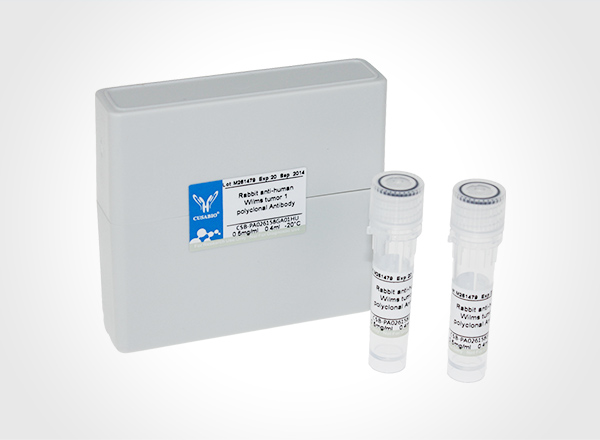
Liquid
Note: We will preferentially ship the format that we have in stock, however, if you have any special requirement for the format, please remark your requirement when placing the order, we will prepare according to your demand.
Upon receipt, store at -20°C or -80°C. Avoid repeated freeze.
Lead Time
Basically, we can dispatch the products out in 1-3 working days after receiving your orders. Delivery time maybe differs from different purchasing way or location, please kindly consult your local distributors for specific delivery time.
Note: All of our proteins are default shipped with normal blue ice packs, if you request to ship with dry ice, please communicate with us in advance and extra fees will be charged.
Usage
For Research Use Only. Not for use in diagnostic or therapeutic procedures.
Forms nonselective divalent cation-conducting channels which mediate the influx of Na(2+), Ca(2+), Mg(2+), Mn(2+), Ba(2+), and Ni(2+) into the cytoplasm, leading to membrane depolarization. Impermeable to zinc ions. In addition, forms heteromultimeric ion channels with TRPM3 which are permeable for calcium and zinc ions. Essential for the depolarizing photoresponse of retinal ON bipolar cells. It is part of the GRM6 signaling cascade. May play a role in metastasis suppression. May act as a spontaneously active, calcium-permeable plasma membrane channel.
Gene References into Functions
We have confirmed the TRPM1 36,445 bp deletion is a founder mutation in the Ashkenazi-Jewish (AJ) population with a carrier rate of 1 in 50. We have also confirmed the 35,741 bp deletion in the CACNA2D4 gene is a founder mutation in the AJ population with a carrier rate of 1 in 56.PMID:28726569
These results show that joint tests of main effects and gene-gene interaction reveal associations at some novel loci that were missed when considering main effects alone.PMID:28813576
Loss of TRPM1 mRNA expression appears to be a crucial event in the progression of melanoma to a more malignant, metastatic phenotype.PMID:27987328
This study reveals the structural underpinnings of TRPML1's regulation, assembly and pathogenesis.PMID:28112729
Affected family members harboured the homozygous 1-bp deletion c.2394delC in exon 18 of the TRPM1 gene, whereas their unaffected parents were heterozygous carriers.PMID:27084085
genotype-phenotype correlations showed that this eye phenotype was secondary to homozygous deletion of TRPM1, the gene responsible for autosomal recessive congenital stationary night blindness. The main differential diagnosis is ceroid lipofuscinosis.PMID:24668847
these data indicate that purified TRPM1 is mostly dimeric. The three-dimensional structure of TRPM1 dimers is characterized by a small putative transmembrane domain and a larger domain with a hollow cavity.PMID:25112866
visual deficits in melanoma associated retinopathy are caused by the uptake of TRPM1 autoantibodies into ON-bipolar cellsPMID:23936334
This is the first reported case of a melanoma-associated retinopathy diagnosed utilizing the innovative approach of testing for serum TRPM1 autoantibodies.PMID:24053997
These data suggest differences in coupling of TRPM1 function to mGluR6 signaling explain different cellular responses to glutamate in the retina and the skin.PMID:23452348
We found 13 different mutations in the TRPM1 gene in congenital stationary night blindness.PMID:23714322
The results expand the mutation spectrum of NYX, CACNA1F and GRM6. They also suggest that NYX mutations are a common cause of congenital stationary night blindness (CSNB),No variations were found in TRPM1.PMID:22735794
present investigation found no evidence for an association between sequence variation at the TRPM1 gene and albumin-to-creatinine ratio in Mexican Americans, although it appears to have modest influence on T2DM risk factorsPMID:21439949
In the human retina TRPM1 is expressed on ON-bipolar cell dendrites that invaginate photoreceptor terminals and is also expressed on the synaptic ribbons of a subclass of rods, suggesting a dual function for TRPM1 in the ON-pathway.PMID:21896854
A proteomic search for proteins associated with nyctalopin in the retina identifies TRPM1 as the binding partner.PMID:21832182
This study reveals TRPM1 to be one of the autoantigens targeted by autoantibodies in at least some patients with cancer-associated retinopathy or melanoma-associated retinopathy associated with retinal ON bipolar cell dysfunction.PMID:21611200
Data demonstrate that TRPM1 proteins are bona fide ion-conducting plasma membrane channels.PMID:21278253
summarize and discuss our present knowledge of TRPM1: its discovery, expression, regulation, and proposed functions in skin and eyePMID:21290293
This review covers the significant discoveries related to the physiological function and regulatory mechanism of the TRPM1 channel in retinal ON bipolar cells and the association of human TRPM1 mutations.PMID:20846719
TRPM1 is mutated in patients with autosomal-recessive congenital stationary night blindness.PMID:20346272
Human TRPM1 mutations are associated with the complete form of congenital stationary night blindness in Japanese patients.PMID:20300565
studies identify MITF as a major transcriptional regulator of TRPM1 and suggest that its prognostic value may be linked to MITF-mediated regulation of cellular differentiationPMID:14744763
These findings suggest that the pattern of TRPM1 mRNA expression may be helpful in the differentiation of Spitz nevi and nodular melanomas.PMID:19396153
Data suggest that TRPM1 is an ion channel whose function is critical to normal melanocyte pigmentation and is thus a potential target for pigmentation disorders.PMID:19436059
The regulation of TRPM1 by ultraviolet and its role in melanogenesis in epidermal melanocytes are reported.PMID:19587221
Recessive mutations of TRPM1 abrogate ON bipolar cell function and cause complete congenital stationary night blindness.PMID:19878917
[REVIEW] TRPM1 and TRPM2, are localized in intracellular compartments and are involved in melanin synthesis and oxidative stress-induced cell deathPMID:19887679
Mutations in TRPM1 are a common cause of complete congenital stationary night blindness.PMID:19896109
TRPM1 is mutated in patients with autosomal-recessive complete congenital stationary night blindness.PMID:19896113
Expressed in the retina where it localizes to the outer plexiform layer. Specifically, it is expressed in retinal bipolar cells (BPCs) of the ON subtype. Highly expressed in benign melanocytic nevi and diffusely expressed in various in situ melanomas, but