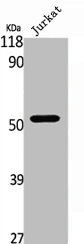
Synthesized peptide derived from the Internal region of Human TRAF2.
Immunogen Species
Homo sapiens (Human)
Conjugate
Non-conjugated
Isotype
IgG
Purification Method
The antibody was affinity-purified from rabbit antiserum by affinity-chromatography using epitope-specific immunogen.
Concentration
It differs from different batches. Please contact us to confirm it.
Buffer
Liquid in PBS containing 50% glycerol, 0.5% BSA and 0.02% sodium azide.
Tested Applications
WB, IHC, ELISA
Storage
Upon receipt, store at -20°C or -80°C. Avoid repeated freeze.
Lead Time
Basically, we can dispatch the products out in 1-3 working days after receiving your orders. Delivery time maybe differs from different purchasing way or location, please kindly consult your local distributors for specific delivery time.
Note: All of our proteins are default shipped with normal blue ice packs, if you request to ship with dry ice, please communicate with us in advance and extra fees will be charged.
Usage
For Research Use Only. Not for use in diagnostic or therapeutic procedures.
Regulates activation of NF-kappa-B and JNK and plays a central role in the regulation of cell survival and apoptosis. Required for normal antibody isotype switching from IgM to IgG. Has E3 ubiquitin-protein ligase activity and promotes 'Lys-63'-linked ubiquitination of target proteins, such as BIRC3, RIPK1 and TICAM1. Is an essential constituent of several E3 ubiquitin-protein ligase complexes, where it promotes the ubiquitination of target proteins by bringing them into contact with other E3 ubiquitin ligases. Regulates BIRC2 and BIRC3 protein levels by inhibiting their autoubiquitination and subsequent degradation; this does not depend on the TRAF2 RING-type zinc finger domain. Plays a role in mediating activation of NF-kappa-B by EIF2AK2/PKR. In complex with BIRC2 or BIRC3, promotes ubiquitination of IKBKE.
Gene References into Functions
The TRAIP coiled-coil domain altered its stoichiometry between dimer and trimer in a concentration-dependent manner. Additionally, the TRAIP RING domain induced even higher-ordered assembly, which was necessary for interacting with the TRAF-N domain of TRAF2 but not TRAF1.PMID:30127245
high levels of CASC9.5 expression promote the proliferation, metastasis and metabolism of lung adenocarcinoma cells and might serve as a prognostic indicator.PMID:29311633
down-regulation of USP48 increases E-cadherin expression and epithelial barrier integrity through reducing TRAF2 stabilityPMID:28874458
DR5-Cbl-b/c-Cbl-TRAF2 complex inhibited TRAIL-induced apoptosis by promoting TRAF2-mediated polyubiquitination of caspase-8 in gastric cancer cells.PMID:28972304
CPNE1 overexpression can upregulate TRAF2 expression in prostate cancer DU-145 cells as determined by Western blotting and immunofluorescence assays.PMID:29151113
TRAF2 functions as an important modulator in tumor metastasis and tumor microenvironment formation and is a novel independent prognostic factor of gastric cancer.PMID:28482378
High expression of TRAF2 can predict poorer prognosis of GBM and was identified as an independent biomarker in GBM prognosis.PMID:28926524
TRAF2 can influence in vitro growth of TRAIL-treated DU-145 cells at least partially via regulating SIRT1 expression.PMID:28667915
Intestinal I/R induced the membrane translocation and phosphorylation of PKCzeta. Pretreatment with the PKCzeta activator phosphatidylcholine remarkably attenuated gut injury by suppressing apoptosis. H/R induced PKCzeta to combine with TRAF2, which was phosphorylated by PKCzeta at Ser(55), but not at Ser(11), under intestinal I/R or H/R conditionsPMID:28726782
Both S1P and caspase-8 are critical for TRAF2 stabilization, polyubiquitination, subsequent activation of JNK/AP1 signaling and MMP1 expression and final promotion of cell invasion.PMID:28482915
Results showed that high expression of TRAF2 was significantly associated with tumor stage of prostate cancer.PMID:28855498
The addition of nanomolar concentration of TRAF2 in GUVs also seems to exert a mechanical action.PMID:28499815
TRAF2 and OTUD7B govern a ubiquitin-dependent switch that regulates mTORC2 signallingPMID:28489822
destabilization of TRAF2 by miR-17 reduced the ability of TRAF2 to associate with cIAP2, resulting in the downregulation of TNF-alpha-induced NF-kappaBp65, c-Jun, and STAT3 nuclear translocation and the production of IL-6, IL-8, MMP-1, and MMP-13 in human rheumatoid arthritis synovial fibroblasts.PMID:27534557
HOXA1-mediated activation of NF-kappaB is non-transcriptional and the RBCK1 and TRAF2 influences on NF-kappaB are epistatic to HOXA1PMID:27382069
RIPK1 collaborates with TRAF2 to inhibit murine and human hepatocarcinogenesis.PMID:28017612
Study presents the characterization of the peptide binding preferences of TRAFs 2, 3, and 5 using deep mutational scanning. The three TRAF proteins demonstrated different preferences for binding to members of the CD40 library, and three peptides from that library individually showed striking differences in affinity for the three TRAFs.PMID:26779844
TRAF2 expression was increased in gastric cancer patients as a result of DNA hypomethylation.PMID:26823737
Data show that when death receptor 5 (DR5) is suppressed, caspase-8 may recruit and stabilize TNF receptor-associated factor 2 (TRAF2) to form a metastasis and invasion signaling complex, resulting in activation of ERK signaling.PMID:26510914
these findings reveal a novel mechanism by which TRAF2 mediates Lys63-linked ubiquitination of DUSP14, leading to DUSP14 activation in T cellsPMID:26521044
There was a significant positive correlation between TRAF2 and TRAF4 expression levels in malignant pleural effusion cellsPMID:26331901
Data show that ectopic expression of interferon regulatory factor 1 (IRF-1) reduces NF-kappa B activity and suppresses TNF receptor-associated factor 2 (TRAF2) and inhibitor of apoptosis 1 protein (cIAP1) expression in breast cancer cells.PMID:26011589
The results identify TRAF2 as an important biological suppressor of necroptosis in vitro and in vivo.PMID:25882049
MAVS50, exposing a degenerate TRAF-binding motif within its N-terminus, effectively competed with full-length MAVS for recruiting TRAF2 and TRAF6PMID:26221961
Presented is the trimer-to-monomer equilibrium transition of the TRAF2 C-terminal domain using both chemical (dilution/guanidinium hydrochloride) and mechanical stress (high pressure) to induce the dissociation of the native protein into subunits.PMID:26390021
Knockdown of IRE1alpha by siRNA dramatically abrogated CXC195-induced activation of TRAF2, ASK and JNK, formation of an IRE1alpha-TRAF2-ASK1 complex and caspase- and mitochondrial-dependent apoptosis in T24 cellsPMID:25797626
PP4R1 could mediate the dephosphorylation of TRAF2 Ser11.PMID:25134449
TRAF2 acts as an antagonist of TRAIL- and CD95L-induced necroptosis.PMID:25299769
Data indicate that TRAF interacting protein TRIP negatively regulates the TNFR-associated factor 2 (TRAF2) ubiquitin-dependent pathway by modulating the TRAF2-sphingosine 1-phosphate (S1P) interaction.PMID:25716317
The phosphorylation of TRAF2 at serine 11 is essential for the survival of cancer cells harboring TRAF2 amplification. Observations identify TRAF2 as a frequently amplified oncogene.PMID:24362534
preventing CD40-TRAF2,3 or CD40-TRAF6 interaction inhibits pro-inflammatory responses in human non-haematopoietic cells.PMID:25051892
During stress-induced mitochondrial hyperfusion, MULAN forms a complex with TRAF2 and modulates its ubiquitylation, signifying that TRAF2 may serve as an ubiquitylated transmitter of NF-kappaB signaling in this pathwayPMID:24841215
GSTP1-1's TRAF2-binding region involves the GSH-binding site.PMID:24457959
RNASET2 contributes to vitiligo pathogenesis by inhibiting TRAF2 expression.PMID:24457966
Data indicate that in monocyte- derived macrophages (MDMs) acutely infected with HIV-1 and treated with HCV rCore and HIV-1 rNef, the HIV-1 replication depends on an upstream signal mediated through TRAF2, TRAF5 and TRAF6.PMID:23774506
TRAF2 is a proviral factor for vaccinia virus that plays a role in promoting efficient viral entry, most likely via the plasma membrane.PMID:24429366
IpaH0722 dampens the acute inflammatory response by preferentially inhibiting the PKC-mediated activation of NF-kappaB by ubiquitinating TRAF2, a molecule downstream of PKC, and by promoting its proteasome-dependent degradation.PMID:23754945
it is hypothesized that ZC3H15 may interact with TRAF-2 functionally within the NF-kappaB pathway, and may be explored as a potential target in acute myeloid leukemiaPMID:23624947
The results of this study showed TRAF2 is upregulated in relapsing-remitting multiple sclerosis.PMID:23595117
TRAF2 can predict relapse of ulcerative colitisPMID:23638224
Data indicate that the Src homology 3 domain-containing GEF (SGEF) promotes fibroblast growth factor-inducible 14 (Fn14) proinvasive signaling in glioblastoma via TNF receptor-associated factor 2 (TRAF2).PMID:23775076
Authors found that rotavirus Non-Structural Protein-1 (NSP1) interacts with TRAF2 and degrades it in a proteasome dependent manner.PMID:23890813
activation of TRAF-1 may be early events in the pathogenesis of inflammatory bowel diseasePMID:23414308
Data iindicate that TRAF2 affects the localization and function of TRAF4 in breast cancer cell lines.PMID:23743189
Parkin suppresses inflammation and cytokine-induced cell death by promoting the proteasomal degradation of TRAF2/6.PMID:23608757
RAD23A down-regulated TRAF2 protein level through ubiquitin-proteasome system.PMID:23357418
These results reveal a critical role for the MAPK8 activation pathway through TRAF2 and RIPK1 for TNFSF10-induced autophagy that blunts apoptosis in cancer cells.PMID:23051914
Changes in expression levels of TNFSF4 and TRAF2 mRNAs may significantly correlate with the pathogenesis of SLE, the disease activity and different clinical features of lupus, particularly lupus nephritis, atherosclerosis and arthritisPMID:22847298
A novel radioresistance mechanism through functional orchestration of rpS3, TRAF2, and NF-kappaB in non-small cell lung cancer cells, is reported.PMID:23188828
Show
More
Hide
All
Subcellular Location
Cytoplasm.
Protein Families
TNF receptor-associated factor family, A subfamily