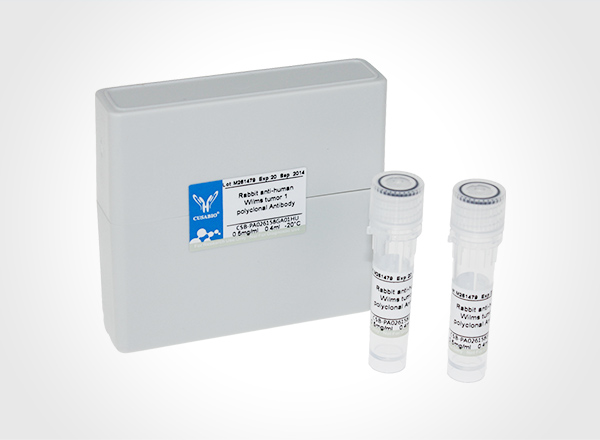
Putative MAPK activating protein PM14 antibody; Putative MAPK-activating protein PM14 antibody; Putative NF kappa B activating protein 20 antibody; Putative NF-kappa-B-activating protein 20 antibody; T2BP antibody; TIFA antibody; TIFA_HUMAN antibody; TRAF interacting protein with FHA domain containing protein A antibody; TRAF-interacting protein with FHA domain-containing protein A antibody; TRAF2 binding protein antibody; TRAF2-binding protein antibody
Raised in
Rabbit
Species Reactivity
Human
Immunogen
Recombinant Human TRAF-interacting protein with FHA domain-containing protein A protein (1-184AA)
Immunogen Species
Homo sapiens (Human)
Conjugate
Biotin
Clonality
Polyclonal
Isotype
IgG
Purification Method
>95%, Protein G purified
Concentration
It differs from different batches. Please contact us to confirm it.
Liquid
Note: We will preferentially ship the format that we have in stock, however, if you have any special requirement for the format, please remark your requirement when placing the order, we will prepare according to your demand.
Upon receipt, store at -20°C or -80°C. Avoid repeated freeze.
Lead Time
Basically, we can dispatch the products out in 1-3 working days after receiving your orders. Delivery time maybe differs from different purchasing way or location, please kindly consult your local distributors for specific delivery time.
Note: All of our proteins are default shipped with normal blue ice packs, if you request to ship with dry ice, please communicate with us in advance and extra fees will be charged.
Usage
For Research Use Only. Not for use in diagnostic or therapeutic procedures.
Adapter molecule that plays a key role in the activation of proinflammatory NF-kappa-B signaling following detection of bacterial pathogen-associated molecular pattern metabolites (PAMPs). Promotes activation of an innate immune response by inducing the oligomerization and polyubiquitination of TRAF6, which leads to the activation of TAK1 and IKK through a proteasome-independent mechanism. TIFA-dependent innate immune response is triggered by ADP-D-glycero-beta-D-manno-heptose (ADP-Heptose), a potent PAMP present in all Gram-negative and some Gram-positive bacteria: ADP-Heptose is recognized by ALPK1, which phosphorylates TIFA at Thr-9, leading to TIFA homooligomerization and subsequent activation of proinflammatory NF-kappa-B signaling.
Gene References into Functions
TIFA may serve as a biomarker in the prediction of lung adenocarcinoma. Furthermore, TIFA may modulate lung cancer cell survival and proliferation through regulating the synthesis of apoptosis-associated proteins.PMID:29975933
TIFA is a crucial mediator in the endothelial innate immune response by potentiating and amplifying NLRP3 inflammasome via augmenting signals 1 and 2PMID:27965388
study revealed that host TIFA and H. pylori-derived heptose-1,7-bisphosphate are critical effectors of innate immune signaling that account for much of the inflammatory response to H. pylori in gastric epithelial cellsPMID:28811347
These results define TIFA as a rheostat for intracellular bacterial replication, escalating the immune response to invasive Gram-negative bacteria that exploit the host cytosol for growth.PMID:28514661
we report that Aurora A is essential for phosphorylation of the TRAF-interacting protein TIFAPMID:28069801
This study reports the crystal structures of TIFA (residues 1-150, with the unstructured C-terminal tail truncated) and its complex with the N-terminal phosphothreonine9 peptide (residues 1-15).PMID:26389808
an innate immune signaling axis, mediated by phosphorylation-dependent oligomerization of the TRAF-interacting protein with forkhead-associated domain (TIFA) that is triggered by heptose-1,7-bisphosphate.PMID:26068852
identify a novel threonine phosphorylation site on TIFA and show that this phosphorylated threonine binds with the FHA domain of TIFA, leading to TIFA oligomerization and TIFA-mediated NF-kappaB activationPMID:22566686
TIFA induces the oligomerization and polyubiquitination of TRAF6, which leads to the activation of TAK1 and IKK through a proteasome-independent mechanismPMID:15492226