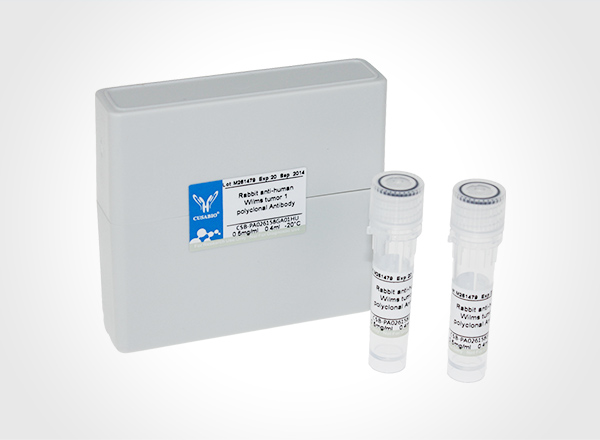
AA antibody; Atrophia areata peripapillary chorioretinal degeneration antibody; NTEF 1 antibody; NTEF-1 antibody; NTEF1 antibody; Protein GT IIC antibody; Protein GT-IIC antibody; REF 1 antibody; REF1 antibody; SV40 transcriptional enhancer factor antibody; TCF 13 antibody; TCF-13 antibody; TCF13 antibody; TEA domain family member antibody; TEA domain family member 1 (SV40 transcriptional enhancer factor) antibody; TEA domain family member 1 antibody; TEAD 1 antibody; TEAD 1 protein antibody; TEAD-1 antibody; TEAD1 antibody; TEAD1 protein antibody; TEAD1_HUMAN antibody; TEF 1 antibody; TEF1 antibody; Transcription factor 13 (SV40 transcriptional enhancer factor) antibody; Transcription factor 13 antibody; Transcriptional enhancer factor 1 antibody; Transcriptional enhancer factor TEF-1 antibody; Transcriptional enhancer factor TEF1 antibody
Raised in
Rabbit
Species Reactivity
Human,Mouse,Rat
Immunogen
Synthesized peptide derived from the Internal region of Human TEF-1.
Immunogen Species
Homo sapiens (Human)
Conjugate
Non-conjugated
Isotype
IgG
Purification Method
The antibody was affinity-purified from rabbit antiserum by affinity-chromatography using epitope-specific immunogen.
Concentration
It differs from different batches. Please contact us to confirm it.
Buffer
Liquid in PBS containing 50% glycerol, 0.5% BSA and 0.02% sodium azide.
Form
Liquid
Note: We will preferentially ship the format that we have in stock, however, if you have any special requirement for the format, please remark your requirement when placing the order, we will prepare according to your demand.
Upon receipt, store at -20°C or -80°C. Avoid repeated freeze.
Lead Time
Basically, we can dispatch the products out in 1-3 working days after receiving your orders. Delivery time maybe differs from different purchasing way or location, please kindly consult your local distributors for specific delivery time.
Note: All of our proteins are default shipped with normal blue ice packs, if you request to ship with dry ice, please communicate with us in advance and extra fees will be charged.
Usage
For Research Use Only. Not for use in diagnostic or therapeutic procedures.
Transcription factor which plays a key role in the Hippo signaling pathway, a pathway involved in organ size control and tumor suppression by restricting proliferation and promoting apoptosis. The core of this pathway is composed of a kinase cascade wherein MST1/MST2, in complex with its regulatory protein SAV1, phosphorylates and activates LATS1/2 in complex with its regulatory protein MOB1, which in turn phosphorylates and inactivates YAP1 oncoprotein and WWTR1/TAZ. Acts by mediating gene expression of YAP1 and WWTR1/TAZ, thereby regulating cell proliferation, migration and epithelial mesenchymal transition (EMT) induction. Binds specifically and cooperatively to the SPH and GT-IIC 'enhansons' (5'-GTGGAATGT-3') and activates transcription in vivo in a cell-specific manner. The activation function appears to be mediated by a limiting cell-specific transcriptional intermediary factor (TIF). Involved in cardiac development. Binds to the M-CAT motif.
Gene References into Functions
YAP1 interacted with TEAD1, exerted their transcriptional control of the functional target, glucose transporter 1 (Glut1).PMID:28892790
Yap1 post-translational modifications favoring its ubiquitination and apoptosis characterize hepatocellular carcinoma (HCC) with better prognosis, whereas conditions favoring the formation of YAP1-TEAD complexes are associated with aggressiveness and acquisition of stemness features by HCC cellsPMID:27359056
TEAD1 and TEAD4 are oncogenic factors, whose aberrant activation are, in part, mediated by the silence of miR-377-3p, miR-1343-3p and miR-4269.PMID:28759040
adult human and mouse hearts had more Taz than Yap1 by mRNA and protein expression and their increases in diseased hearts were proportional and did not change Yap1/Taz ratio. Yap1, Taz, and Tead1 were accumulated in the nuclear fraction and cardiomyocyte nuclei of diseased heartsPMID:29154888
Here, the authors show that TEAD1-expressing skeletal muscle of transgenic mice features a dramatic hyperplasia of muscle stem cells (i.e. satellite cells, SCs) but surprisingly without affecting muscle tissue size.PMID:27725085
This identifies the YAP1/TEAD1 complex as the representative dysregulated profile of Hippo signaling in OS and provides proof-of-principle that targeting TEAD1 may be a therapeutic strategy of osteosarcoma.PMID:28483529
The authors show MRTF family proteins bind YAP via a conserved PPXY motif that interacts with the YAP WW domain. This interaction allows MRTF to recruit NcoA3 to the TEAD-YAP transcriptional complex and potentiate its transcriptional activity.PMID:28028053
MYC and TEAD activity is able to stratify different breast cancer subtypes in large panels of breast cancer patients.PMID:27433809
Collectively, these results indicate that human papillomavirus 16 E6 induces upregulation of APOBEC3B through increased levels of TEADs, highlighting the importance of the TEAD-APOBEC3B axis in carcinogenesis.PMID:28077648
Upregulation of transcriptional enhancer activator domain 1 was found in hepatocellular carcinoma tissues and inversely correlated with miR-590-3p. Our results indicate a tumor suppressor role of miR-590-3p in hepatocellular carcinoma through targeting transcriptional enhancer activator domain 1 and suggest its use in the diagnosis and prognosis of liver cancer.PMID:28349829
show that the proangiogenic microfibrillar-associated protein 5 (MFAP5) is a direct transcriptional target of YAP/TEAD in cholangiocarcinoma cells transcription factors.PMID:26173433
TAZ negatively regulate transcription of DeltaNp63 through TEAD1,2,3 and 4 transcription factors.PMID:25995450
Our data suggest that AIC is a genetically heterogeneous disease and is not restricted to the X chromosome, and that TEAD1 mutations may be present in male patients.PMID:26091538
Our findings suggest that genetic variants of Hippo pathway genes, particularly YAP1 rs11225163, TEAD1 rs7944031 and TEAD4 rs1990330, may independently or jointly modulate survival of CM patients.PMID:25628125
Suggest central role for TEAD and YAP as signal-responsive regulators of multipotent pancreatic progenitors.PMID:25915126
the YAP-TEAD interaction can be disrupted using cyclic YAP-like peptides, which targets the HIPPO pathwayPMID:25384421
the first evidence demonstrating that TEAD1 is a novel general repressor of smooth muscle-specific gene expression through interfering with myocardin binding to SRF.PMID:24344135
identified an intronic region of the NAIP gene responding to TEAD1/YAP activity, suggesting that regulation of NAIP by TEAD1/YAP is at the transcriptional levelPMID:23994529
Data indicate that knockdown of TEAD1/3/4 induces an almost identical cellular senescent phenotype as YAP silencing.PMID:23576552
our data reveal a new, Livin-dependent, apoptotic role for TEAD1 in mammals and provide mechanistic insight downstream of TEAD1 deregulation in cancers.PMID:23029054
TEAD1 has non-AUG translation initiationPMID:1851669
These results are consistent with two plausible models of cryptic MCAT enhancer regulation by Pur alpha, Pur beta, and MSY1 involving either competitive single-stranded DNA binding or masking of MCAT-bound transcription enhancer factor-1.PMID:11751932
Transcription enhancer factor 1 binds multiple muscle MEF2 and A/T-rich elements during fast-to-slow skeletal muscle fiber type transitionsPMID:12861002
the mutation in the TEAD1 gene is the cause of Sveinsson's chorioretinal atrophy.PMID:15016762
regulation of IFITM3 by TEF-1 demonstrates that TEF-1 dependent regulation is more widespread than its previously established role in the expression of muscle specific genesPMID:18177740
TEAD1 inhibits prolactin gene expression in cultured human uterine decidual cells.PMID:18775765
TEAD1 and the ubiquitin ligase c-Cbl were identified as novel basal cell markers in prostate cancerPMID:19002168
Here we show that during vertebrate neural tube development, the TEA domain transcription factor (TEAD) is the cognate DNA-binding partner of YAP.PMID:19015275
The primary cellular origin of circumpapillary dysgenesis of the pigment epithelium is within the choroid instead of the pigment epithelium.PMID:19410955
A missense mutation (Y421H) in TEAD1 is tightly linked to Sveinsson's chorioretinal atrophy (SCRA), an autosomal dominant eye disease characterized by symmetrical lesions radiating from the optic disc involving the retina and the choroid.PMID:15016762
TEAD1 (TEF-1) interacts with a muscle-specific cofactor to promote skeletal muscle gene expression.PMID:12376544
Show
More
Hide
All
Subcellular Location
Nucleus.
Tissue Specificity
Preferentially expressed in skeletal muscle. Lower levels in pancreas, placenta, and heart.