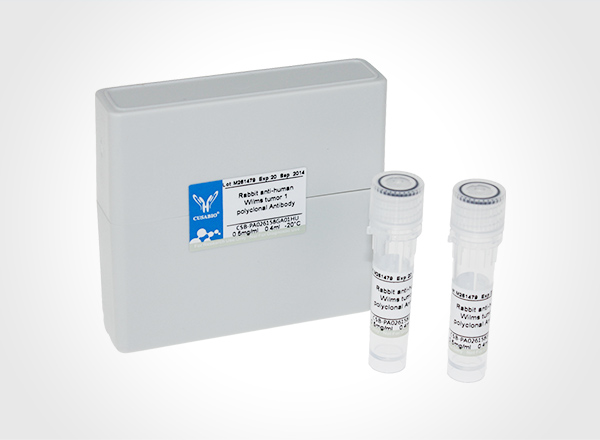
Liquid
Note: We will preferentially ship the format that we have in stock, however, if you have any special requirement for the format, please remark your requirement when placing the order, we will prepare according to your demand.
Upon receipt, store at -20°C or -80°C. Avoid repeated freeze.
Lead Time
Basically, we can dispatch the products out in 1-3 working days after receiving your orders. Delivery time maybe differs from different purchasing way or location, please kindly consult your local distributors for specific delivery time.
Note: All of our proteins are default shipped with normal blue ice packs, if you request to ship with dry ice, please communicate with us in advance and extra fees will be charged.
Usage
For Research Use Only. Not for use in diagnostic or therapeutic procedures.
Scaffolding protein that specifically recognizes and binds dimethylarginine-containing proteins. In nucleus, acts as a coactivator: recognizes and binds asymmetric dimethylation on the core histone tails associated with transcriptional activation (H3R17me2a and H4R3me2a) and recruits proteins at these arginine-methylated loci. In cytoplasm, may play a role in the assembly and/or disassembly of mRNA stress granules and in the regulation of translation of target mRNAs by binding Arg/Gly-rich motifs (GAR) in dimethylarginine-containing proteins.
Gene References into Functions
Structural basis of the interaction between TOP3B and the TDRD3 auxiliary factor has been reported.PMID:28176834
Top3b proteins from several animals associate with polyribosomes, which are units of mRNA translation, whereas the Top3 homologs from E. coli and yeast lack the association. The Top3b-polyribosome association requires TDRD3, which directly interacts with Top3beta and is present in animals but not bacteria or yeast.PMID:27257063
The binding specificity and affinity of the Tudor domains of TDRD3, SMN and SPF30 proteins were characterized quantitatively.PMID:22363433
The TDRD3 is an effector molecule that promotes transcription by binding methylarginine marks on histone tails.PMID:21172665
Tudor domain of TDRD3 was required for its recruitment to cytoplasmic stress granules.PMID:18632687
propose a contribution of Tdrd3 to FMRP-mediated translational repression and suggest that the loss of the FMRP-Tdrd3 interaction caused by the I304N mutation might contribute to the pathogenesis of Fragile X syndromePMID:18664458
Show
More
Hide
All
Subcellular Location
Cytoplasm. Nucleus.
Tissue Specificity
Detected in heart, brain, placenta, lung, liver, skeletal muscle, kidney and pancreas.