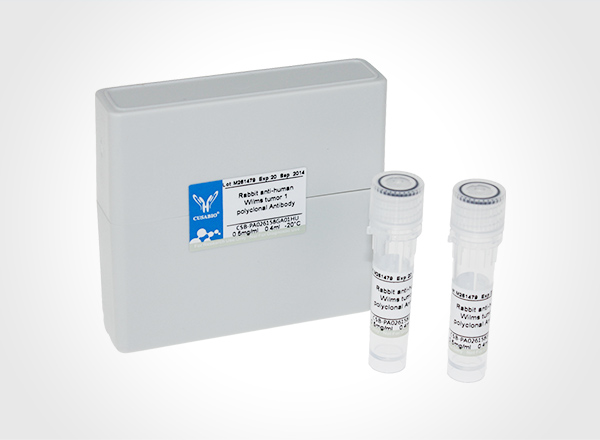
Liquid
Note: We will preferentially ship the format that we have in stock, however, if you have any special requirement for the format, please remark your requirement when placing the order, we will prepare according to your demand.
Upon receipt, store at -20°C or -80°C. Avoid repeated freeze.
Lead Time
Basically, we can dispatch the products out in 1-3 working days after receiving your orders. Delivery time maybe differs from different purchasing way or location, please kindly consult your local distributors for specific delivery time.
Note: All of our proteins are default shipped with normal blue ice packs, if you request to ship with dry ice, please communicate with us in advance and extra fees will be charged.
Usage
For Research Use Only. Not for use in diagnostic or therapeutic procedures.
Receptor that may play a role in the perception of bitterness and is gustducin-linked. May play a role in sensing the chemical composition of the gastrointestinal content. The activity of this receptor may stimulate alpha gustducin, mediate PLC-beta-2 activation and lead to the gating of TRPM5.
Gene References into Functions
bitter taste perception TAS2R38 diplotypes associated with vegetable consumption in participants enrolled in either an enhanced or a minimal nutrition counseling intervention, were examined.PMID:29686110
A QPCR analysis demonstrated that TAS2R38, a subtype of the bitter taste receptor, was associated with GLP-1 secretion. Berberine-mediated GLP-1 secretion was attenuated in response to small interfering RNA silencing of TAS2R38.PMID:29363059
genetic association studies in population of preschool-aged children in Guelph, Ontario: Data suggest that SNPs in CD36 (rs1761667), TAS1R2 (rs35874116), and TAS2R38 (rs713598) are associated with snacking behavior in the population studied. [PILOT PROJECTS]PMID:29385734
genetic association studies in population in Italy: Data suggest that an SNP in TAS2R38 (RS713598) is associated with higher bitter taste perception threshold and higher/lower preferences for selected nutrient/energy dense foods, such as beer, butter, and cured meat; this SNP may be associated with overweight.PMID:28738701
The current study suggests that genetic variation in TAS2R38 and CA6 influences picky eating in preschoolers.PMID:28858874
this study demonstrated that a Bacillus cereus product(s) elicited an NO-mediated innate defense response in upper airway epithelium that seemed to be partially mediated by a T2R signaling pathwayPMID:28716170
Findings suggest that TAS2R38 may be associated with the risk for gastric cancer in Koreans, although the TAS2R38 diplotype did not influence dietary intake.PMID:27245112
It is suggested that the risk and resistance of cancers is antagonistically controlled by the two TAS2R38 alleles, PAV and AVI, rather than by the AVI allele alone.PMID:28552880
In addition, we found signatures of ancient selective forces acting on different African TAS2R38 haplotypes. Collectively our results provide evidence for a relaxation of recent selective forces acting on this gene and a revised hypothesis for the origins of the present-day worldwide distribution of TAS2R38 haplotypes.PMID:27138342
genetic association studies in population of elderly women in Poland: Data suggest that SNPs in TAS2R38 (rs713598, rs1726866, rs10246939) and an SNP in CA6 (rs2274333) are associated with intake of and preferences for some foods (coffee and white cabbage) among the population studied. (TAS2R38 = taste receptor type 2 member 38; CA6 = carbonic anhydrase VI)PMID:28455260
Despite many other factors influencing food preference and intake in children, actual intake of sweet food items is associated with TAS2R38 genotype. Children with PP or PA genotype consume more (energy dense) sweet tasting foods.PMID:27475756
We now describe expression of T2R38 in tumor cells in patients with pancreatic cancer and in tumor-derived cell lines. our data indicate a new, additional function of the taste receptor T2R38 beyond sensing "bitter".PMID:26862855
TAS2R38 gene has an impact on phenotypic and clinical outputs affecting obesity, showing significant associations with extreme weight conditions, and changes in both olfactory capacity and immune traits.PMID:27059147
This research is the first to demonstrate a relationship between T2R38 bitter taste receptor activity (assessed by phenylthiocarbamide taste sensitivity), a genetic trait, and in vitro biofilm formation in clinical isolates recovered from chronic rhinosinusitis patientsPMID:27309535
T2R38 is thus much more broadly tuned for bacterial compounds than previously thought.PMID:28902853
TAS2R38 genotype and 6-n-propylthiouracil sensitivity status revealed high percentage of non-tasters. Food preferences and BMI did not significantly correlate TAS2R38 genotype.PMID:28652185
T2R38 is stimulated by acyl-homoserine lactones, gram-negative quorum-sensing molecules, and subsequently activates nitric oxide-dependent innate immune responses. The formation of mature cilia is necessary for T2R38 expression and function, and polymorphisms that underlie T2R38 functionality appear to be involved in susceptibility to upper respiratory infection and recalcitrant CRS.PMID:27650657
Immunohistochemistry of human ileum tissues was performed in this study, which showed that TAS2R38 was co-localized with glucagon-like peptide 1 (GLP-1) in enteroendocrine L-cells.PMID:27208775
Study did not find an association between TAS2R38 genotype and chronic rhinosinusitis (CRS), thus questioning its real contribution to CRS susceptibility.PMID:27515546
The expression of TAS2R38 in placental tissues points to further new functions and hitherto unknown endogenous ligands of TAS2Rs far beyond bitter tasting.PMID:26950109
Our investigation indicates that T2R38 genotype correlates both with SNOT-22 scores and rhinologic-specific quality of life in DeltaF508 homozygous cystic fibrosis patientsPMID:26678226
Variability in perceived bitterness of capsaicin and ethanol were significantly associated with TAS2R38PMID:26785164
This study suggest that: 1) alexithymia, in addition to the TAS2R38 polymorphism, may play a role in responsiveness to the aversive and bitter taste of PROP; and 2) alexithymia.PMID:26805725
phagocytes are activated via a rather specialized receptor that was not previously described on myeloid cells, the bitter taste receptor T2R38.PMID:26782143
TAS2R38 genotype predicts surgical outcome in nonpolypoid chronic rhinosinusitis.PMID:26562612
This study finding significant excess of rare nonsynonymous variants exclusive to European Americans smokers in TAS2R38.PMID:25450229
T2R38 is expressed in distinct populations of enteroendocrine cells in the human colonic mucosa. It colocalized with CCK-, GLP1- or PYY-IR. There were more T2R38-positive cells in overweight/obese subjects.PMID:26866366
The novel TAS2R38 AVV haplotype was associated with alcohol intake in Mexican-Mestizo population.PMID:26256902
Our analyses revealed also, besides simple associations, complex associations of bitterness sensitivity across TAS2RPMID:26406243
dental plaque amount, lactobacilli count, age, and saliva buffer capacity, as well as TAS2R38 gene polymorphism, explained total of 87.8% of variations in DMFT scores.PMID:26377569
Our data suggest that the regulation of gingival innate immunity by T2R38 is genotype-dependentPMID:26552761
Study demonstrates that the response profiles of the cat bitter receptors Tas2r38 and Tas2r43 are distinct from those of their orthologous human receptorsPMID:26037485
A strong correlation between the two matrices was found suggesting that the pattern of food liking was closely related to the distribution of PROP phenotype . same relationship was not observed when TAS2R38 genotypes were substituted for PROP phenotypePMID:24626196
Expression and functional activity of the bitter taste receptors TAS2R1 and TAS2R38 in human keratinocytesPMID:25573083
A significant effect modification of the PROP(6-n-propylthiouracil)-taste intensity relationships by TAS2R38 diplotype was observed.PMID:25634331
Study showed that PROP (6-n-propylthiouracil) bitterness was due to TAS2R38 diplotypes, whereas the density of fungiform papillae was more closely associated with gustin genotypesPMID:25447475
The hTAS2R38 genotype may have distinct associations with food consumption in boys and girls.PMID:24912558
Genetic variation in TRPV1 and TAS2Rs influence sensations from sampled EtOH and may potentially influence how individuals initially respond to alcoholic beverages.PMID:25257701
All psychophysical data were subsequently analyzed as a function of TAS2R38 genotype.PMID:23761681
genetic polymorphism is associated with chronic rhinosinusitis in Canadien patientsPMID:24415641
genetic variation in TAS2R38 is related to individual body composition measures and may further influence consumer goods intake in the Sorbs possibly via individual sensitivity to bitter taste.PMID:24312479
genetic association studies in African and Asian Americans in New York City: Data (from studies using 6-n-propylthiouracil taste intensity as biomarker) suggest that genetic variation in TAS2R38 is not associated with overweight in populations studied.PMID:24418005
Gustin and TAS2R38 genotypes were associated with PROP threshold, but bitterness intensity was mostly determined by TAS2R38 genotypes.PMID:24040192
results provide evidence that PAV-taste receptor type 2 member 38 (TAS2R38) expression amount correlates with individual differences in bitter sensory perception and dietPMID:24025627
Evaluated the phenotypic variations at TAS2R38 gene locus in relation to PMS severity and adiposity measures among adult women.PMID:23980393
PTC (phenylthiocarbamide) / PROP (6-n-propylthiouracil)-nontaster TAS2R38 genotype/haplotype was associated with height and weight but not with BMI, which may in turn have influenced the energy and carbohydrate intakes.PMID:23535535
genetic polymorphism is associated with chronic rhinosinusitis disease progression, necessity foe surgery and surgical outcomePMID:23322450
the TAS2R38 genotypes of schizophrenia patients was examined to determine whether the increased prevalence of nontasters in this patient population was indicative of a specific genetic associationPMID:22955840
The localization of TAS2R38 is neither restricted to the cell surface nor particularly enriched at the level of the microvilli.PMID:22792271
Show
More
Hide
All
Subcellular Location
Membrane; Multi-pass membrane protein.
Protein Families
G-protein coupled receptor T2R family
Tissue Specificity
Expressed in subsets of taste receptor cells of the tongue and exclusively in gustducin-positive cells. Expressed in testis.