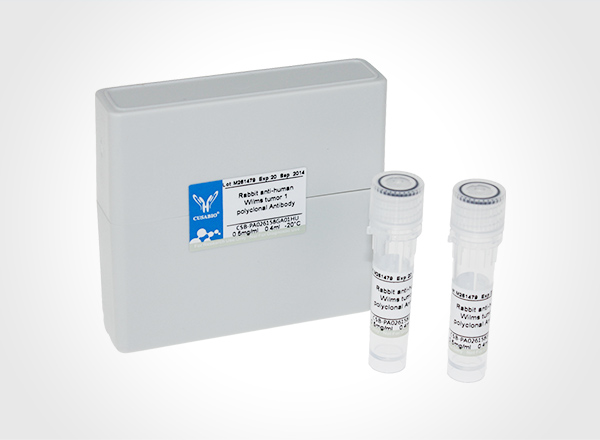
Liquid
Note: We will preferentially ship the format that we have in stock, however, if you have any special requirement for the format, please remark your requirement when placing the order, we will prepare according to your demand.
Storage
Upon receipt, store at -20°C or -80°C. Avoid repeated freeze.
Lead Time
Basically, we can dispatch the products out in 1-3 working days after receiving your orders. Delivery time maybe differs from different purchasing way or location, please kindly consult your local distributors for specific delivery time.
Note: All of our proteins are default shipped with normal blue ice packs, if you request to ship with dry ice, please communicate with us in advance and extra fees will be charged.
Usage
For Research Use Only. Not for use in diagnostic or therapeutic procedures.
Putative taste receptor. TAS1R2/TAS1R3 recognizes diverse natural and synthetic sweeteners.
Gene References into Functions
genetic association studies in population of preschool-aged children in Guelph, Ontario: Data suggest that SNPs in CD36 (rs1761667), TAS1R2 (rs35874116), and TAS2R38 (rs713598) are associated with snacking behavior in the population studied. [PILOT PROJECTS]PMID:29385734
We observe that binding of agonists to VFD2 of TAS1R2 leads to major conformational changes to form a TM6/TM6 interface between TMDs of TAS1R2 and TAS1R3, which is consistent with the activation process observed biophysically on the metabotropic glutamate receptor 2 homodimer.PMID:28228527
Alleles from each TAS1R2 locus (GG compared with AA alleles of rs12033832, and CT/CC compared with TT alleles of rs35874116) were related to higher consumption of carbohydrates (% energy) and higher amount of sweet foods, respectively (P<0.05).PMID:29110749
The molecular anatomy of sweet taste receptor dimers T1R2-T1R3 has been presented.PMID:27936499
no significant associations between GLUT2 and/or TAS1R2 polymorphisms and fillings were found, but allele frequencies of the TAS1R2 variant were marginally significantly different between children with DMFT = 0 and DMFT >/=1. no significant interaction between both genes and risk of dental caries was found. GLUT2 and TASR1 polymorphisms may influence the risk of caries in the Czech populationPMID:26112465
In conclusion, the Val/Val genotype of TAS1R2 was associated with a higher carbohydrate intake and HTG.PMID:26907331
high-risk caries experience (>8 caries) was found to be associated with TAS1R2 rs35874116 homozygous polymorphic genotype.PMID:25924601
The rs12033832 single nucleotide polymorphism in TAS1R2 is associated with sucrose taste and sugar intake, but the effect differs depending on BMIPMID:26279452
human and mouse membrane trafficking systems for sweet taste receptors T1r2 and T1r3PMID:25029362
effects of artificial sweeteners on adipose tissue may be largely independent of the classical sweet taste receptors, T1R2 and T1R3PMID:24068707
Interaction between brazzein and the amino terminal domain of the sweet receptor subunit T1R2 showed a stronger interaction at 7 degrees C than at 37 degrees C.; the low temperature conformation, alters the orientations of 2 loops known to be critical for the sweetness of brazzein, may represent the bound state of brazzei in the complex with the human sweet receptor.PMID:23349025
Genetic ablation of the sweet TR protein T1R2 obliterates fructose-induced insulin release and its potentiating effects on glucose-stimulated insulin secretion in vitro and in vivo.PMID:22315413
T1R2/T1R3 is involved in glucose-dependent secretion of satiation peptidesPMID:21540445
Our findings show that a genetic variation in TAS1R2 affects habitual consumption of sugars and may contribute to interindividual differences in changing behaviors in response to dietary counseling.PMID:20943793
significant associations were seen in TAS1R2 for caries risk and/or protection.PMID:20858777
Data show that Positive allosteric modulators of the sweet taste receptor could help reduce the caloric content in food and beverages while maintaining the desired taste.PMID:20173092
Results from mutagenesis and chimeras of the receptor indicated that brazzein interacts with both T1R2 and T1R3 and that the Venus flytrap module of T1R2 is important for brazzein agonism.PMID:20302879
Interactions between the human sweet-sensing T1R2-T1R3 receptor and sweeteners detected by saturation transfer difference NMR spectroscopy.PMID:19664591
The mechanism of interaction of the sweet protein monellin with the T1R2-T1R3 receptor.PMID:12706725
sweet and umami taste are strictly dependent on T1R-receptors, and show that selective elimination of T1R-subunits differentially abolishes detection and perception of these two taste modalitiesPMID:14636554
water rinses remove the inhibitor from the heteromeric sweetener receptor TAS1R2-TAS1R3, which activates cells and results in the perception of strong sweetness from pure waterPMID:16633339
Some of the amino acid positions crucial for activation of hTAS1R2+hTAS1R3 by neohesperidin dihydrochalcone are involved in the binding of allosteric modulators in other class C GPCRsPMID:17935609