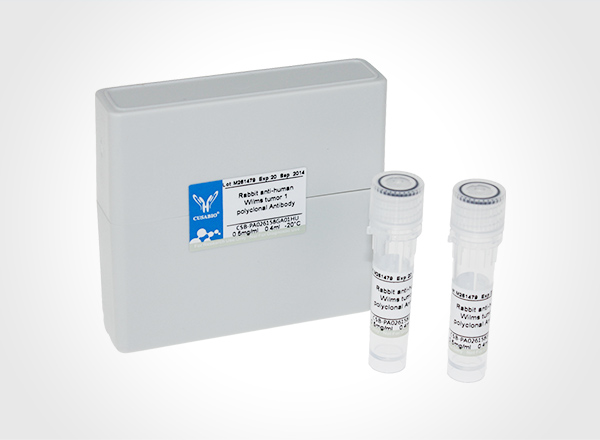
Brain protein 4.1 antibody; SYN 1 antibody; SYN 1a antibody; SYN 1b antibody; SYN I antibody; SYN1 antibody; SYN1_HUMAN antibody; SYN1a antibody; SYN1b antibody; Synapsin 1 antibody; Synapsin I antibody; Synapsin-1 antibody; Synapsin1 antibody; SynapsinI antibody; SYNI antibody
Raised in
Rabbit
Species Reactivity
Human,Mouse,Rat
Immunogen
Synthesized peptide derived from Human Synapsin I around the non-phosphorylation site of S605.
Immunogen Species
Homo sapiens (Human)
Conjugate
Non-conjugated
Isotype
IgG
Purification Method
The antibody was affinity-purified from rabbit antiserum by affinity-chromatography using epitope-specific immunogen.
Concentration
It differs from different batches. Please contact us to confirm it.
Buffer
Liquid in PBS containing 50% glycerol, 0.5% BSA and 0.02% sodium azide.
Form
Liquid
Note: We will preferentially ship the format that we have in stock, however, if you have any special requirement for the format, please remark your requirement when placing the order, we will prepare according to your demand.
Upon receipt, store at -20°C or -80°C. Avoid repeated freeze.
Lead Time
Basically, we can dispatch the products out in 1-3 working days after receiving your orders. Delivery time maybe differs from different purchasing way or location, please kindly consult your local distributors for specific delivery time.
Note: All of our proteins are default shipped with normal blue ice packs, if you request to ship with dry ice, please communicate with us in advance and extra fees will be charged.
Usage
For Research Use Only. Not for use in diagnostic or therapeutic procedures.
Neuronal phosphoprotein that coats synaptic vesicles, binds to the cytoskeleton, and is believed to function in the regulation of neurotransmitter release. The complex formed with NOS1 and CAPON proteins is necessary for specific nitric-oxid functions at a presynaptic level.
Gene References into Functions
Authors identified the c.236 C > G/p.S79W mutation in SYN1 as causative for the non-syndromic ID of the MRX50 family. Accordingly, the in vitro characterization of S79W SynI clearly indicates that the mutation does not interfere with neurodevelopmental aspects, but perturbs spontaneous SV exocytosis, SV clustering and SV lateral mobility along axons.PMID:28973667
These findings contribute to previous work showing dysregulation of Synapsins, particularly SYN2, in mood disorders and improve our understanding of the regulatory mechanisms that precipitate these changes likely leading to the BD or MDD phenotype.PMID:27515700
Cerebral malaria causes pre-synaptic excitation and eventually activation of synapsin I, leading to increased neurotransmitter release.PMID:26823711
Patterns of the immunoreactivity with antibodies to SNAP-25, synapsin-I and synaptophysin are completely appropriate to those of adult's OB on the 38-40 weeks of the prenatal development.PMID:26204769
The implementation of the AlphaScreen pSYN1 assay and future development of additional primary neuronal HTS assays provides an attractive approach for discovery of novel classes of therapeutic candidates for a variety of CNS disorders.PMID:24088370
these findings suggest PRICKLE1 mutations contribute to ASD by disrupting the interaction with SYN1 and regulation of synaptic vesicles.PMID:24312498
Data indicate that in patients carrying the W356x mutation the function of synapsin I is markedly impaired, and support the value of Syn1(-/-) mice as an experimental model mimicking the human pathology.PMID:23818987
Epileptogenic Q555X SYN1 mutant triggers imbalances in release dynamics and short-term plasticity.PMID:23406870
The histone modification marks were significantly increased in major depression and this effect was correlated with significant increases in SYN1b gene expression.PMID:22571925
The allelic frequencies of SYN1 are associated with Korean female schizophrenia.PMID:22807112
SYN1 loss-of-function mutations in autism and partial epilepsy cause impaired synaptic function.PMID:21441247
the nucleocytoplasmic shuttling of dysbindin-1 regulates synapsin I expression and thus may be involved in the pathogenesis of schizophrenia.PMID:20921223
The authors propose claudin-2 and SYN1 work in concert to enhance microbial translocation across the intestinal epithelial barrier to contribute to chronic immune activation and CD4 T-cell depletion in HIV-1-infected patients.PMID:20700059
The results showed that synapsin I was significantly decreased in the stratum radiatum of CA1 subfield and the molecular layer of DG in AD patients.PMID:14673601
SYN1 nonsense mutation is the likely cause of epileptic and other phenotypesPMID:14985377
Synapsins and S100A1 interact in nerve terminals where coexpresssed; S100A1 cannot bind SV-associated synapsin I and may function as a cytoplasmic store of monomeric synapsin I; synapsin dimerization and interaction with S100A1 are mutually exclusivePMID:15147519
This study concluded that the human synapsin I gene is positively regulated by nuclear respiratory factor 1 and mediates the function of nuclear respiratory factor 1 in neurite outgrowth.PMID:19301426