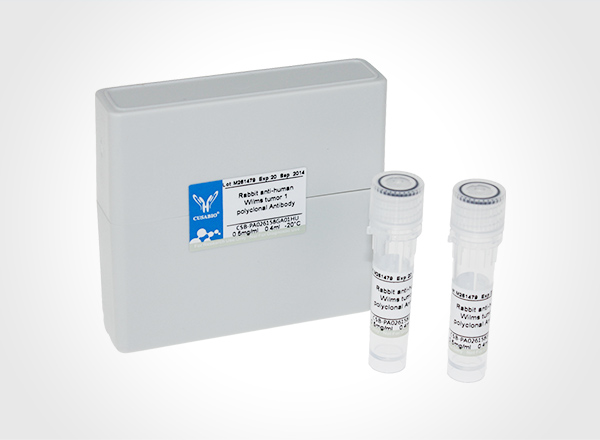
Liquid
Note: We will preferentially ship the format that we have in stock, however, if you have any special requirement for the format, please remark your requirement when placing the order, we will prepare according to your demand.
Storage
Upon receipt, store at -20°C or -80°C. Avoid repeated freeze.
Lead Time
Basically, we can dispatch the products out in 1-3 working days after receiving your orders. Delivery time maybe differs from different purchasing way or location, please kindly consult your local distributors for specific delivery time.
Note: All of our proteins are default shipped with normal blue ice packs, if you request to ship with dry ice, please communicate with us in advance and extra fees will be charged.
Usage
For Research Use Only. Not for use in diagnostic or therapeutic procedures.
Autophagy receptor required for selective macroautophagy (aggrephagy). Functions as a bridge between polyubiquitinated cargo and autophagosomes. Interacts directly with both the cargo to become degraded and an autophagy modifier of the MAP1 LC3 family. Along with WDFY3, involved in the formation and autophagic degradation of cytoplasmic ubiquitin-containing inclusions (p62 bodies, ALIS/aggresome-like induced structures). Along with WDFY3, required to recruit ubiquitinated proteins to PML bodies in the nucleus. May regulate the activation of NFKB1 by TNF-alpha, nerve growth factor (NGF) and interleukin-1. May play a role in titin/TTN downstream signaling in muscle cells. May regulate signaling cascades through ubiquitination. Adapter that mediates the interaction between TRAF6 and CYLD. May be involved in cell differentiation, apoptosis, immune response and regulation of K(+) channels. Involved in endosome organization by retaining vesicles in the perinuclear cloud: following ubiquitination by RNF26, attracts specific vesicle-associated adapters, forming a molecular bridge that restrains cognate vesicles in the perinuclear region and organizes the endosomal pathway for efficient cargo transport. Promotes relocalization of 'Lys-63'-linked ubiquitinated STING1 to autophagosomes. Acts as an activator of the NFE2L2/NRF2 pathway via interaction with KEAP1: interaction inactivates the BCR(KEAP1) complex, promoting nuclear accumulation of NFE2L2/NRF2 and subsequent expression of cytoprotective genes.
Gene References into Functions
Study shows that p62 hijacked NOXA for its degradation during autophagy.PMID:29758299
A complex of C9ORF72 and p62 uses arginine methylation to eliminate stress granules by autophagy.PMID:30022074
Study demonstrated that the expression of p62 was upregulated in 4nitroquinoline1oxideinduced oral carcinogenesis, accompanied with myeloidderived suppressor cells and regulatory T cells accumulation.PMID:30272335
High p62 cytoplasmic expression on its own (p </= 0.001), or in combination with low LC3B (p = 0.034), was associated with nonresponse to chemotherapy, regardless of whether or not the regiments contained paclitaxel, but there was no independent prognostic value of LC3B or p62 expression patterns for esophageal adenocarcinomas .PMID:29897944
the complex structures between the ZZ-domain of p62 and various type-1 and type-2 N-degrons, are reported.PMID:30120248
the role of p62 in energy metabolism was studied in fibroblasts.PMID:28490746
p62 and ubiquitinated proteins spontaneously coalesce into larger clusters. Efficient cluster formation requires substrates modified with at least two ubiquitin chains longer than three moieties and is based on p62 filaments cross-linked by the substrates.PMID:29343546
27-OH induced autophagy is dependent on the relation between nuclear factor erythroid 2 p45-related factor 2 (Nrf2)-dependent antioxidant response and p62.PMID:29879549
our results showed that high CD44 led to p62-associated NRF2 activation in CD44(high) breast CSC-like cells. NRF2 activation contributed to the aggressive phenotype, tumor growth, and anticancer drug resistance of CD44(high) CSCsPMID:29729523
results suggested that p62 plays a protective role in adipogenesis of human adipose-derived stromal cells through regulating mitophagy.PMID:29866118
The results of the present study demonstrated that p62 may aggravate LPSinduced acute kidney injury in mice by promoting apoptosis in renal tubular epithelial cells.PMID:29620262
Study supports HuR's role as an upstream regulator of p62 expression in ARPE-19 cells, helps to understand better the early events in response to a proautophagy stimulus.PMID:29576851
Therefore in this review we discuss the role of p62 in autophagy, apoptosis and cancer through its different domains and outline the importance of modulating cellular levels of p62 in cancer therapeutics.PMID:29738493
Both the metastatic and recurrent tumor tissues expressed less p62 than the patient-matched primary tumor. A significant inverse correlation has been found between p62 expression and both the disease-free survival and overall survival.PMID:29699801
p62 deficiency in stromal fibroblasts promotes resistance to glutamine deprivation by the direct control of ATF4 stability through its p62-mediated polyubiquitination.PMID:28988820
AGG is also found to trigger ubiquitination of PUMA which in turn interacted with p62 for prompting mitophagy suggesting that AGG turns on PUMA-mediated mitophagy in U87MG cells in both p62-dependent as well as in p62-independent mannerPMID:29229477
The results suggest that p62 may be an effective predictor of prognosis and a potential target for therapy in osteosarcoma.PMID:29617702
The model reveals a compensatory autophagic pathway, mediated by a SQSTM1/p62-dependent clearance of accumulated polyubiquitinated proteins. In addition to mediating the sequestration of ubiquitinated cargos into phagophores, the precursors to autophagosomes, SQSTM1 is also important for polyubiquitinated aggregate formation upon proteasomal inhibition.PMID:28792301
ESI induces protective autophagy of lung cancer cells through Nrf2-p62-keap1 feedback loopPMID:28617433
IFN-gamma induces activated but insufficient autophagy and thus contributes to a degree to p62-dependent apoptosis of nasal epithelial cells in chronic rhinosinusitis with nasal polyps.PMID:28258963
The underling mechanism of autophagy/p62/Nrf2 pathway discovered may provide a new direction for drug development.PMID:28737825
Study show the proteasome autophagy mechanism is mediated by the p62/SQSTM1 adapter and requires its ubiquitin-associated domain. Independently, p62 serves also as a shuttling protein for ubiquitinated substrates, using its PB1 domain. This places p62 in a pivotal position where under certain conditions it binds to the proteasome as a protease, whereas in other conditions it recognizes the proteasome as a prey.PMID:27791183
The study describes a previously uncharacterized cellular response induced by heme: the formation of p62/SQSTM1 aggregates containing ubiquitinated proteins in structures known as aggresome-like induced structures (ALIS). This action is part of a response driven by the transcription factor NRF2 to the excessive generation of reactive oxygen species induced by heme.PMID:27821769
The data identify an intricate mechanism of hepatitis C virus-dependent inhibition of Nrf2/ antioxidant response elements-mediated gene expression which counteracts serine 349-phosphorylated p62-induced activation of Nrf2.PMID:28673615
Results identified SQSTM1, a regulator of apoptosis and autophagy, to be hyper-phosphorylated and associated with development of cisplatin resistance in high-grade serous ovarian cancer.PMID:28455291
p62 immunoreactivity was detected in 11% of colorectal adenoma and 31% of the adenocarcinoma cases, and almost negligible in the normal epithelium. p62 promotes cell proliferation in colorectal carcinoma cells, was significantly associated with synchronous liver metastasis in the colorectal carcinoma cases, and was an independent adverse prognostic factor for overall survival in the colorectal cancer patients.PMID:28544335
NEDD4 is an autophagic E3 ubiquitin ligase that ubiquitylates SQSTM1, facilitating SQSTM1-mediated inclusion body autophagy.PMID:29021346
SQSTM1/p62 senses the saturation of reactive oxygen species (ROS)-buffering systems, and that this redox-sensitivity is important to increase autophagy, and thus ensure the survival of cells under oxidative stress conditions.PMID:29343728
This study is the first to show a cytoplasmic function of claudin 1 as an autophagy regulator and provides the evidence that claudin 1-mediated autophagy regulation is an integral part of the mechanism by which claudin 1 regulates cancer progression.PMID:29307823
The autophagy induced by 2-PCPA requires LC3-II processing machinery..2-PCPA treatment induces the change of global gene expression program, including a series of autophagy-related genes, such as SQSTM1/p62. Taken together, our data indicate that KDM1A/LSD1 inhibitors induce autophagy through affecting the expression of autophagy-related genes and in a BECN1-independent mannerPMID:28800922
The results of this study reflect that Frontotemporal Dementia /SQSTM1 carriers show a right atrophy pattern in prefrontal-orbital-insular regions with relative preservation of the temporal lobes different from that observed in Sporadic Frontotemporal Dementia.PMID:27163810
the L341V mutation limits the critical step of SQSTM1 recruitment to the phagophorePMID:27158844
Endogenous p62 undergoes E2-dependent ubiquitylation during upregulation of Ubiquitin (Ub) homeostasis, a condition termed as Ub(+) stress, that is intrinsic to Ub overexpression, heat shock or prolonged proteasomal inhibition by bortezomib, a chemotherapeutic drug.PMID:28322253
LC3 and p62/SQSTM1 have roles in early-stage non-small cell lung cancerPMID:27250032
LC3B and p62 have roles in autophagy in esophageal adenocarcinomaPMID:27250034
ALS-FTLD associated mutations of SQSTM1 disrupt Keap1 binding and disable Nrf2 signaling.PMID:27554286
analysis of soluble SQSTM1 complexes and soluble complexes formed between SQSTM1 oligomers and LC3 using a combination of fluorescence microscopy-based biophysical approaches in living cellsPMID:27442348
CAL suppresses the expression of pro-inflammatory cytokines via p62/Nrf2-linked HO-1 induction in RASFs.PMID:27678042
Vps34 stimulates tumor development mainly through PKC-delta- activation of p62.PMID:28846113
casein kinase 1 phosphorylates the SQSTM1 S349 residue when harmful proteins accumulate under HSF1 stressPMID:27846364
SQSTM1 binds and inhibits E3 ligase RNF168s activity, which is essential for H2A ubiquitinationPMID:27791533
this study proved that SYVN1 enhances SERPINA1(E342K)/ATZ degradation through SQSTM1-dependent autophagy and attenuates SERPINA1(E342K)/ATZ cytotoxicity.PMID:28121484
The authors show that ufmylation regulates SQSTM1 by eliciting a cell type-specific endoplasmic reticulum stress response which induces SQSTM1 expression and results in its accumulation in the cytosol.PMID:27351204
TRIM11 suppresses AIM2 inflammasome by degrading AIM2 via p62-dependent selective autophagy.PMID:27498865
These data define that YOD1 antagonizes TRAF6/p62-dependent IL-1 signaling to NF-kappaB.PMID:28244869
Data show that p62 interaction with LC3, leading to the delivery of p62 and its cargoes to the autophagosome.PMID:28740232
These results demonstrate a novel SQSTM1 regulatory network that promotes a nickel-induced tumorigenic effect in human bronchial epithelial cells.PMID:27467530
Thyroid hormone promotes selective autophagy via induction of DAPK2-SQSTM1 cascade, which in turn protects hepatocytes from diethylnitrosamine-induced hepatotoxicity or carcinogenesis.PMID:27653365
P62 functions as a tumour metastasis promoter.PMID:28968743
Silence of p62 promotes apoptosis induced by mitochondrial depolarization.PMID:28433685