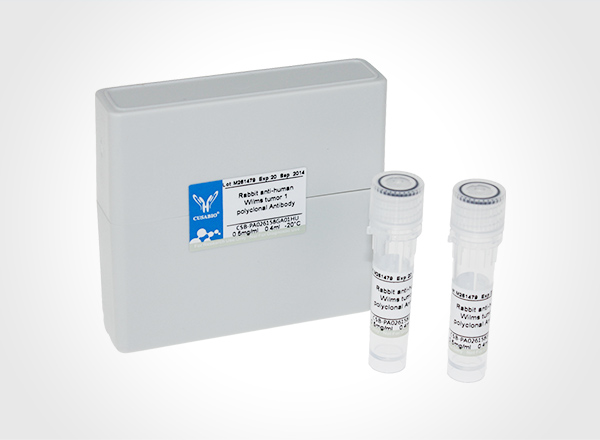
Liquid
Note: We will preferentially ship the format that we have in stock, however, if you have any special requirement for the format, please remark your requirement when placing the order, we will prepare according to your demand.
Storage
Upon receipt, store at -20°C or -80°C. Avoid repeated freeze.
Lead Time
Basically, we can dispatch the products out in 1-3 working days after receiving your orders. Delivery time maybe differs from different purchasing way or location, please kindly consult your local distributors for specific delivery time.
Note: All of our proteins are default shipped with normal blue ice packs, if you request to ship with dry ice, please communicate with us in advance and extra fees will be charged.
Usage
For Research Use Only. Not for use in diagnostic or therapeutic procedures.
Serine protease inhibitor that inhibits plasminogen activators and plasmin but not thrombin. May be involved in the formation or reorganization of synaptic connections as well as for synaptic plasticity in the adult nervous system. May protect neurons from cell damage by tissue-type plasminogen activator (Probable).
Gene References into Functions
We present two pediatric cases of progressive myoclonic epilepsy with SERPINI1 pathogenic variants that lead to a severe presentation.PMID:28631894
Data indicated that rs9853967 and rs11714980 polymorphisms in CCM3 and SERPINI1respectively could be associated with a protective role in cerebral cavernous malformations disease.PMID:27737651
SERPINI1 is an important regulator of epithelial-mesenchymal transition in an orthotopic implantation model of colorectal cancerPMID:26892864
The thermal and chemical stability along with the polymerisation propensity of both Wild Type and Glu289Ala NS were characterized.PMID:26329378
This C-terminal lability is not required for neuroserpin polymerisation in the endoplasmic reticulum, but the additional glycan facilitates degradation of the mutant protein during proteasomal impairment.PMID:26367528
the protective effect of neuroserpin maybe independent from its canonical interaction with a tissue-type plasminogen activatorPMID:26176694
Neuroserpin is expressed in naive effector memory and central memory CD4 and CD8 T cell subsets, and monocytes, B cells, and NK cells. T-cell activation caused its translocation to the immunologic synapse, secretion, and delayed downregulation.PMID:25670787
Molecular Dynamics simulations suggest that Neuroserpin conformational stability and flexibility arise from a spatial distribution of intramolecular salt-bridges and hydrogen bonds.PMID:25450507
Alzheimer's disease brain tissues with elevated neuroserpin protein also showed increased expression of THRbeta1 and HuDPMID:24036060
our study did not provide any evidence for an association between genetic variation at the SERPINI1 locus and ischemic strokePMID:21487809
Neuroprotective properties of neuroserpin may be related to the inhibition of excitotoxicity, inflammation, as well as blood brain barrier disruption that occur after acute ischemic stroke.PMID:21569344
Hrd1 and gp78 mediate mutant neuroserpin turnover through the ERAD pathway.PMID:21507957
high serum neuroserpin levels before intravenous tPA and neuroserpin levels decrease at 24 h after ischaemic stroke, independently of tPA treatment, may have a role in good functional outcomePMID:21174006
The latent and polymer hNS forms obtained at 45 degrees C and 85 degrees C differ in their chemical and thermal stabilities; furthermore, the human neuroserpin polymers also differ in size and morphologyPMID:21081089
investigated the refolding and polymerization pathways of wild-type neuroserpin and of the pathogenic mutants S49P and H338RPMID:20691191
Mutant Neuroserpin (S49P) that causes familial encephalopathy with neuroserpin inclusion bodies is a poor proteinase inhibitor and readily forms polymers in vitroPMID:11880376
The interactions between NSP and t-PA were distinct from those between plasmin and NSP, suggesting that the physiologic effect of t-PA-NSP interactions may be more complex than previously thought.PMID:12228252
Neuroserpin has a role as a selective inhibitor of tissue-type plasminogen activator in the central nervous system [review]PMID:14983220
neuroserpin mutants that cause dementia accumulate as polymers within the endoplasmic reticulumPMID:15090543
tissue plasminogen activator and neuroserpin are widely expressed in the human central nervous systemPMID:15269833
reactive centre loop of neuroserpin Portland being partially inserted into beta-sheet A to adopt a conformation similar to an intermediate on the polymerization pathwayPMID:15291813
Data show that the S49P mutant of neuroserpin that causes the dementia familial encephalopathy with neuroserpin inclusion bodies (FENIB) forms a latent species in vitro and in vivo in addition to the formation of polymers.PMID:15664988
neuroserpin interacts with Abeta(1-42) to form off-pathway non-toxic oligomers and so protects neurons in Alzheimer diseasePMID:16849336
intergenic region of the head-to-head PDCD10-SERPINI1 gene pair provides an interesting and informative example of a complex regulatory systemPMID:17212813
in a French family with the S52R mutation of the neuroserpin gene, progressive myoclonic epilepsy was associated with a frontal syndromePMID:17606885
This study provides the first evidence that neuroserpin is associated with early-onset ischemic stroke among Caucasian women.PMID:17961231
conformational modification in the protein under oxidative stressPMID:18051703
We report a neuroserpin mutation that causes electrical status epilepticus of slow-wave sleep.PMID:18591508
Neuroserpin and tissue plasminogen activator are associated with amyloid-beta plaques in Alzheimer brain tissue.PMID:19222708
Human neuroserpin: structure and time-dependent inhibitionPMID:19265707
Analyses restricted to glioblastoma (n = 254) yielded significant associations for the SELP, DEFB126/127, SERPINI1, and LY96 genetic regions.PMID:19423540
intracellular neuroserpin polymers activate NF-kappaB by a pathway that is independent of the IRE1, ATF6, and PERK limbs of the canonical unfolded protein response but is dependent on intracellular calciumPMID:19423713