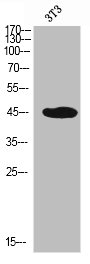
Synthesized peptide derived from the N-terminal region of Human PSGL-1.
Immunogen Species
Homo sapiens (Human)
Conjugate
Non-conjugated
Isotype
IgG
Purification Method
The antibody was affinity-purified from rabbit antiserum by affinity-chromatography using epitope-specific immunogen.
Concentration
It differs from different batches. Please contact us to confirm it.
Buffer
Liquid in PBS containing 50% glycerol, 0.5% BSA and 0.02% sodium azide.
Tested Applications
WB, ELISA
Storage
Upon receipt, store at -20°C or -80°C. Avoid repeated freeze.
Lead Time
Basically, we can dispatch the products out in 1-3 working days after receiving your orders. Delivery time maybe differs from different purchasing way or location, please kindly consult your local distributors for specific delivery time.
Usage
For Research Use Only. Not for use in diagnostic or therapeutic procedures.
A SLe(x)-type proteoglycan, which through high affinity, calcium-dependent interactions with E-, P- and L-selectins, mediates rapid rolling of leukocytes over vascular surfaces during the initial steps in inflammation. Critical for the initial leukocyte capture.; (Microbial infection) Acts as a receptor for enterovirus 71.
Gene References into Functions
These data indicate that cardiac surgery influences the expression of CD162, CD166 and CD195 and that the intensity of the immune system response, displayed as the change in the CD162, CD166, CD195 expression, varies, depending on the surgical technique used.PMID:27625334
PSGL1 mediated leukocyte rolling and the inflammatory response in general.PSGL1 is a ligand for Siglec-5 and interacts with Siglec-5 ectodomain.PMID:27892504
The Interaction of Selectins and PSGL-1 as a Key Component in Thrombus Formation and Cancer Progression.PMID:28680883
Studies indicate that P-selectin glycoprotein ligand-1 (PSGL-1) PSGL-1 can negatively regulate T cell function.PMID:28262471
Results suggest that PSGL-1 may play an oncogenic role in the development of intestinal tumors, and this is likely mediated through activation of NFkB signaling by MIP-1g.PMID:28108624
c-Myc regulates P-selectin glycoprotein ligand-1 expression in monocytes during HIV-1 infection.PMID:28663244
The percentage of CXCR3(+) CD4(+) TEM cells negatively correlated with the severity of the cutaneous disease in psoriasis patients. Importantly CLA(+) CD4(+) TCM cells expressing CCR6(+) or CCR4(+)CXCR3(+) negatively correlated with psoriasis severity suggesting recruitment to the skin compartment.PMID:28392462
Platelet-leukocyte aggregations increased in acute ischemic stroke patients rapidly within 3h. The I allele of PSGL-1 M62I was associated with risk of developing acute ischemic stroke, especially large artery atherosclerosis stroke and small artery occlusion stroke. Small artery occlusion stroke patients with the II genotype of PSGL-1 M62I have the higher level of platelet-neutrophil aggregates.PMID:27423570
The significant presence of CLA+ T cells and E-selectin expressions in the OLPG suggests their involvement in the etiopathogenesis of OLP; however, only a weak correlation between CLA+ T cells and E-selectin was observed.PMID:26332489
PSGL-1 is a novel receptor for S. pneumoniae that contributes to protection against invasive pneumococcal disease.PMID:26975045
Report influence of SELPLG variation on leukocyte-platelet interactions in cardiovascular disease.PMID:25428141
CD162 staining and the staining degree, with the other standard immunohistochemical stains, were shown to be beneficial in the diagnosis of multiple myeloma disease.PMID:25445472
Staphylococcal SElX and SSL6 proteins bind cell surface receptors PSGL-1 and CD47, respectively.PMID:24840181
SCARB2 and PSGL-1 in human gastrointestinal tract, lung, and brain tissues correlated with the distribution of pathological changes seen in EV71 infection.PMID:24997419
Host membrane protein PSGL-1, CD43, and CD44 association with assembling HIV-1 Gag is driven by polybasic sequences present in the cytoplasmic tails of the membrane proteins and in Gag.PMID:25320329
Up-regulation of PSGL-1 on CD14++CD16+ monocytes may play a crucial role in plaque rupture and thrombus formation.PMID:24583418
lymphocyte trafficking into the CNS under VLA-4 blockade can occur by using the alternative adhesion molecules, PSGL-1 and MCAM, the latter representing an exclusive pathway for TH17 cells to migrate over the blood-brain barrierPMID:25135296
ligation of PSGL-1 on HL-60 cells activates beta2 integrin, for which lipid raft integrity and Syk activation are responsiblePMID:24312591
Specific phosphorylations on 130 and 153 tyrosine residues of p85-bound Rho-GDP dissociation inhibitor-2 are pivotal for P-selectin glycoprotein ligand-1-induced beta1 integrin-mediated lymphocyte adhesion to vascular cell adhesion molecule-1.PMID:24055812
PSGL-1 has Janus-faced functions, being both adhesive and anti-adhesive.PMID:23192782
Phosphoinositide 3-kinase (PI3K) is required for PSGL-1-induced beta1 integrin clustering which ultimately regulates beta1 integrin-mediated Jurkat cell adhesion to fibronectin.PMID:24122451
In conclusion, authors report PSGL-1 as a novel target for pneumococcal ZmpC and show that ZmpC inhibits neutrophil extravasation during pneumococcal pneumonia.PMID:23601501
Data suggest that PSGL1 on leukocytes is binding site for VP1 (a capsid protein) in Enterovirus 71; conserved lysine residues on virus surface are responsible for interaction with sulfated tyrosine residues in PSGL1 N-terminus.PMID:23935488
Expression of CD11b and CD162 on monocytes has a temperature-dependent regulation, with decreased expression during hypothermia.PMID:23812215
Psoriasis patients' tonsils have a higher frequency of skin-homing CLA [cutaneous lymphocyte-associated antigen] positive T cells, correlating significantly with their frequency of blood CLA+ T cells.PMID:23750651
A receptor-dominated endocytosis of enterovirus 71 infection was observed: PSGL-1 initiates caveola-dependent endocytosis and hSCARB2 activates clathrin-dependent endocytosis.PMID:23760234
The aim of the study was to investigate the degree of platelet activation in NSCLC and the roles of PSGL-1 in the activation of platelets.PMID:22535539
These results indicated that SCARB2 is capable of viral binding, viral internalization, and viral uncoating and that the low infection efficiency of L-PSGL1 cells is due to the inability of PSGL1 to induce viral uncoating.PMID:23302872
effect of mutation on binding affinity to P- and L-selectinPMID:22947939
There is significant association between PSGL-1 Met62Ile polymorphism and advanced carotid atherosclerosis with stenosis in female patients from the Serbian population.PMID:22307784
E- and P-selectins play a role in spontaneous metastasis formation both into bone marrow and lungs.PMID:22366582
PSGL-1 EBS plays a critical role in recruiting leukocytes on selectins and in activating the MAPK pathway, whereas it is dispensable to phosphorylate Syk and to lead to alpha(L)beta(2)-dependent leukocyte slow rolling.PMID:22311979
Data show the contribution of P-selectin glycoprotein ligand-1 (PSGL-1) to the regulation of growth, dissemination, and drug resistance in multiple myeloma (MM) cells in the context of the bone marrow microenvironment.PMID:22096244
ADAM8 is both associated with PSGL-1 through the ezrin-radixin-moesin actin-binding proteins and able to cause the proteolytic cleavage of this adhesion receptor.PMID:22229154
PSGL-1 microparticles show a characteristic course during alloSCT and their possible association with relapse/progress requires further evaluation of the PSGL-1/P-selectin interaction in leukemias and lymphomasPMID:21864485
Coxsackievirus A24 variant bound better to mouse L929 cells overexpressing human P-selectin glycoprotein ligand-1 (PSGL-1) than to mock-transfected cells, suggesting that PSGL-1 is a candidate receptor for the virus.PMID:21880775
Healthy volunteers were genotyped and the adhesion of neutrophils expressing the PSGL-1 isoforms A/A, A/B and B/B were studied under static and physiologic flow conditions.PMID:21144558
IL-6 induces neutrophilia and reduces CD162 expression on neutrophils in inflammationPMID:21292497
Tyrosine sulfation of the amino terminus of PSGL-1 is associated with enterovirus 71 infection.PMID:21079683
The results suggest that an adaptive mutation, along with a PSGL-1-binding phenotype, may facilitate efficient PSGL-1-dependent replication of enterovirus 71 strains in L-PSGL-1 cells.PMID:20943886
Results suggested that Syk plays a key role in signal transduction downstream of PSGL-1 in endothelial progenitor cells.PMID:20705591
cutaneous lymphocyte-associated antigen expression might be an indicator of poor prognosis in non-nasal NK-cell lymphomas with nodal presentationPMID:19628338
There is a strong expression of both SELPLG and coronin-1C in the majority of primary effusion lymphomas, irrespective of their gene dosage. SELPLG is critical for cell migration and chemotaxis, while CORO1C regulates actin-dependent processes.PMID:20690162
Deficiency of Psgl-1 is associated with reduced IL-1 receptor-mediated adhesive properties of the endothelium.PMID:20558823
Comparison of PSGL-1 microbead and neutrophil rolling: microvillus elongation stabilizes P-selectin bond clustersPMID:11916843
G-CSF down regulates PSGL-1 expression on the surface of neutrophils in humansPMID:11961238
Expression of cutaneous lymphocyte-associated antigen by CD8(+) T cells specific for herpes simplex virus type 2(cutaneous lymphocyte-associated antigen)PMID:12189248
Binding of two anti-human (KPL1 and PL1) and two anti-mouse (4RA10 and 2PH1) PSGL-1 mAbs to synthetic peptides of N-terminus of human and mouse PSGL-1 was found to be independent of tyrosine sulfation.PMID:12223514
The epitope recognized by the M-DC8 MAb is 6-sulfo LacNAc, a novel carbohydrate modification of the P selectin glycoprotein ligand 1 (PSGL-1)PMID:12354382
increased PSGL-1 expression on granulocytes from allergic-asthmatic subjects resulted in increased leukocyte recruitment on P-selectin under flow conditionsPMID:12377939
Show
More
Hide
All
Subcellular Location
Membrane; Single-pass type I membrane protein.
Tissue Specificity
Expressed on neutrophils, monocytes and most lymphocytes.