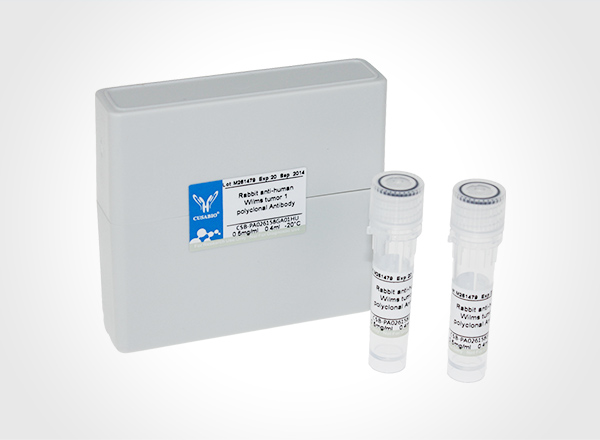
HYKPP antibody; HYPP antibody; Na(V)1.4 antibody; NAC1A antibody; Nav1.4 antibody; Scn4a antibody; SCN4A_HUMAN antibody; Skeletal muscle voltage dependent sodium channel type IV alpha subunit antibody; SkM1 antibody; Sodium channel protein skeletal muscle subunit alpha antibody; Sodium channel protein type 4 subunit alpha antibody; Sodium channel protein type IV subunit alpha antibody; Sodium channel voltage gated type IV alpha subunit antibody; Voltage gated sodium channel subunit alpha Nav1.4 antibody; Voltage gated sodium channel type 4 alpha antibody; Voltage-gated sodium channel subunit alpha Nav1.4 antibody
Raised in
Rabbit
Species Reactivity
Human,Mouse,Rat
Immunogen
Synthesized peptide derived from the Internal region of Human Na+ CP type IVα.
Immunogen Species
Homo sapiens (Human)
Conjugate
Non-conjugated
Isotype
IgG
Purification Method
The antibody was affinity-purified from rabbit antiserum by affinity-chromatography using epitope-specific immunogen.
Concentration
It differs from different batches. Please contact us to confirm it.
Buffer
Liquid in PBS containing 50% glycerol, 0.5% BSA and 0.02% sodium azide.
Form
Liquid
Note: We will preferentially ship the format that we have in stock, however, if you have any special requirement for the format, please remark your requirement when placing the order, we will prepare according to your demand.
Upon receipt, store at -20°C or -80°C. Avoid repeated freeze.
Lead Time
Basically, we can dispatch the products out in 1-3 working days after receiving your orders. Delivery time maybe differs from different purchasing way or location, please kindly consult your local distributors for specific delivery time.
Note: All of our proteins are default shipped with normal blue ice packs, if you request to ship with dry ice, please communicate with us in advance and extra fees will be charged.
Usage
For Research Use Only. Not for use in diagnostic or therapeutic procedures.
Pore-forming subunit of a voltage-gated sodium channel complex through which Na(+) ions pass in accordance with their electrochemical gradient. Alternates between resting, activated and inactivated states. Required for normal muscle fiber excitability, normal muscle contraction and relaxation cycles, and constant muscle strength in the presence of fluctuating K(+) levels.
Gene References into Functions
this study reports the cryo-electron microscopy structure of the human Nav1.4-beta1 complex at 3.2-A resolution.PMID:30190309
R1451 pathogenic mutations shifted the inactivation kinetics and reduced the current density.PMID:29391559
structural basis for gating pore current in periodic paralysis; results reveal pathogenic mechanisms of periodic paralysis at the atomic level and suggest designs of drugs that may prevent ionic leak and provide symptomatic relief from hypokalaemic and normokalaemic periodic paralysisPMID:29769724
Rare SCN4A variants that directly alter NaV1.4 function occur in infants who had died from SIDS. These variants are predicted to significantly alter muscle membrane excitability and compromise respiratory and laryngeal function.PMID:29605429
We report on 3 brothers presenting a peculiar clinical and histopathologic phenotype characterized by facial weakness with ptosis and a mild dystrophic pattern associated with recessive SCN4A mutations.PMID:28003497
Paramyotonia congenita-causing mutation N1366S leads to a gain-of-function change of NaV1.4 gating in response to cold.PMID:28940424
Data suggest that mutation of the sodium channel, voltage-gated, type IV, alpha protein (SCN4A) gene probably underlies the hypokalemic periodic paralysis in the family.PMID:29419865
We identified a novel Nav 1.4 mutation I692M in 14 families out of the 104 genetically identified Hyperkalemic periodic paralysis (HyperPP) families in the Neuromuscular Centre Ulm and is therefore as frequent as I693T (13 families out of 14 HyperPP families) in Germany. Surprisingly, in 13 families, a known polymorphism S906T was also presentPMID:27714768
Combining our results with the literature on Chinese populations indicates that 21 mutations in CLCN1 have been associated with myotonia congenital, while 7 mutations in SCN4A have been associated with paramyotonia congenita, 2 mutations in SCN4A have been associated with sodium channel myotonias.PMID:27415035
A rare variant p.Pro1629Leu in SCN4A identified in a patient with a skeletal muscle deficit and intermittent dysphagia.PMID:28012096
Cohort of 30 patients carrying the c.3466G>A p.A1156T mutation in the SCN4A gene showed a consistent phenotype of predominant myalgia, muscle stiffness, and exercise cramps without signs of clinical myotonia, paramyotonia, or periodic paralyses; modest gain in the function of p.A1156T channel in whole-cell patch clamp studies may explain the absence of clinical myotoniaPMID:28330959
These data suggest a possible involvement of SCN4A variants in the pathophysiological mechanism underlying the development of a spontaneous or drug-induced type 1 electrocardiographic pattern and the occurrence of malignant arrhythmias in some patients with Brugada syndrome.PMID:26036855
association of the genetic variability of SCN4A with the development of essential tremorPMID:26427606
Computer simulations of the effects of the I693T mutation were introduced in the muscle fiber model by both hyperpolarizing shifts in the Nav1.4 channel activation and a faster recovery from slow channel inactivationPMID:26494408
CACNA1S and SCN4A mutations are relatively rare in patients with hypokalemic periodic paralysisPMID:26252573
Recessive loss-of-function SCN4A mutations were identified in congenital myopathy patients.PMID:26700687
The c.4427 T>C (p.Met1476Thr) mutation of the SCN4A gene contribute to the paramyotonia congenita.PMID:27060299
Mutation analysis in the patient and in child's mother revealed a heterozygous p.N1180I mutation in exon 19 of SCN4A gene. In newborns with stiffness, peripheral contractures and myotonia, the sequence analysis of SCN4A gene should be performed.PMID:25735906
As the result, heterozygous mutations c.2024G>A (R675Q) and c.1333G>A (V445M) of gene SCN4A were identified in the hypokalemic periodic paralysis patient and the paramyotonia congenita family respectively.PMID:25839108
The patient with scn4a mutation exhibited various symptoms that evolved with age, including apneic episodes, tonic muscular contractions during sleep, fluctuating severe episodic myotonia, and finally episodic paralyses.PMID:25724373
Electrophysiological studies of the SCN4A P72L variant showed a hyperpolarizing shift (-5 mV) of the voltage dependence of activation that may increase cell excitabilityPMID:25660391
A Val1589Met mutation at exon 24 of the SCN4A gene appears in affected subjects with a mild form of paramyotonia, while healthy members had a point mutation at position 1513 at exon 24 of the SCN4A genePMID:25755818
A homozygous mutation in Nav 1.4 at position 1457 (Arg1457His) was identified in congenital myasthenic syndrome.PMID:25707578
Its M1592V mutation of SCN4A shares a much greater clinical diversity ranging from congenital paramyotonia to periodic paralysis with a longer duration.PMID:24943082
The data indicate that sialic acids attached to both N- and O-glycans residing within the Nav1.4 D1S5-S6 linker modulate channel gating through electrostatic mechanismsPMID:25450184
report the discovery of a novel SCN4A mutation (c.1762A>G; p.I588V) in a patient with myotonia and periodic paralysis, located within the S1 segment of the second domain of the Nav1.4 channelPMID:25348630
SCN4A was functionally affected by R675Q mutation, a possible reason for causing normokalemic periodic paralysis.PMID:24682880
Patients with life-threatening laryngospasm were found to be heterozygous for the same SCN4A mutation.PMID:25311598
The study demonstrates that the hNaV1.4F1705I mutation, which is linked to cold aggravated myotonia, alters the voltage dependence of inactivation and the temperature sensitivity of current kinetics.PMID:24324661
The effect of two single mutations of a critical tyrosine residue in the filter of NaV1.4 on tetrodotoxin binding observed experimentally is reproduced using computational mutagenesis.PMID:24607901
This work reveals a novel mechanism of disrupted S4 translocation for hypokalaemic periodic paralysis mutations at arginine residues located below the gating pore constriction of the voltage sensor module.PMID:24549961
Non-dystrophic myotonias are characterised by muscle stiffness during voluntary movement owing to delayed skeletal muscle relaxation caused by mutation in the SCN4A skeletal muscle channel genes.PMID:23417379
Non-dystrophic myotonias are rare diseases caused by mutations in skeletal muscle SCN4A.PMID:23771340
genetic study showed missense mutation (R1448C) in the voltage-gated sodium channel, type IV, alpha subunitPMID:23420899
Analyses of SCN4A, a key player in myotonia, have revealed parallels between its slow-inactivation and myotonic warm-up, which suggest that SCN4A is critical not only in producing the myotonic reaction, but also in mediating the warm-up.PMID:23381896
Nav1.4 N440K mutation causes a gain of function consistent with skeletal muscle hyperexcitability as observed in individuals with the mutation.PMID:22914841
Cooling can augment the disruption of the voltage dependence of fast inactivation by mutant M1476I/Nav1.4 channelsPMID:22250216
The patient presented a marked warm-up phenomenon of myotonia but the repeated short exercise test suggested mutations of the sodium channel.PMID:22617007
We found significant ocular involvement in a family with a mutation in SCN4A.PMID:22653516
A minority of sporadic periodic paralysis patients studied have de novo CACNA1S or SCN4A mutations and may have a variant of familial periodic paralysis.PMID:21841462
Substitutions at position 799 of the Nav1.4 channel favor the channel open state with sustained activity leading to hyperexcitability of laryngeal muscles that could be lethal during infancy.PMID:21521764
L1436P mutation in the SCN4A gene causes a sodium channel myotonia with an atypical clinical presentation, characterized by late onset painful cold-aggravated myotoniaPMID:21664816
This study demonistrated that mutation of Met1592Val in the SCN4A gene is associated with aggressive development of paralysis periodica paramyotonia characterized by severe vacuolar myopathy.PMID:21665479
The skeletal muscle alpha-subunit NaV1.4 was transiently expressed in wild-type Chinese hamster ovary (CHO) cellsPMID:21606664
ranolazine interacts with the open state and stabilizes the inactivated state(s) of Na(v)1.4 channels, causes voltage- and use-dependent block of I(Na) and suppresses persistent I(Na)PMID:21317558
Anthopleurin elicited opposing effects on the gating mode, kinetics and charge immobilized during open- versus closed-state fast inactivation of Nav1.4 channels.PMID:21099342
study detected the SCN4A R672H mutation in one hypokalemic periodic paralysis Turkish familyPMID:21043388
Severe neonatal episodic laryngospasm is a new phenotype caused by a sodium channelopathy, which can be alleviated by channel blockers.PMID:20713951
electrostatic network interactions between S2 and other transmembrane segments within Na(v)1.4D4 are similar to but not identical to those proposed for K+ channelsPMID:19881885
This study describes the first cases of homozygosity for two missense mutations in the SCN4A gene which increases severity of muscle channelopathies.PMID:19882638