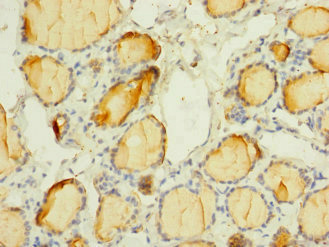
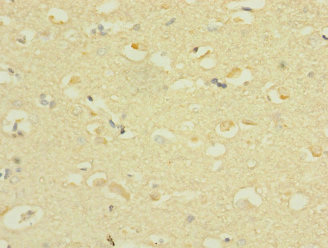
brain III voltage-gated sodium channel antibody; NAC3 antibody; Nav1.3 antibody; SCN3A antibody; SCN3A_HUMAN antibody; Sodium channel protein brain III subunit alpha antibody; Sodium channel protein type 3 subunit alpha antibody; Sodium channel protein type III subunit alpha antibody; Sodium channel protein, brain III subunit alpha antibody; sodium channel, brain type III, alpha subunit antibody; sodium channel, neuronal type III, alpha subunit antibody; sodium channel, voltage-gated, type III, alpha polypeptide antibody; sodium channel, voltage-gated, type III, alpha subunit antibody; Voltage gated sodium channel subtype III antibody; Voltage gated sodium channel subunit alpha Nav1.3 antibody; Voltage-gated sodium channel subtype III antibody; Voltage-gated sodium channel subunit alpha Nav1.3 antibody
Raised in
Rabbit
Species Reactivity
Human
Immunogen
Recombinant Human Sodium channel protein type 3 subunit alpha protein (274-400AA)
Immunogen Species
Homo sapiens (Human)
Conjugate
Non-conjugated
Clonality
Polyclonal
Isotype
IgG
Purification Method
Antigen Affinity Purified
Concentration
It differs from different batches. Please contact us to confirm it.
Buffer
PBS with 0.02% sodium azide, 50% glycerol, pH7.3.
Form
Liquid
Note: We will preferentially ship the format that we have in stock, however, if you have any special requirement for the format, please remark your requirement when placing the order, we will prepare according to your demand.
Upon receipt, store at -20°C or -80°C. Avoid repeated freeze.
Lead Time
Basically, we can dispatch the products out in 1-3 working days after receiving your orders. Delivery time maybe differs from different purchasing way or location, please kindly consult your local distributors for specific delivery time.
Note: All of our proteins are default shipped with normal blue ice packs, if you request to ship with dry ice, please communicate with us in advance and extra fees will be charged.
Usage
For Research Use Only. Not for use in diagnostic or therapeutic procedures.
Mediates the voltage-dependent sodium ion permeability of excitable membranes. Assuming opened or closed conformations in response to the voltage difference across the membrane, forms a sodium-selective channel through which Na(+) ions may pass in accordance with their electrochemical gradient. May contribute to the regulation of serotonin/5-hydroxytryptamine release by enterochromaffin cells. In pancreatic endocrine cells, required for both glucagon and glucose-induced insulin secretion.
Gene References into Functions
SCN3A is involved in development of the human brain and oral motor development. When SCN3A is mutated, patients present with polymicrogyria and speech deficits.PMID:30146301
Novel de novo variant SCN3A-L247P was demonstrated to cause a defect in trafficking, which would be predicted to functionally reduce SCN3A activity. Consistent with the clinical observations, Scn3a+/Hyp mice display increased seizure susceptibility, hypoactivity, and impaired motor learning.PMID:28235671
sodium channel currents in oocytes expressing either wild-type or mutant (A4V) SOD1 proteinPMID:27072680
Discovery of a common biophysical defect among variants identified in unrelated pediatric epilepsy patients suggests that SCN3A may contribute to neuronal hyperexcitability and epilepsy.PMID:24157691
Upregulation of Nav1.3 protein and a specific cellular distribution of Nav1.3 proteins in focal cortical dysplasia type IIb(FCDIIb) lesion tissue samples suggest that Nav1.3 may be involved in the generation of epileptic activity in FCDIIb.PMID:22494998
Deletions in SCN3A gene is associated with autistic features and developmental delay.PMID:20346423
In trigeminal neuralgia (TN) there is a reduction in the expression of Nav1.7 and an increase in the expression of Nav1.3, Nav1.8 expression not significantly different; TN can be, at least in part, a channelopathy.PMID:19699781
in autism families, two polymorphic coding variants of SCN3A are describedPMID:12610651
Characterization of 5' untranslated regions SCN3A, and identification of cis-conserved noncoding sequences.PMID:17544618