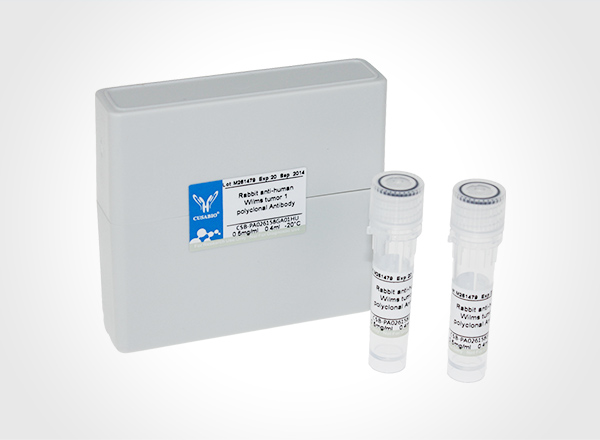
Liquid
Note: We will preferentially ship the format that we have in stock, however, if you have any special requirement for the format, please remark your requirement when placing the order, we will prepare according to your demand.
Upon receipt, store at -20°C or -80°C. Avoid repeated freeze.
Lead Time
Basically, we can dispatch the products out in 1-3 working days after receiving your orders. Delivery time maybe differs from different purchasing way or location, please kindly consult your local distributors for specific delivery time.
Note: All of our proteins are default shipped with normal blue ice packs, if you request to ship with dry ice, please communicate with us in advance and extra fees will be charged.
Usage
For Research Use Only. Not for use in diagnostic or therapeutic procedures.
May be involved in post-transcriptional processing, most probably in mRNA splicing. Binds to RNA homopolymers, with a preference for poly(G) and poly(U) and little for poly(A). May bind to specific miRNA hairpins.
Gene References into Functions
RBM10: Harmful or helpful-many factors to consider.PMID:29274279
RBM10 mutations contribute to lung adenocarcinoma pathogenesis.PMID:28091594
The high rate of TERT promoter mutations, MED12 mutations, RBM10 mutations, and chromosome 1q gain highlight their likely association with tumor virulencePMID:28634282
The well-known high-fidelity RNA splice site recognition by RBM10, and probably by RBM5 and RBM6, can thus be largely rationalized by a cooperative binding action of RRM and ZnF domainsPMID:29450990
Our work has not only expanded the number of pre-mRNA targets for RBM10, but identified RBM10 as a novel regulator of SMN2 alternative inclusion.PMID:28728573
RBM10 functions as a splicing regulator using two RNA-binding units with different specificities to promote exon skipping.PMID:28379442
RNA binding motif protein 10 (RBM10) negatively regulates its own mRNA and protein expression and that of RNA binding motif protein 5 (RBM5) by promoting alternative splicing-coupled nonsense-mediated mRNA decay (AS-NMD).PMID:28586478
results provide evidence that RBM10 expression, in RBM5-null tumors, may contribute to tumor growth and metastasis. Measurement of both RBM10 and RBM5 expression in clinical samples may therefore hold prognostic and/or potentially predictive valuePMID:28662214
RBM10-TFE3 is a recurrent gene fusion in Xp11 translocation renal cell carcinoma.PMID:28296677
Xp11 translocation renal cell carcinomas with RBM10-TFE3 gene fusion demonstrating melanotic features and overlapping morphology with t(6;11) RCC.PMID:28288037
RNA-binding motif 10 messenger RNA and protein were reduced in lung adenocarcinoma tissues, and RNA-binding motif 10 overexpression inhibited lung adenocarcinoma cancer cell malignant behavior in vitro. Molecularly, RNA-binding motif 10 regulates many gene pathways involving in the tumor development or progression.PMID:28347232
RBM10-TFE3 fusion variant (from chromosome X paracentric inversion), therefore, appears to be a recurrent molecular event in Xp11.2 RCCs. RBM10-TFE3 fusion should be added in the list of screened fusion transcripts in targeted molecular diagnostic multiplex RT-PCRPMID:26998913
RBM10 is a tumor suppressor that represses Notch signaling and cell proliferation through the regulation of NUMB alternative splicingPMID:26853560
Src family tyrosine kinase signaling may regulate FilGAP through association with RBM10PMID:26751795
The ability of RBM10v1 to regulate alternative splicing depends, at least in part, on a structural alteration within the second RNA recognition motif domain, and correlates with preferential expression of the NUMB exon 11 inclusion variant.PMID:25889998
RBM10 regulates alternative splicing of Fas and Bcl-x genes.PMID:24530524
Antagonizes the effects of RBM5, RBM6, and RBM10 in cell colony formation.PMID:24332178
This study established RBM10 as an important regulator of alternative splicing, presented a mechanistic model for RBM10-mediated splicing regulation and provided a molecular link to understanding a human congenital disorder.PMID:24000153
S1-1 contains multiple nuclear localisation sequence that act cooperatively.PMID:23294349
Massively parallel sequencing of exons on the X chromosome identifies RBM10 as the gene that causes a syndromic form of cleft palate.PMID:20451169
From these results, it seems that the X-chromosome, through its RBM genes, plays a formerly unknown role in the regulation of programmed cell death (apoptosis) in breast cancer.PMID:16552754
S1-1 constitutes hundreds of nuclear domains, which dynamically change their structures in a reversible manner; upon globally reducing RNA polymerase II transcription, S1-1 nuclear bodies enlarge and decrease in number.PMID:18315527
results indicate that very few genes are involved in the last steps of the apoptotic cascade in breast cancer, among them one of the X-chromosome RBM familyPMID:18820371
Show
More
Hide
All
Subcellular Location
Nucleus. Note=In the extranucleolar nucleoplasm constitutes hundreds of nuclear domains, which dynamically change their structures in a reversible manner. Upon globally reducing RNA polymerase II transcription, the nuclear bodies enlarge and decrease in number. They occur closely adjacent to nuclear speckles or IGCs (interchromatin granule clusters) but coincide with TIDRs (transcription-inactivation-dependent RNA domains).