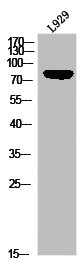
Synthesized peptide derived from Human HSL around the phosphorylation site of S855.
Immunogen Species
Homo sapiens (Human)
Conjugate
Non-conjugated
Isotype
IgG
Purification Method
The antibody was affinity-purified from rabbit antiserum by affinity-chromatography using epitope-specific immunogen.
Concentration
It differs from different batches. Please contact us to confirm it.
Buffer
Liquid in PBS containing 50% glycerol, 0.5% BSA and 0.02% sodium azide.
Tested Applications
WB, IHC, ELISA
Storage
Upon receipt, store at -20°C or -80°C. Avoid repeated freeze.
Lead Time
Basically, we can dispatch the products out in 1-3 working days after receiving your orders. Delivery time maybe differs from different purchasing way or location, please kindly consult your local distributors for specific delivery time.
Note: All of our proteins are default shipped with normal blue ice packs, if you request to ship with dry ice, please communicate with us in advance and extra fees will be charged.
Usage
For Research Use Only. Not for use in diagnostic or therapeutic procedures.
Lipase with broad substrate specificity, catalyzing the hydrolysis of triacylglycerols (TAGs), diacylglycerols (DAGs), monoacylglycerols (MAGs), cholesteryl esters and retinyl esters. Shows a preferential hydrolysis of DAGs over TAGs and MAGs and preferentially hydrolyzes the fatty acid (FA) esters at the sn-3 position of the glycerol backbone in DAGs. Preferentially hydrolyzes FA esters at the sn-1 and sn-2 positions of the glycerol backbone in TAGs. Catalyzes the hydrolysis of 2-arachidonoylglycerol, an endocannabinoid and of 2-acetyl monoalkylglycerol ether, the penultimate precursor of the pathway for de novo synthesis of platelet-activating factor. In adipose tissue and heart, it primarily hydrolyzes stored triglycerides to free fatty acids, while in steroidogenic tissues, it principally converts cholesteryl esters to free cholesterol for steroid hormone production.
Gene References into Functions
The homozygous null LIPE mutation could result in marked inhibition of lipolysis from some adipose tissue depots and thus may induce an extremely rare phenotype of MSL and partial lipodystrophy in adulthood associated with complications of insulin resistance, such as diabetes, hypertriglyceridemia and hepatic steatosis.PMID:27862896
Despite reductions in intramyocellular lipolysis and HSL expression, overexpression of HSL did not rescue defects in insulin action in skeletal myotubes from obese type 2 diabetic subjects.PMID:25819461
Identification of a homozygous nonsense variant p.Ala507fsTer563 in hormone sensitive lipase as the likely cause of the lipodystrophy phenotype in siblings.PMID:25475467
These findings indicate the physiological significance of HSL in adipocyte function and the regulation of systemic lipid and glucose homeostasis and underscore the severe metabolic consequences of impaired lipolysis.PMID:24848981
Serum triglyceride was significantly up-regulated in men with the (CG + GG) genotype of HSL promoter polymorphism.PMID:23688034
M. leprae suppresses lipid degradation through inhibition of HSL expression.PMID:22553833
Enzyme promiscuity in the hormone-sensitive lipase family of proteins.PMID:21933124
Resveratrol increased adipose triglyceride lipase gene and protein expressions, an effect that was not observed for hormone-sensitive lipase in human SGBS adipocytes.PMID:21543206
LIPE C-60G variation can inhibit the decrease of LDL-C and the increases of HDL-C and apo A-I in young healthy males, and can inhibit the decrease of LDL-C and the increase of insulin in young healthy females induced by a high-carbohydrate diet.PMID:21826994
suggests that genetic variation of HSL may be a risk factor for male infertilityPMID:21919688
Data show that hormone-sensitive lipase activity is reduced in adipose tissue of patients with and without diabetes, while lipoprotein lipase activity is reduces only in patients with diabetes.PMID:20926921
It is concluded that ACTH via the PKA pathway stimulates expression of SF-1, which activates transcription of LIPE presumably by interaction with putative binding sequences within promoter APMID:21081692
total lipase, ATGL and HSL activities were higher in visceral white adipose tissue of cancer patients compared with individuals without cancer and higher in cancer patients with cachexia compared with cancer patients without cachexiaPMID:21680814
Data indicate that altered ATGL and HSL expression in skeletal muscle could promote DAG accumulation and disrupt insulin signaling and action.PMID:21498783
Studies indicate tha HSL is regulated by reversible phosphorylation on five critical residues.PMID:21241784
Those findings indicate improvement and conservation of lifestyle depending on genetic predisposition in ADIPOQ, PLIN and LIPE should be encouraged.PMID:20495294
The present study aimed at comparing expression and subcellular distribution of perilipin and hormone-sensitive lipase in two abdominal adipose tissues of lean and obese women.PMID:20017959
genes of C3, hormone-sensitive lipase, and PPARgamma may exert a modifying effect on lipid and glucose metabolism in familial combined hypersensitivityPMID:11979403
overexpression of HSL, despite increased lipase activity, does not lead to enhanced lipolysisPMID:12518034
HSL i6 A5 HOMOZYGOSITY IS A RISK FACTOR FOR BODY FAT ACCUMULATIONPMID:12534454
high concentrations of estradiol significantly increased both hormone-sensitive lipase expression and glycerol release relative to controlPMID:12701046
lipolytic catecholamine resistance of sc adipocytes in polycystic ovary syndrome is probably due to a combination of decreased amounts of beta(2)-adrenergic receptors, the regulatory II beta-component of protein kinase A, and hormone-sensitive lipasePMID:12727985
High adrenaline levels can stimulate hormone-sensitive lipase(HSL) activity regardless of metabolic milieu. Large increases in adrenaline during exercise are able to further stimulate contraction-induced increase in HSL activity.PMID:12730334
The presence of a catalytically inactive variant of this enzyme is associated with decreased lipolysis in abdominal subcutaneous adipose tissue of obese subjectsPMID:12765952
role of cyclic GMP in natriuretic peptide-mediated phosphorylation in adipocytesPMID:12970365
AMPK is a major regulator of skeletal muscle HSL activity that can override beta-adrenergic stimulationPMID:15231718
catalytic serine of hormone-sensitive lipase is highly reactive and similar behavior was also observed with lipases with no lid domain covering their active site, or with a deletion in the lid domainPMID:15260473
5'AMP-activated protein kinase phosphorylates hormone-sensitive lipase on Ser565 in human skeletal muscle during exercise with reduced muscle glycogen. Apparently, HSL Ser565 phosphorylation by AMPK during exercisePMID:15308678
mechanism of infertility in HSL-deficient males is cell autonomous and resides in postmeiotic germ cells, because HSL expression in these cells is in itself sufficient to restore normal fertilityPMID:15345679
a pre-lipolysis complex containing at least AFABP and HSL existsPMID:15456755
Basal HSL is decreased in patients with type 2 diabetes mellitus, and this may be a consequence of elevated plasma insulin levels.PMID:15609025
Perilipin targets a novel pool of lipid droplets for lipolytic attack by hormone-sensitive lipasePMID:16243839
the HSL C-60G polymorphism is associated with increased waist circumference in non-obese subjectsPMID:16534522
adrenergic stimulation contributes to the increase in HSL activity that occurs in human skeletal muscle in the first minute of exercise at 65% and 90% VO2 peakPMID:16690773
HSL gene expression shows a regulation according to obesity status and is associated with increased adipose tissue lipase activity.PMID:16752181
although HSL expression and Ser(659) phosphorylation in skeletal muscle during exercise is sex specific, total muscle HSL activity measured in vitro was similar between sexesPMID:16822962
maternal type 1 diabetes is associated with TG accumulation and increased EL and HSL gene expression in placentaPMID:16940551
Adipose triglyceride lipase and hormone sensitive lipase are responsible for more than 95% of the triacylglycerol hydrolase activity present in murine white adipose tissue.PMID:17074755
Adipose triglyceride lipase (ATGL) is less important than hormone-sensitive lipase (HSL) in regulating catecholamine-induced lipolysis. Both lipases regulate basal lipolysis in human adipocytes. ATGL expression is not influenced by obesity or PCOS.PMID:17327373
In obese subjects, insulin resistance and hyperinsulinemia are strongly associated with ATGL and HSL mRNA and protein expression, independent of fat massPMID:17356053
Dydrogesterone and norethisterone increase secretion of HSL from abdominaal adipocytes.PMID:17587400
variation of the HSL gene might be associated with a physiological effect on in vivo beta-adrenoceptor-mediated fat oxidationPMID:18249203
Real-time PCR revealed that large adipocytes expressed higher mRNA levels of hormone sensitive lipase.PMID:18383440
Obesity is accompanied by impaired fasting glycerol release, lower HSL protein expression, and serine phosphorylation.PMID:18398140
Mapping of the hormone-sensitive lipase binding site on the adipocyte fatty acid-binding protein (AFABP). Identification of the charge quartet on the AFABP/aP2 helix-turn-helix domain.PMID:18820256
analysis of human, mouse and ovine Hormone Sensitive LipasePMID:18824087
PKA activates human HSL against lipid substrates in vitro primarily through phosphorylation of Ser649 and Ser650PMID:19018281
These results suggest that the associations between physical activity and body fat and plasma lipoprotein/lipid concentrations in men are dependent on the LIPE C-60G polymorphism,.PMID:19164092
results suggest that ATGL/CGI-58 acts independently of HSL and precedes its action in the sequential hydrolysis of triglycerides in human hMADS adipocytesPMID:19433586