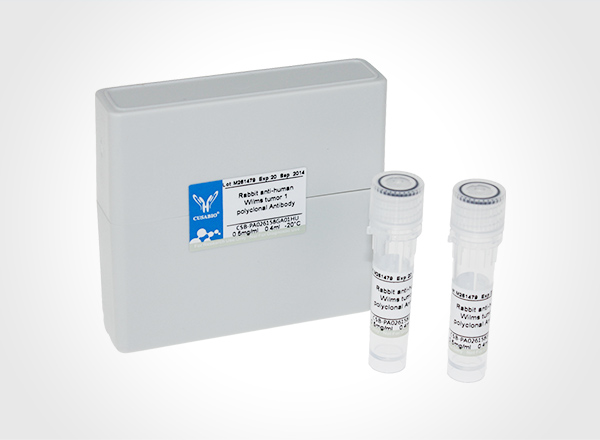
KCNA3; HGK5; Potassium voltage-gated channel subfamily A member 3; HLK3; HPCN3; Voltage-gated K(+ channel HuKIII; Voltage-gated potassium channel subunit Kv1.3
Raised in
Rabbit
Species Reactivity
Human,Mouse,Rat
Immunogen
Synthesized peptide derived from Human Kv1.3 around the phosphorylation site of Y187.
Immunogen Species
Homo sapiens (Human)
Conjugate
Non-conjugated
Isotype
IgG
Purification Method
The antibody was affinity-purified from rabbit antiserum by affinity-chromatography using epitope-specific immunogen.
Concentration
It differs from different batches. Please contact us to confirm it.
Buffer
Liquid in PBS containing 50% glycerol, 0.5% BSA and 0.02% sodium azide.
Form
Liquid
Note: We will preferentially ship the format that we have in stock, however, if you have any special requirement for the format, please remark your requirement when placing the order, we will prepare according to your demand.
Upon receipt, store at -20°C or -80°C. Avoid repeated freeze.
Lead Time
Basically, we can dispatch the products out in 1-3 working days after receiving your orders. Delivery time maybe differs from different purchasing way or location, please kindly consult your local distributors for specific delivery time.
Note: All of our proteins are default shipped with normal blue ice packs, if you request to ship with dry ice, please communicate with us in advance and extra fees will be charged.
Usage
For Research Use Only. Not for use in diagnostic or therapeutic procedures.
Mediates the voltage-dependent potassium ion permeability of excitable membranes. Assuming opened or closed conformations in response to the voltage difference across the membrane, the protein forms a potassium-selective channel through which potassium ions may pass in accordance with their electrochemical gradient.
Gene References into Functions
T-cell dependency on Kv1.3 or KCa3.1 might be irreversibly modulated by antigen exposure.PMID:28248292
Kv1.3 methylation may serve as diagnostic and prognostic markers in colorectal cancer.PMID:28472608
the tertiary structure of the C-terminal domain of Kv1.3 is necessary and sufficient for Kv1.3- KCNE4 interaction.PMID:27802162
results identify a caveolin-binding domain in Kv1 channels and highlight the mechanisms that govern the regulation of channel surface localization during cellular processesPMID:26931497
we report that Kv1.3-NPs reduced NFAT activation and CD40L expression exclusively in CD45RO(+) T cells. Furthermore, Kv1.3-NPs suppressed cytokine release and induced a phenotype switch of T cells from predominantly memory to naive.PMID:26994905
The implication of Kv1.3 in a wide repertoire of human pathologies indicates this channel is an important therapeutic target.PMID:26634786
Results contribute to the characterization of leukemic B cells, as it shows that upregulation of Kv1.3 in pathologic B lymphocytes is linked to the oncogenic B-RAF signaling.PMID:26393354
Data suggest that C-terminus is necessary for Kv1.3-induced cell proliferation; the mechanism involves accessibility of key docking sites at the C terminus; phosphorylation of Tyr-447 by MAP kinase signal cascade appears crucial.PMID:26655221
concluded that Kv1.3 may stimulate macrophage migration through the activation of ERK.PMID:26748289
The inhibition of Kv1.3 channels might be involved in antiproliferative and proapoptotic effects of the compounds observed in cancer cell lines expressing these channels.PMID:25688010
Kv1.3 channels modulate human vascular smooth muscle cells proliferation independently of mTOR signaling pathway.PMID:25208915
actin dynamics regulates the membrane motility of Kv1.3 channels.PMID:25739456
The increment and decrement of the basic residue number in a positively charged S4 sensor of Kv1.3 channel yields conductance-voltage relationship curves in the positive direction by approximately 31.2 mV and 2-4 mVPMID:25944908
the association between Kv1.3 and the COPII cargo adaptor subunit isoform Sec24aPMID:26156069
Findings reveal that alpha-defensins are endogenous inhibitors of potassium voltage-gated channel subfamily A member 3 (Kv1.3) with distinct interaction mechanisms.PMID:26148969
This study demonstrated that Potassium channel Kv1.3 is highly expressed by microglia in human Alzheimer's disease.PMID:25362031
These results demonstrate that Kv1.3 channels are primarily localized in the nucleus of several types of cancer cells and human brain tissues where they are capable of regulating nuclear membrane potential and activation of transcription factorsPMID:25829491
the small molecule Kv1.3 blocker PAP-1 dose-dependently inhibited proliferation and suppressed IL-2 and IFN-gamma production.PMID:25175978
Treatment with Acacetin for 24 h significantly inhibited Kv1.3 protein expression.PMID:25301362
results revealed that the deficient expression of Kv1.3 channel would cause the less Ca2+ signal, leading to the less efficiency in secretionPMID:24594979
Targeting the ion channel Kv1.3 with scorpion venom peptides engineered for potency, selectivity, and half-lifePMID:24939846
We show the structure of the T1 domain derived from the voltage-dependent potassium channel K(v)1.3 of Homo sapiens sapiens at 1.2 A resolution crystallized under near-physiological conditions.PMID:24114469
Authors show the helical transmembrane S3b-S4 hairpin ("paddle") of a voltage-gated potassium (Kv) channel, a critical region of the Kv voltage sensor, forms in the ribosomal vestibule.PMID:24055377
CMYA5 is a new potential substrate of Kcna3 in human heartPMID:23335746
diseases. Our present results indicate a critical role for Kv1.3 in the conversion of CD8+ T cells into potential pathogenic effector cells with cytotoxic function.PMID:23382885
role of Kv1.3 in modulating cholesterol-metabolism-associated molecules in human acute monocytic leukemia cell-derived macrophages (THP-1 macrophages) and human monocyte-derived macrophages exposed to oxidized LDLPMID:23099443
Diclofenac can significant down-regulate the expression of Kv1.3 and Kir2.1 channels in human macrophages, lower their membrane potential and inhibit the process of foam cell formation.PMID:22931594
MMP23-PD suppresses the voltage-gated potassium channel KV1.3, but not the closely related KV1.2 channel, by trapping the channel intracellularly.PMID:23300077
GrB released from T cells induced neurotoxicity by interacting with the membrane bound Gi-coupled PAR-1 receptor and subsequently activated Kv1.3 and Notch-1PMID:22952817
and immunocytochemistry experiments revealed an association between K(v)1.5, K(v)beta1.3, the receptor for activated C kinase (RACK1), PKCbetaI, PKCbetaII, and PKCtheta.PMID:22547057
Selective knockdown of protein kinase A 1(PKAI) eliminates modulation of Kv1.3 channels by PKAI activation.PMID:22378744
Data suggest that rituximab induces apoptosis of malignant B lymphocytes by stimulating FcgammaRIIB receptors and inhibiting Kv1.3 channels.PMID:22192444
CD4+CD28null T cells expressed small numbers of the voltage-gated Kv1.3 and intermediate-conductance Ca2+-activated K+ channel KCa3.1 when quiescent, but increased Kv1.3 expression 4-fold with little change in KCa3.1 levels upon activation.PMID:22169811
expression of Kv1.5 and Kv1.3 increased in skeletal muscle tumorigenesis in a close relationship with malignancy.PMID:22360360
hypoxia disrupts AP1/clathrin-mediated forward trafficking of Kv1.3 from the trans-Golgi to the plasma membrane thus contributing to decreased Kv1.3 surface expression in T lymphocytes.PMID:22134923
Functional blockade of the voltage-gated potassium channel Kv1.3 mediates reversion of T effector to central memory lymphocytes through SMAD3/p21cip1 signaling.PMID:22110135
Our findings provide the first evidence that KCNA3 is associated with autoimmune pancreatitis and suggest that KCNA3 may influence the risk for autoimmune pancreatitisPMID:22045429
PDZ binding domain-dependent interactions affect both Kv1.3 localization (plasma membrane vs. golgi complex) and electrophysiological function. PDZ interactions affect localization and function via independent mechanisms.PMID:21726550
regulatory switch of Kv1.3 activity in peripherally induced Tregs may constitute an important contributing factor in the signaling rewiring associated with the development of these cellsPMID:21834013
findings are not supportive of a role for Kv1.3 in the modulation of peripheral insulin sensitivityPMID:21586699
A mutation in Kv1.3 (A413C) doubles the stoichiometry of emopamil but not verapamil for blocking the channel.PMID:21220411
K(V)1.3 potassium channels are functional in proliferating mouse and human vascular smooth muscle cells and have positive effects on cell migration. Blockers of the channels may be useful as inhibitors of neointimal hyperplasia.PMID:20884640
treatment with short hairpin RNA (shRNA) against Kv1.3, significantly blocked A549 cells' proliferationPMID:21087602
higher expression on major T-lymphocyte subsets of newborns compared to adult ones except for T(h)1 lymphocytesPMID:20601376
increased impact on T-lymphocyte activation in type 1 diabetes mellitus patientsPMID:20603149
Kv1.3 contributes an unusual nonconducting role - the detection of metabolic state.PMID:20865378
role of this channel in the sequence of events leading to Bax-induced cytochrome c releasePMID:20114030
A comparison of the expression patterns of Kv1.3 and Kv1.5 in the human fetus.PMID:20798505
trafficking abnormalities contribute to defective signaling in systemic lupus erythematosus T cellsPMID:19959227
Given that glutamate is present in plasma and that both mGluRs and K(V)1.3 channels regulate T-lymphocyte responsiveness, our finding may account for the presence of immune-associated alterations in AD.PMID:19850126
Show
More
Hide
All
Subcellular Location
Cell membrane; Multi-pass membrane protein.
Protein Families
Potassium channel family, A (Shaker) (TC 1.A.1.2) subfamily, Kv1.3/KCNA3 sub-subfamily