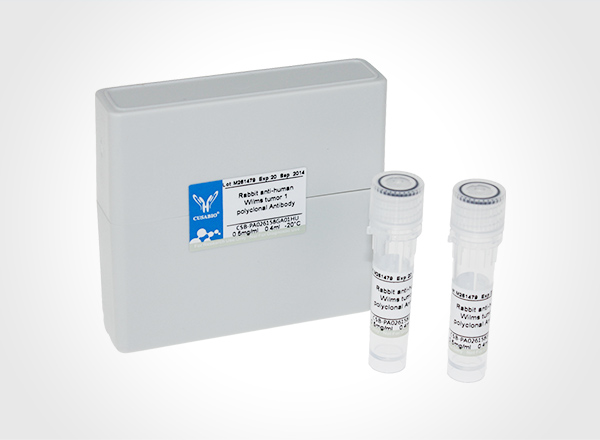
Upon receipt, store at -20°C or -80°C. Avoid repeated freeze.
Lead Time
Basically, we can dispatch the products out in 1-3 working days after receiving your orders. Delivery time maybe differs from different purchasing way or location, please kindly consult your local distributors for specific delivery time.
Note: All of our proteins are default shipped with normal blue ice packs, if you request to ship with dry ice, please communicate with us in advance and extra fees will be charged.
Usage
For Research Use Only. Not for use in diagnostic or therapeutic procedures.
Anticoagulant plasma protein; it is a cofactor to activated protein C in the degradation of coagulation factors Va and VIIIa. It helps to prevent coagulation and stimulating fibrinolysis.
Gene References into Functions
The authors provide strong evidence that the rare Protein S Heerlen (PSH) mutation variant is associated with venous thrombosis in unselected individuals.PMID:28374852
Functional PROS1 variants are more common in the general Swedish population than anticipated.PMID:29883906
The present case combined with the review of the literature suggests that p.Arg451* in the PROS1 gene mainly leads to clinically evident thrombosis following trauma, surgery or serious comorbidities especially malignancy.PMID:29321366
Protein S and Gas6 mediates phagocytosis of HIV-1-infected cells by bridging receptor tyrosine kinase Mer to phosphatidylserine exposed on infected cells.PMID:29304470
these results suggest a novel pathogenic role of SPE B that initiates protein S degradation followed by the inhibition of apoptotic cell clearance by macrophagesPMID:27181595
Taken together, our gain-of-function, loss-of-function analyses suggest that PROS may facilitate cell proliferation and promote castration resistance in human castration-resistant PCa-like cells via its apoptosis-regulating property.PMID:27342144
protein S has a clinical relevance and a protective role in pulmonary fibrosisPMID:27172994
Due to the versatility exemplified, this probe holds great promise for exploring the role of protein S-nitrosylation in the pathophysiological process of a variety of vascular diseasesPMID:28284075
There was no association between PS-Tokushima and recurrent pregnancy loss and a PS deficiency or low PS activity was shown not to serve as a reliable clinical predictor of subsequent miscarriage.PMID:28214760
we identify PROS1 as a driver of Oral Squamous Cell Carcinoma tumor growth and a modulator of AXL expressionPMID:28118606
The prevalence of PS de fi ciency in the present study was higher than in Western countries and con fi rms the high prevalence of PS de fi ciency in Asian populationsPMID:27748013
Patients with type 2 diabetes had significantly lower circulating free protein S than healthy control subjectsPMID:27207541
In the present study, gene analysis of six unrelated Japanese families diagnosed with congenital protein S deficiency identified five missense mutations in the PROS1 gene - c.757C>T (Ala139Val; A139V), c.1346 G>T (Cys449Phe; C449F), c.1352G>A (Arg451Gln; R451Q), c.1424G>T (Cys475Phe; C475F) and c.1574C>T (Ala525Val; A525V) - and one frameshift mutation, c.2135delA (Asp599ThrfsTer13; D599TfsTer13).PMID:28088608
The odds ratio of developing idiopathic fatal pulmonary embolism as a variant carrier for PROS1 is 56.4 (95% CI, 5.3-351.1; P = 0.001).PMID:28174134
described a novel PROS1 frameshift mutation, c.74dupA, in a hereditary protein S deficiency family. Interestingly, both of the proband and his mother carried the mutation and had a protein S deficiency, however, only the proband suffered a pulmonary embolism while his mother had no history of any thrombosis, suggesting that a triggering event might have been involved in the thrombus formation.PMID:27846449
PROS1 may play an important role in the development of glioblastoma multiforme through cellular proliferation, migration and invasion as well as apoptosis.PMID:27840905
Low protein S expression is associated with diabetes mellitus.PMID:27345772
analysis of genotype phenotype correlation in PROS1 in a large cohort of adults with suspicion of inherited quantitative protein S deficiencyPMID:26466767
The immunoabsorption of PON1 from plasma significantly reduced protein S anti-coagulant activity.PMID:26358807
Elevated levels of circulating microparticles can play a role in carriers of mild and severe inherited thrombophilia resulting from protein S deficiency.PMID:26354831
The ELISA system using the PS K196E mutation-specific antibody is a useful tool for the rapid identification of PS K196E carriers, who are at a higher risk for venous thromboembolism.PMID:26186226
A PROS1 c.1486_1490delGATTA mutation on exon 12. appeared to be the primary cause of thrombosis in the family of the present study.PMID:25997409
analysis of the amino acid residues in the laminin G domains of protein S involved in tissue factor pathway inhibitor interactionPMID:25716664
Women with low levels of plasma PS activity and free PS during early pregnancy might have increased risks of pregnancy-induced hypertension, or pre-eclampsia.PMID:25879167
analysis of compound heterozygote protein S deficiency in two Japanese patients [case reports]PMID:25868595
Protein S exacerbates acute alcoholic hepatitis by inhibiting apoptosis of activated natural killer T cells.PMID:25399514
The present study highlights that the GAS6/ProS-TAM system correlates in several ways with disease activity in systemic lupus erythematosusPMID:23497733
genetic polymorphism affects endogenous thrombin potential among FV Leiden carriersPMID:24226152
Identical large duplication mutation of PROS1 was detected in 3 unrelated patients with thrombophilia from hereditary protein S deficiency.PMID:24992033
Anti-human protein S antibody induces tissue factor expression through a direct interaction with PFKP and ERK1/2 activation in coronary artery endothelial cells.PMID:24331211
Data indicate that the protein S sex hormone-binding globulin (SHBG)-like domain was important for binding and enhancement of tissue factor pathway inhibitor (TFPI).PMID:24740810
study found the S K196E mutation, a genetic risk factor for venous thromboembolism, was not found in Chinese or Koreans; results suggest the protein S K196E mutation is a recent occurrence and fixed within the Japanese populationPMID:23721692
implicate protein S residues 37-50 as a binding site for FVa that mediates, at least in part, the direct inhibition of FVa-dependent procoagulant activity by protein SPMID:23892573
miR-494 is involved in the mechanism of estrogen-mediated downregulation of PS expressionPMID:23789915
This is the first report of a large deletion of PROS1 from exon 1 through 12 in Polish patients with deep-vein thrombosis.PMID:23473639
PS exerts anticoagulant cofactor activity with TFPIalpha from any physiological pool, likely by localizing TFPIalpha to membrane surfaces, stabilizing its interaction with membrane-bound FXa, and slowing thrombin generation.PMID:24233490
Data suggest that protein S testing and PROS1 testing should not be considered in unselected patients with venous thrombosis.PMID:24014240
This study is the largest investigation of ProS deficiency in China and the first investigation of the influence of Type I ProS missense mutations on the global level of coagulation function.PMID:23813890
The effect of oral contraceptives on TFPI and PS is a possible explanation for the increased risk of venous thrombosis associated with oral contraceptives.PMID:23407778
Data indicate that activated T cells express Pros1.PMID:23850380
Platelet protein S may be an essential pool of protein S that counterbalances procoagulant activities on platelets.PMID:23238804
sputum glutaredoxin-1 may have a role in asthma, while protein S may have a role in better lung functionPMID:23370801
The tyrosine kinase receptor MER is activated by PROS and mediates its inhibitory effect on VEGF-A-induced EC proliferation.PMID:23065156
TFPI Kunitz domain 3 residue Glu226 is essential for TFPI enhancement by protein S.PMID:23074276
PROS1 is elevated in high grade and castration-resistant prostate cancer and could serve as a potential biomarker of aggressive disease.PMID:22908226
mutation deletions but no other types of rearrangements detected in patients with protein S deficiencyPMID:22627709
genetic polymorphism is associated with increased free plasma tissue factor pathway inhibitor levelsPMID:22273984
proteolytic cleavage is increased in patients with essential thrombocythaemia and reduced in patients with chemotherapy-induced thrombocytopeniaPMID:22318644
Serum of women during third trimester of pregnancy complicated by intrauterine growth restriction (IUGR) had significantly lower functional and free protein S compared with control; however, no correlation was found between total protein S and IUGR.PMID:22104477
Persistently low protein S activity levels are highly indicative of a genetic alteration in PROS1.PMID:22261441