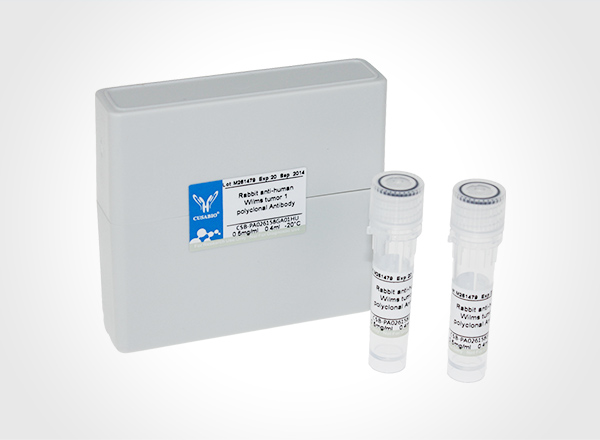
EPK 2 antibody; EPK2 antibody; KPCD3_HUMAN antibody; nPKC nu antibody; nPKC-nu antibody; nPKCnu antibody; nu antibody; PKCnu antibody; PKD 3 antibody; PKD3 antibody; PRK D3 antibody; PRKCN antibody; PRKD 3 antibody; Prkd3 antibody; Protein kinase C antibody; Protein kinase C nu antibody; Protein kinase C nu type antibody; Protein kinase D3 antibody; Protein kinase EPK 2 antibody; Protein kinase EPK2 antibody; Serine threonine protein kinase antibody; Serine/threonine protein kinase D3 antibody; Serine/threonine-protein kinase D3 antibody
Raised in
Rabbit
Species Reactivity
Human
Immunogen
Recombinant Human Serine/threonine-protein kinase D3 protein (326-510AA)
Immunogen Species
Homo sapiens (Human)
Conjugate
Biotin
Clonality
Polyclonal
Isotype
IgG
Purification Method
>95%, Protein G purified
Concentration
It differs from different batches. Please contact us to confirm it.
Liquid
Note: We will preferentially ship the format that we have in stock, however, if you have any special requirement for the format, please remark your requirement when placing the order, we will prepare according to your demand.
Upon receipt, store at -20°C or -80°C. Avoid repeated freeze.
Lead Time
Basically, we can dispatch the products out in 1-3 working days after receiving your orders. Delivery time maybe differs from different purchasing way or location, please kindly consult your local distributors for specific delivery time.
Note: All of our proteins are default shipped with normal blue ice packs, if you request to ship with dry ice, please communicate with us in advance and extra fees will be charged.
Usage
For Research Use Only. Not for use in diagnostic or therapeutic procedures.
Converts transient diacylglycerol (DAG) signals into prolonged physiological effects, downstream of PKC. Involved in resistance to oxidative stress.
Gene References into Functions
Our findings suggest that abnormal PKD3 expression might contribute to hepatocellular carcinoma progression. Furthermore, high PKD3 expression predicts a poor prognosis in hepatocellular carcinoma patients after hepatectomyPMID:28363424
The enriched pathway analysis reveals that PRKD3 regulates pathways contributing to multiple cancer related events, including cell cycle, migration and others.PMID:28656000
None of the Polymorphous low-grade adenocarcinoma (PLGA) lacking PRKD1 somatic mutations or PRKD gene family rearrangements harboured somatic mutations in the kinase domains of the PRKD2 or PRKD3 genes.PMID:26426580
This study discovered and characterized a novel, highly conserved N-terminal domain, comprising 92 amino acids, which mediates dimerization of Protein Kinase D (PKD) isoforms, PKD1, PKD2, and PKD3 monomers.PMID:27662904
Studies indicate that the loss of protein kinase D PKD1 is thought to promote invasion and metastasis, while PKD2 and upregulated PKD3 to be positive regulators of proliferation.PMID:26253275
Loss of PKD2 enhanced KC proliferative potential while loss of PKD3 resulted in a progressive proliferation defect, loss of clonogenicity and diminished tissue regenerative ability.PMID:25802335
for the first time, PKD3 is implicated in the transcription activation of latent HIV-1 provirus, and our results revealed a molecular mechanism of prostratin-induced HIV-1 transcription via PKCepsilon/PKD3/NF-kappaB signaling pathway.PMID:25136641
Activation of PKD2 and further increase of PKD3 activity leads to additional phosphorylation and inhibition of endogenous phosphatase slingshot 1L.PMID:24840177
PKD3 in TNBC cells provides a molecular connection between the Golgi and endolysosomal compartments to enhance proliferative mTORC1-S6K1 signaling.PMID:24337579
PKD3 negatively regulates human airway epithelial barrier formation and integrity through down-regulation of claudin-1, which is a key component of tight junctions.PMID:24265314
PKD3 may contribute to the malignant progression of prostate cancer cells through negative regulation of MMP-7 expression.PMID:20813660
PKD3 contributes to the proliferation and malignant growth of androgen-dependent prostate cancer cells in part by upregulating PSA expression.PMID:20813663
We have identified PKD2 and PKD3, especially PKD3, as novel cell growth regulators in HCC1806 triple-negative breast cancer cellsPMID:23393329
PKD antagonists inhibited differentiation and viability of human hematopoietic stem cells, and had less HDAC phosphorylation, confirming the need for PKD-HDAC signaling in erythropoiesis.PMID:22983445
phosphorylation of GIT1 on serine 46 by PKD3 represents a molecular switch by which GIT1 localization, paxillin trafficking, and cellular protrusive activity are regulated.PMID:22893698
Data demonstrate the functional role of protein kinase D1 and protein kinase D3 in modulating physiological responses to Ox1R activation.PMID:20621130
Novel isoforms regulate human keratinocyte differentiation by activating a p38 delta mitogen-activated protein kinase cascade that targets CCAAT/enhancer-binding protein alpha.PMID:12080077
PKCnu is an important component of signaling pathways downstream from novel PKC enzymes after B-cell receptor engagementPMID:12506120
the effect of G protein-coupled receptor agonists on the regulatory properties, continuous shuttling, and intracellular distribution of Protein kinase C nu/protein kinase D3PMID:12676944
specificity of different PKD isoforms in regulating protein trafficking from the trans-Golgi networkPMID:14743217
PKD3 directly contributes to insulin-independent basal glucose uptake in L6 skeletal muscle cells.PMID:15496505
Expression of constitutively activated PKCeta caused Golgi fragmentation.PMID:15824133
the catalytic activity of PKD3 may regulate its nuclear import through autophosphorylation and/or interaction with another proteinPMID:16380377
The vesicular distribution may be attributed in part to the direct interaction between PKD3 and vesicle-associated membrane protein VAMP2, through which PKD3 may regulate VAMP2 vesicle trafficking by facilitating its recruitment to the target membrane.PMID:17196367
A pathway comprising PKCs>Raf-1>MEK-1>ERK-1/-2 mediates the effect of gastrin on the CgA promoter, and strongly suggests that enhanced phosphorylation of Sp1 and CREB is crucial for CgA transactivation through the G protein-coupled CCK-B/gastrin receptor.PMID:17889508
The data suggest that protein kinase C contributes to the phosphorylation of influenza PB1 and NS1 proteins which appears to be functionally relevant for both viral RNA polymerase activity and efficient viral replication.PMID:19264651
Show
More
Hide
All
Subcellular Location
Cytoplasm. Membrane. Note=Translocation to the cell membrane is required for kinase activation.
Protein Families
Protein kinase superfamily, CAMK Ser/Thr protein kinase family, PKD subfamily