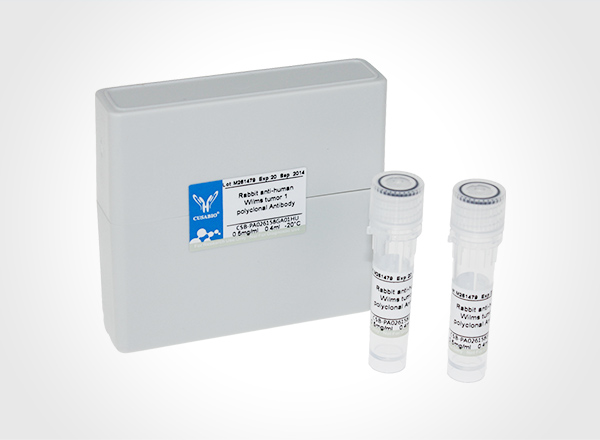
Upon receipt, store at -20°C or -80°C. Avoid repeated freeze.
Lead Time
Basically, we can dispatch the products out in 1-3 working days after receiving your orders. Delivery time maybe differs from different purchasing way or location, please kindly consult your local distributors for specific delivery time.
Note: All of our proteins are default shipped with normal blue ice packs, if you request to ship with dry ice, please communicate with us in advance and extra fees will be charged.
Usage
For Research Use Only. Not for use in diagnostic or therapeutic procedures.
Regulatory subunit of the cAMP-dependent protein kinases involved in cAMP signaling in cells. Type II regulatory chains mediate membrane association by binding to anchoring proteins, including the MAP2 kinase.
Gene References into Functions
High PK-R2 expression is associated with colorectal cancer.PMID:26372733
Prkar2a deficiency predisposes to hematopoietic malignancies in vivo. RIIalpha's likely association with HS and DLBCL was hitherto unrecognized and may lead to better understanding of these rare neoplasms.PMID:26608815
Disruption of Snapin-PKR2 interaction did not affect PKR2 signaling, but increased the ligand-induced degradation, implying a role of Snapin in the trafficking of PKR2.PMID:26687946
we demonstrate that neurochondrin has strong isoform selectivity towards the RIIa subunit of PKA with nanomolar affinityPMID:25916936
These data demonstrate that some Kallmann syndrome-associated, intracellularly retained mutant PKR2 receptors can be functionally rescued, suggesting a potential treatment strategy for patients bearing such mutations.PMID:24753254
Smad4 and the R subunit of the protein kinase A holoenzyme form a functional complex in vivo in response to TGFbeta.PMID:23362281
ETO nervy homology region (NHR) 3 domain-PKA(RIIalpha) protein interaction does not appear to significantly contribute to AML1-ETO's ability to induce leukemia.PMID:20708017
findings indicate that increased particulate type II protein kinase A activity occurs throughout pregnancy therefore directing the cAMP quiescence signal to specific subcellular loci within myometrial smooth muscle cellsPMID:12727975
These data implicate the involvement of PKA-RIIalpha anchoring apical targeting of distinct proteins and glycosphingolipids to apical plasma membrane domains and suggest that rerouting may underlie the delayed Golgi-to-apical surface transport of MDR1.PMID:16723498
The high-resolution crystal structures of the docking and dimerization (D/D) domain of the RIIalpha regulatory subunit of PKA in complex with the high-affinity anchoring peptide AKAP-IS explain the molecular basis for AKAP-regulatory subunit recognition.PMID:17081989
The data suggest that centrosomal anchoring of RIIalpha and the interrelated subapical positioning of these centrosomes is required for oncostatin M-, but not cAMP-mediated, bile canalicular lumen development.PMID:17494870
RIIalpha releases Calpha upon elevated cAMP alone, dependent on autophosphorylation of the RIIalpha inhibitory domainPMID:17884635
Bacillus anthracis edema toxin altered the protein levels and activity of protein kinase A and exchange protein activated by cAMP (Epac), a recently identified cAMP-binding molecule.PMID:19307216
Show
More
Hide
All
Subcellular Location
Cytoplasm. Cell membrane. Note=Colocalizes with PJA2 in the cytoplasm and the cell membrane.
Protein Families
CAMP-dependent kinase regulatory chain family
Tissue Specificity
Four types of regulatory chains are found: I-alpha, I-beta, II-alpha, and II-beta. Their expression varies among tissues and is in some cases constitutive and in others inducible.