Synthesized peptide derived from Human PPAR-α around the non-phosphorylation site of S21.
Immunogen Species
Homo sapiens (Human)
Conjugate
Non-conjugated
Isotype
IgG
Purification Method
The antibody was affinity-purified from rabbit antiserum by affinity-chromatography using epitope-specific immunogen.
Concentration
It differs from different batches. Please contact us to confirm it.
Buffer
Liquid in PBS containing 50% glycerol, 0.5% BSA and 0.02% sodium azide.
Tested Applications
WB, IF, ELISA
Storage
Upon receipt, store at -20°C or -80°C. Avoid repeated freeze.
Lead Time
Basically, we can dispatch the products out in 1-3 working days after receiving your orders. Delivery time maybe differs from different purchasing way or location, please kindly consult your local distributors for specific delivery time.
Note: All of our proteins are default shipped with normal blue ice packs, if you request to ship with dry ice, please communicate with us in advance and extra fees will be charged.
Usage
For Research Use Only. Not for use in diagnostic or therapeutic procedures.
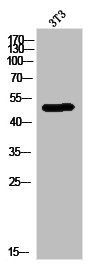
Western Blot analysis of 3T3 cells using PPAR-α Polyclonal Antibody
Description
PPARA polyclonal antibody CSB-PA030137 was produced in the rabbit immunized by using the Synthesized peptide derived from Human PPAR-α around the non-phosphorylation site of S21 as the immunogen. The target protein PPARA, a ligand-activated transcription factor, is a key regulator of lipid metabolism. Transactivation activity requires heterodimerization with RXRA and is antagonized by NR2C2. This protein may be required for the propagation of clock information to metabolic pathways regulated by PER2. Diseases associated with PPARA include Fatty Liver Disease and Lipid Metabolism Disorder.
This PPARA Polyclonal antibody was tested in the ELISA, WB and IF applications. The non-conjugated IgG was affinity-purified from rabbit antiserum by affinity-chromatography using epitope-specific immunogen. It reacts with the PPARA proteins of human or mouse or rat-origin and may be used to detect the endogenous levels of PPARA protein.
Ligand-activated transcription factor. Key regulator of lipid metabolism. Activated by the endogenous ligand 1-palmitoyl-2-oleoyl-sn-glycerol-3-phosphocholine (16:0/18:1-GPC). Activated by oleylethanolamide, a naturally occurring lipid that regulates satiety. Receptor for peroxisome proliferators such as hypolipidemic drugs and fatty acids. Regulates the peroxisomal beta-oxidation pathway of fatty acids. Functions as transcription activator for the ACOX1 and P450 genes. Transactivation activity requires heterodimerization with RXRA and is antagonized by NR2C2. May be required for the propagation of clock information to metabolic pathways regulated by PER2.
Gene References into Functions
Ubiquitination modification through the coordinated action of PAQR3 with HUWE1 plays a crucial role in regulating the activity of hepatic PPARalpha in response to starvation.PMID:29331071
Circulated eosinophilic expression of PPARalpha protein is reduced in metabolic syndrome.PMID:29699951
TNFalpha differently regulated the levels of PPARalpha, LXRalpha, and LXRbeta binding to the apoA-I gene promoter in THP-1 cells. Obtained results suggest a novel tissue-specific mechanism of the TNFalpha-mediated regulation of apoA-I gene in monocytes and macrophages and show that endogenous ApoA-I might be positively regulated in macrophage during inflammation.PMID:29442267
MAR1 ameliorates LPS-induced atherosclerotic reactions via PPARalpha-mediated suppression of inflammation and ER stress.PMID:29971543
Data suggest that, in hepatocytes, MIRN34A plays roles in regulation of mitochondrial remodeling and lipid metabolism including development/prevention of non-alcoholic fatty liver disease; MIRN34A appears to act via AMPK/PPARalpha signal transduction. (MIRN34A = microRNA 34a; AMPK = AMP-activated protein kinase; PPARalpha = peroxisome proliferator activated receptor alpha)PMID:29197627
miR-214 overexpression inhibits glioma cell growth in vitro and in vivo by inducing cell cycle arrest in G0/G1. Collectively, these data uncover a novel role for a PPARalpha-miR-214-E2F2 pathway in controlling glioma cell proliferation.PMID:29862267
Improvements in metabolic and neurodegenerative diseases are often attributed to anti-inflammatory effects of PPAR activation. (Review)PMID:29799467
circRNA_0046366, which demonstrated expression loss in HepG2-based hepatocellular steatosis, exerts antagonistic effect on miR-34a activity. miR-34a inactivation abrogates its inhibitory role against PPARalpha.PMID:29391755
We first reported that the FOMX1 pathway is the most upregulated and the PPARalpha pathway is the most downregulated pathway in Triple Negative Breast Cancers (TNBCs). These two pathways could be simultaneously targeted in further studies. Also the pathway classifier we performed in this study provided insight into the TNBC heterogeneity.PMID:29301506
Polymorphism of PPARA is associated with late onset of type 2 diabetes mellitus.PMID:28292576
results demonstrated that OEA exerts anti-inflammatory effects by enhancing PPARalpha signaling, inhibiting the TLR4-mediated NF-kappaB signaling pathway, and interfering with the ERK1/2-dependent signaling cascade (TLR4/ERK1/2/AP-1/STAT3), which suggests that OEA may be a therapeutic agent for inflammatory diseases.PMID:27721381
data suggested that miR-19a negatively controlled the autophagy of hepatocytes attenuated in D-GalN/LPS-stimulated hepatocytes via regulating NBR2 and AMPK/PPARalpha signaling.PMID:28586153
The minor allele of rs1800206 and rs1805192 from PPAR A and PPAR G and its interaction were associated with increased Breast Cancer risk.PMID:28669518
High concentrations of DINCH urinary metabolites activate human PPAR-alpha.PMID:29421333
PPARalpha is overexpressed in primary glioblastomaPMID:27926792
these results suggest that the E2F1/miR19a/PPARalpha feedback loop is critical for glioma progressionPMID:27835866
Data conclude that the ER-stress mediated reduction in apoA-I transcription could be partly mediated via the inhibition of PPARalpha mRNA expression and activity. In addition, BET inhibition increased apoA-I transcription, even if PPARalpha production and activity were decreased. Both BET inhibition and PPARalpha activation ameliorate the apoA-I lowering effect of ER-stress and are therefore interesting targets to elev...PMID:28012209
Results demonstrated that PPARa directly inhibited Glut1 mRNA expression resulting in influx of glucose in cancer cells.PMID:27918085
PPARalpha and LXRalpha may be mediators by which omega3PUFA attenuate bile acid-induced hepatocellular injuryPMID:26756785
Our results support an important association between rs1800206 minor allele of PPAR alpha and diabetic retinopathy, and the interaction analysis also shown a combined effect of Leu162 allele-abdominal obesity interaction on diabetic retinopathy.PMID:26671228
Taken together, our data suggest that eupatilin inhibits TNFalpha-induced MMP-2/-9 expression by suppressing NF-kappaB and MAPKAP-1 pathways via PPARalpha. Our findings suggest the usefulness of eupatilin for preventing skin aging.PMID:28899779
Hepatic PARP1 activation inhibits FAO pathway upregulation through poly(ADP-ribosyl)ation of PPARalpha, worsening hepatic steatosis and inflammatory responses associated with overnutrition.PMID:27979751
Aleglitazar protects cardiomyocytes against hyperglycaemia-induced apoptosis by combined activation of both peroxisome proliferator-activated receptor-alpha and peroxisome proliferator-activated receptor-gamma.PMID:28111985
Study reports a molecular mechanism by which glucocorticoid-induced PPARalpha expression negatively affects the activity of PPARgamma and downregulates BCO1 gene expression. Results explicate novel aspects of local glucocorticoid:retinoid interactions that may contribute to alveolar tissue remodeling in chronic lung diseases that affect children and, possibly, adults.PMID:28732066
Interference with PLIN2 and PPARalpha resulted in major alterations in gene expression, especially affecting lipid, glucose, and purine metabolism.PMID:27308945
PPARalpha and FXR function coordinately to integrate liver energy balance.PMID:28287408
This study showed that oleoylethanolamine and palmitoylethanolamine have endogenous roles and potential therapeutic applications in conditions of intestinal hyperpermeability and inflammation.PMID:27623929
An association was found with PPARalpha polymorphism and patients with nicotine dependency and schizophrenia.PMID:27624431
PPAR agonists have shown to have anti proliferative effect in squamous cell carcinoma of the head and neck.PMID:27896820
Results show that PPARalpha is downregulated and SREBP-1c is upregulated in steatosis L-02 cells. These changes increase lipid synthesis and reduce lipid disposal, which ultimately lead to hepatic steatosis.PMID:27270405
Perfluoroalkyl acids addition to activating PPARalpha as a primary target, also have the potential to activate CAR, PPARgamma, and ERalpha as well as suppress STAT5B.PMID:28558994
the metabolic events, controlled by PPARs, occurring during neuronal precursor differentiation, the glucose and lipid metabolism was investigated.PMID:27860527
The CYP2E1-PPARalpha axis may play a role in ethanol-induced neurotoxicity via the alteration of the genes related with synaptic functionPMID:28385499
Studies indicate that natural dietary compounds, including nutrients and phytochemicals, are Peroxisome proliferator-activated receptor alpha (PPARalpha) ligands or modulators.PMID:27863018
Genome-wide comparison of the inducible transcriptomes of nuclear receptors CAR, PXR and PPARalpha in primary human hepatocytes has been presented.PMID:26994748
Hepatitis B virus increases the expression of alpha-mannosidases both in vitro and in vivo via activation of the PPARalpha pathway by its envelope protein.PMID:27920474
These observations candidate PPARs as new biomarkers of follicle competence opening new hypotheses on controlled ovarian stimulation effects on ovarian physiology.PMID:26332656
PPARalpha activation plays defensive and compensative roles by reducing cellular toxicity associated with fatty acids and sulfuric acid.PMID:27644403
PPARalpha/gamma agonist, elafibranor resolves nonalcoholic steatohepatitis without worsening fibrosis.PMID:26874076
The effects of fenofibrate on nonalcoholic fatty liver disease in the context of PPAR-alpha activation was studied.PMID:27930988
PPARA polymorphism is associated with the risk of coronary heart disease.PMID:27512842
Telmisartan improved the hyperglycemia-induced cardiac fibrosis through the PPARdelta/STAT3 pathway.PMID:27519769
A modest relationship was found between PPARalpha and AIP expression, both being significantly higher in the presence of pre-operative somatostatin analogues in somatotropinoma patients.PMID:26872613
Fenofibrate inhibited atrial metabolic remodeling in atrial fibrillation (AF) by regulating the PPAR-alpha/sirtuin 1/PGC-1alpha pathway indicating a novel therapeutic strategy for AFPMID:26787506
PPAR delta + 294TT genotype frequency in the Chinese Han population was higher than in the Chinese Uyghur population and may affect the risk of ischemic stroke.PMID:26814631
PPARalpha functions as an E3 ubiquitin ligase to induce Bcl2 ubiquitination and degradation, leading to increased cancer cell sensitivity in response to chemotherapy drugs.PMID:26556865
There was no statistically significant difference in the distribution of PPARalpha Leu162Val polymorphism between the ischemic stroke patients and controls in the Han ethnic group.PMID:26671025
results support an important association between rs1800206 minor allele (V) of PPAR alpha and lower CRP level; the interaction analysis showed a combined effect between rs1800206 and rs135539 on the lower CRP levelPMID:26497374
PPAR-gamma and PTEN expressions are related to the clinical parameters and prognosis of renal cell carcinomaPMID:26722456
Describe a renoprotective role of fenofibrate in albumin bound fatty acid associated tubular toxicity, involving the transcriptional activation of PPARalpha and suppression of NF-kB.PMID:26617775
Show
More
Hide
All
Subcellular Location
Nucleus.
Protein Families
Nuclear hormone receptor family, NR1 subfamily
Tissue Specificity
Skeletal muscle, liver, heart and kidney. Expressed in monocytes.