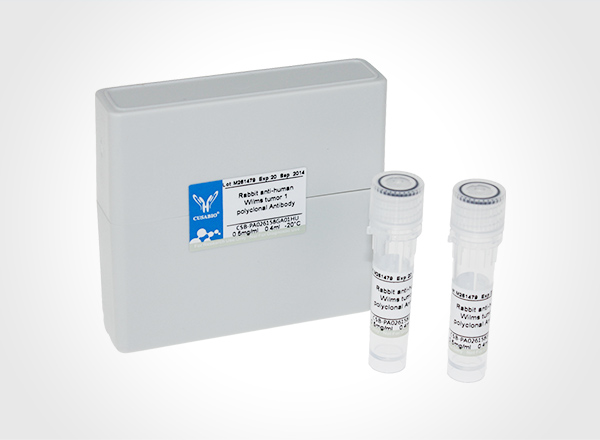
Liquid
Note: We will preferentially ship the format that we have in stock, however, if you have any special requirement for the format, please remark your requirement when placing the order, we will prepare according to your demand.
Upon receipt, store at -20°C or -80°C. Avoid repeated freeze.
Lead Time
Basically, we can dispatch the products out in 1-3 working days after receiving your orders. Delivery time maybe differs from different purchasing way or location, please kindly consult your local distributors for specific delivery time.
Note: All of our proteins are default shipped with normal blue ice packs, if you request to ship with dry ice, please communicate with us in advance and extra fees will be charged.
Usage
For Research Use Only. Not for use in diagnostic or therapeutic procedures.
Plays a central role in the biogenesis of melanosomes. Involved in the maturation of melanosomes from stage I to II. The transition from stage I melanosomes to stage II melanosomes involves an elongation of the vesicle, and the appearance within of distinct fibrillar structures. Release of the soluble form, ME20-S, could protect tumor cells from antibody mediated immunity.
Gene References into Functions
To provide a source of dual-specific T cells for ACT, we generated a transgenic mouse strain expressing a CAR specific for Her2 in leukocytes under the control of the vav promoter .This CAR mouse strain was bred onto the pMEL transgenic mouse strain, expressing a TCR specific for the premelanosome protein, gp100PMID:27965307
IMCgp100 (ImmTAC recognizing a peptide derived from the melanoma-specific protein, gp100, presented by HLA-A*0201) efficiently redirects and activates effector and memory cells from both CD8(+) and CD4(+) repertoires to kill melanoma cells.PMID:28640942
our work attempts to provide structural insights into the RPT domain structure and to elucidate its contribution to Pmel17 amyloid fibril formation.PMID:26754844
These findings help to clarify the mechanism of T-cell recognition of gp100 during melanoma responses and could direct the development of altered peptides for vaccination.PMID:26917722
Data suggest that the Kringle-like domain of PMEL facilitates post-endoplasmic reticulum processing of disulfide-bonded PMEL dimers and promotes formation of PMEL functional amyloid fibrillar structures within multivesicular endosomes.PMID:26694611
mutant N-terminally extended peptides exhibited significantly increased HLA-A*02:01 binding affinity and elicited CD8(+) T cell stimulation in vitro similar to the wtgp100209-217 epitope.PMID:26507656
Data indicate that repeat domain (RPT) derived from Pmel17 aggregation kinetics were influenced only by lysolipid-containing phospholipid vesicles.PMID:25451784
Melanosome-autonomous regulation of size and number: the OA1 receptor sustains PMEL expression.PMID:24650003
SIL-TAL1 rearrangement identifies a distinct subtype with inferior outcome which could allow for individual therapeutic stratification for T-ALL patients.PMID:24040098
the molecular basis for the distinct trafficking and morphogenetic properties of PMEL and GPNMB is the PKD domainPMID:23452376
Data indicat that the N-terminal region of PMEL/Pmel17 is essential for the formation of melanosomal fibrils.PMID:23389629
BACE2 cleaves the integral membrane form of PMEL within the juxtamembrane domain, releasing the PMEL luminal domain into endosomal precursors for the formation of amyloid fibrils and downstream melanosome morphogenesis.PMID:23754390
The recombinant Pmel 17 plasmids were right as we expected by DNA sequencingPMID:23643172
The most significant single-nucleotide polymorphism in the 12q13.2 locus is located immediately upstream of the promoter region of PMEL for vitiligo in Han Chinese.PMID:22951725
An antibody drug conjugate reactive with PMEL17 exhibits target-dependent tumor cell killing in vitro and in vivo.PMID:22613716
This is a review on two human amyloidogenic polypeptides, one associated with Parkinson's disease, alpha-synuclein (alpha-syn), and the other important for melanin synthesis, the repeat domain (RPT) from Pmel17.[Review]PMID:21993592
MART-1- and gp100-expressing and -non-expressing melanoma cells are equally proliferative in tumors and clonogenic in vitro.PMID:21993558
Pmel17 repeat domain fibril dissolution is pH dependentPMID:22092386
the DW and HoSi mutations alter PMEL TMD oligomerization and/or association with membranes, with consequent formation of aberrantly packed fibrils. PMEL mutations can model the conversion between physiological and pathological amyloidPMID:21949659
the multistep processing of Pmel17 begins with an early cleavage during secretion that primes the protein for later functional processing.PMID:21247888
Repeat domains of melanosome matrix protein Pmel17 orthologs form amyloid fibrils at the acidic melanosomal pH.PMID:21148556
Data suggest that intramelanosomal pH regulates Pmel17 amyloid formation and its subsequent dissolution in vivo.PMID:21106765
N-terminal region and the polycystic kidney disease-like domain is highly crucial for endoplasmic reticulum export, subcellular targeting, and fibril formation by Pmel17 and thus for establishing functional melanosomes.PMID:20231267
Data conclude that sPmel17 is released by regulated proteolytic ectodomain shedding.PMID:19884326
we identified the gp100/pMel17 melanosomal protein as the shared antigen recognized by three independent CD8+ CTL clones in HLA-A*6801-restricted fashion.PMID:12135425
Data show that MITF appears to regulate the expression of the SILV and MLANA genes.PMID:12819038
Antigen-specific T lymphocyte reactivity to gp100 peptides was seen in 15 of 17 (88%) vitiligo patients, with many demonstrating very high reactivity at levels comparable with those observed with common recall antigensPMID:12925214
truncation of the repeat region within Pmel17 alters either fibrillogenic activity or the interaction of Pmel17 with melanin intermediatesPMID:14632201
CD8 T lymphocytes recognized a nonameric peptide on melanoma cells that comprises two noncontiguous segments of melanocytic glycoprotein gp100(PMEL17); the production of this peptide involves the excision of four amino acids and splicing of the fragmentsPMID:15001714
PMEL17 is rapidly processed in the endoplasmic reticulum and glycosylated in the early GolgiPMID:15096515
Data suggest that MART-1 is indispensable for Pmel17 function and thus plays an important role in regulating mammalian pigmentation.PMID:15695812
Data show that the melanosomal protein Pmel17 is sorted into intralumenal vesicles by a mechanism that is dependent upon lumenal determinants and conserved in non-pigment cells.PMID:16516837
the RPT domain of PMEL17/GP100 is essential for its function in generating the fibrillar matrix of melanosomes and that the luminal domain is necessary for its correct processing and trafficking to those organellesPMID:16682408
Pmel17 is a critical component of melanogenesis.PMID:16704461
These data reveal a dual sorting defect in a natural mutant of Pmel17 and support a requirement of endocytic trafficking in Pmel17 fibril formation.PMID:16760433
addition of sialic acid affects the stability and sorting of Pmel17 and reduces pigmentationPMID:17303571
GTP-bound form of Rab7 promotes melanogenesis through the regulation of gp100 maturation in melanoma cells.PMID:17625594
Premelanosome amyloid-like fibrils are composed of only golgi-processed forms of Pmel17 that have been proteolytically processed in endosomesPMID:17991747
Measurement of Melan-A, gp100, MAGE-3, MIA and tyrosinase represents a prognostic factor and a method for early detection of metastasis and treatment response of melanoma patients.PMID:18181974
Tyrosinase-, gp100-, or TRP-2-specific CD8(+) T cells could not be identified in the peripheral blood of individuals with vitiligo.PMID:18337837
Nuclear to non-nuclear Pmel17/gp100 expression (HMB45 staining) is a discriminator between benign and malignant melanocytic lesions.PMID:18552823
MHC class II presentation of gp100 epitopes in melanoma cells requires the function of conventional endosomes and is influenced by melanosomes.PMID:19017974
release of the Pmel17 ectodomain, which is critical for melanin amyloidogenesis, is initiated by S2 cleavage at a juxtamembrane positionPMID:19047044
the repeat domain of the melanosome fibril protein Pmel17 forms the amyloid core promoting melanin synthesisPMID:19666488
N-terminal domains elicit formation of functional Pmel17 amyloid fibrils.PMID:19840945
Details and validates the multiple sorting pathways used by the silver protein to reach melanosomes. It identifies the specific adaptor proteins involved and sheds light on the polarization of the melanocyte.PMID:16492709
Detailed analysis of the post-translational modifications and their effect over the processing and trafficking of the silv gene.PMID:17303571
The PMEL17 (SILV) protein catalyzes the polymerization of 5,6-dihydroxyindole-2-carboxylic acid to melanin.PMID:8617263
Pmel17 is proteolytically processed in a post-Golgi compartment and is enriched in multivesicular endosomes prior to incorporation in stage II melanosomes.PMID:11694580
A proteolytic fragment of Pmel17, generated by proprotein convertase cleavage, is the major biogenetic component of the underlying fibrillar matrix of melanosome precursors.PMID:12732614
Show
More
Hide
All
Subcellular Location
Endoplasmic reticulum membrane; Single-pass type I membrane protein. Golgi apparatus. Melanosome. Endosome, multivesicular body. Note=Identified by mass spectrometry in melanosome fractions from stage I to stage IV. Localizes predominantly to intralumenal vesicles (ILVs) within multivesicular bodies. Associates with ILVs found within the lumen of premelanosomes and melanosomes and particularly in compartments that serve as precursors to the striated stage II premelanosomes.; [M-alpha]: Secreted.
Protein Families
PMEL/NMB family
Tissue Specificity
Preferentially expressed in melanomas. Some expression was found in dysplastic nevi. Not found in normal tissues nor in carcinomas. Normally expressed at low levels in quiescent adult melanocytes but overexpressed by proliferating neonatal melanocytes and