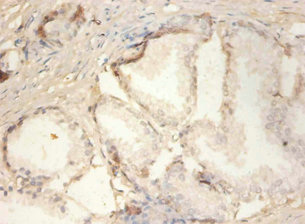
Upon receipt, store at -20°C or -80°C. Avoid repeated freeze.
Lead Time
Basically, we can dispatch the products out in 1-3 working days after receiving your orders. Delivery time maybe differs from different purchasing way or location, please kindly consult your local distributors for specific delivery time.
Note: All of our proteins are default shipped with normal blue ice packs, if you request to ship with dry ice, please communicate with us in advance and extra fees will be charged.
Usage
For Research Use Only. Not for use in diagnostic or therapeutic procedures.
Secretory calcium-dependent phospholipase A2 that primarily targets extracellular phospholipids with implications in host antimicrobial defense, inflammatory response and tissue regeneration. Hydrolyzes the ester bond of the fatty acyl group attached at sn-2 position of phospholipids (phospholipase A2 activity) with preference for phosphatidylethanolamines and phosphatidylglycerols over phosphatidylcholines. Contributes to lipid remodeling of cellular membranes and generation of lipid mediators involved in pathogen clearance. Displays bactericidal activity against Gram-positive bacteria by directly hydrolyzing phospholipids of the bacterial membrane. Upon sterile inflammation, targets membrane phospholipids of extracellular mitochondria released from activated platelets, generating free unsaturated fatty acids such as arachidonate that is used by neighboring leukocytes to synthesize inflammatory eicosanoids such as leukotrienes. Simultaneously, by compromising mitochondrial membrane integrity, promotes the release in circulation of potent damage-associated molecular pattern molecules that activate the innate immune response. Plays a stem cell regulator role in the intestinal crypt. Within intracellular compartment mediates Paneth cell differentiation and its stem cell supporting functions by inhibiting Wnt signaling pathway in intestinal stem cell (ICS). Secreted in the intestinal lumen upon inflammation, acts in an autocrine way and promotes prostaglandin E2 synthesis that stimulates Wnt signaling pathway in ICS cells and tissue regeneration. May play a role in the biosynthesis of N-acyl ethanolamines that regulate energy metabolism and inflammation. Hydrolyzes N-acyl phosphatidylethanolamines to N-acyl lysophosphatidylethanolamines, which are further cleaved by a lysophospholipase D to release N-acyl ethanolamines. Independent of its catalytic activity, acts as a ligand for integrins. Binds to and activates integrins ITGAV:ITGB3, ITGA4:ITGB1 and ITGA5:ITGB1. Binds to a site (site 2) which is distinct from the classical ligand-binding site (site 1) and induces integrin conformational changes and enhanced ligand binding to site 1. Induces cell proliferation in an integrin-dependent manner.
Gene References into Functions
sPLA2 appears to play an important role in the pathogenesis of dengue. We found that sPLA2 activity was significantly higher in patients with dengue haemorrhagic fever when compared to those with dengue fever, during the first 120 h of clinical illness.PMID:28250920
The findings of this study showed that maslinic acid inhibit inflammatory effects induced by sPLA2-IIA, including foam cells formation and PGE2 production.PMID:29872016
High PLA2 activity is associated with West Nile virus infection.PMID:29709018
A lipidomics-based LC/MS assay was used to define the specificity of cPLA2, iPLA2, and sPLA2 toward a variety of phospholipids. A unique hydrophobic binding site for the cleaved fatty acid dominates each enzyme's specificity rather than its catalytic residues and polar headgroup binding site.PMID:29342349
demonstration of an independent association between early-stage atherosclerosis and increased levels of sPLA2-IIa, implying that increased sPLA2-IIa may have a role in early-stage atherosclerosis in MetS patientsPMID:27941821
these results suggest that PLA2G2A polymorphisms are involved in the risk of developing metabolic syndrome and type 2 diabetes mellitus and are associated with subclinical atherosclerosis in this group of patientsPMID:27608594
PLA2G2A has a previously undiscovered impact on insulin sensitivity and metabolismPMID:28663239
lipidomic analyses revealed that sequestration of PUFAs in LDs by sPLA2-induced TAG remodelling and retention of PUFAs in LDs by inhibition of ATGL-mediated TAG lipolysis protect from PUFA lipotoxicity.PMID:29229414
This report provides the first demonstration that Phosphatidylcholine-Isoprostanes are readily hydrolyzed by group IIA, V and X Secretory Phospholipases A2.PMID:28528433
Given an aberrant high level of sPLA2IIa in the tumor microenvironment that should be much higher than that in the blood, our findings support the notion that sPLA2IIa functions as a ligand for EGFR family receptors and supports CSC properties via HER/ERBB-elicited signaling, which may contribute to resistance to therapy and cancer progressionPMID:28440478
the activity of human cPLA2alpha towards a multitude of glycerophospholipids species present in micelles or bilayers, was investigated.PMID:27377346
Mutational analysis of functional sites showed that both peroxidase and PLA2 active sites were necessary for mutant Prdx6 function, and that Prdx6 phosphorylation (at T177 residue) was essential for optimum PLA2 activity.Mutant Prdx6 at its Sumo1 sites escapes and abates this adverse process by maintaining its integrity and gaining functionPMID:28055018
sPLA2-IIA activates Integrin alphaVbeta3 and Integrin alpha4beta1 in an allosteric manner. (Review)PMID:27864802
Leptin, at concentrations with minimal or no activating effects on astrocytoma cells, enhanced growth and migration promoted by low doses of sPLA2-IIA. sPLA2-IIA alone induced a transient phosphorylation pattern in the Src/ERK/Akt/mTOR/p70S6K/rS6 pathway through EGFR transactivationPMID:28249041
Molecular dynamics simulations reveal structural insights into inhibitor binding modes and functionality in human PLA2G2A.PMID:28056488
Hepatitis B virus can upregulate the expression of PLA2G2A, and serum levels of PLA2G2A are associated with the progression of hepatitis to liver cirrhosis and hepatocellular carcinoma.PMID:28077172
Dimethyl ester of bilirubin exhibits anti-inflammatory activity through inhibition of secretory phospholipase A2, lipoxygenase and cyclooxygenase.PMID:27060751
High expression of PLA2G2A was associated with poor therapeutic response and worse survival in patients with rectal cancer receiving neoadjuvant concurrent cheomoradiotherapy (CCRT).PMID:25393083
Data show that phospholipase A2 group IIA, V and X have different target/function related activity.PMID:26711221
Polyozellin might play an important role in the modulation of sPLA2-IIA expression and activity in response to the inflammatory diseases.PMID:26659873
Overexpression of sPLA2-IIA does not alter MCP-1 level at baseline, but could enhance the atherogenic effect of oxidized LDL in HASMCs, at least partly due to activation of Akt.PMID:26488172
These results suggest that the genetic ablation of iPLA2b increased iron uptake in the brain through the activation of IRP2 and upregulation of DMT1, which may be associated with mitochondrial dysfunction.PMID:26506412
IL-22 induced at an early stage of L. monocytogenes infection enhances innate immunity against L. monocytogenes in the liver by stimulating hepatocytes to produce PLA2G2APMID:26644377
PLA2G2A was detected in all samples of endometriomas, but not in normal endometrium, and immunohistochemistry showed PLA2G2A-specific staining in epithelial cells of endometrioma paraffin sections.PMID:25366587
Results indicate that secreted phospholipase A2 IIA (sPLA2-IIA) as an enzyme working in concert with platelet microparticles (MPs) 12-lipoxygenase (12-LO) to promote internalization.PMID:26106157
Secretory PLA2 IIa expression can predict the clinical outcome of lung adenocarcinoma patients.PMID:25317799
Co-expression of PLA2G2A and COX-2 significantly correlated with the depth of invasion (p=0.004)and with TNM stage (p=0.04) of esophageal squamous cell carcinomaPMID:25422234
sPLA2 are secreted from ciliated cells and appear to induce mucin and cysLT secretion from goblet cells, strongly suggesting that airway goblet cells are proinflammatory effector cells.PMID:25429648
Studies indicate that the expression of secreted phospholipases A2 (sPLA2s), most notably the group IIA, III and X enzymes, is dysregulated in various malignant tissues.PMID:25286228
PLA2G2A levels increase in expectorations of cystic fibrosis patients in an age-dependent manner.PMID:25290234
AdPLA2 plays an important role in promoting tumorigenesis and disease progression by modulating the production of prostaglandins and may serve as a potential therapeutic target in TSC and LAM.PMID:25347447
Summarizing, Der p1 and Fel d1 involve phospholipase A2 enzymes in their action.PMID:25247183
The minor allele of rs11573156, is a dominant haplotype and is associated with the higher sPLA2-IIa levels.PMID:25794429
Activity of iPLbeta correlates inversely with the hydrophobicity of the phospholipid substrate.PMID:25713085
Secretory phospholipase A2 activity is raised in acute respiratory distress syndrome infants.PMID:23883784
Proinflammatory secreted phospholipase A2 type IIA (sPLA-IIA) induces integrin activation through direct binding to a newly identified binding site (site 2) in integrin alphaVbeta3, integrin alphavbeta1, and integrin alpha4beta1.PMID:25398877
women with metabolic syndrome demonstrated a low but positive correlation between sPLA2 and hsCRP levelsPMID:24521628
Findings support the notion that sPLA2-IIa functions as a ligand for the EGFR family of receptors leading to an elevated HER/HER2-elicited signaling lung cancer cells.PMID:24913497
PLA2G2A gene polymorphisms may modify the risk of esophageal squamous cell carcinoma developmentPMID:24641411
hydrolysis of the mitochondrial membrane by sPLA2-IIA yields inflammatory mediators (ie, lysophospholipids, fatty acids, and mtDNA) that promote leukocyte activationPMID:25082876
This review presents evidence for pathophysiological roles of sPLA2 in the central nervous system and neurological diseases.PMID:24113843
Determined circulating levels of sPLA2-IIA, C-reactive protein (CRP), fibrinogen, factor VIII (FVIII), von Willebrand factor (vWF), and antithrombin as biomarkers of inflammation and coagulation in patients with various types of malignancies.PMID:23722320
Increased serum levels of serum amyloid a, PLA2G2, and C reactive protein were observed in patients with benign prostate hyperplasia, localized and metastasized prostate cancer in comparison to healthy individuals.PMID:24061501
Data indicate that the expression of genes encoding hGIIA, hGIII and hGX sPLA2s (PLA2G2A, PLA2G3 and PLA2G10, respectively) in breast tumour biopsies differs from that in normal tissues.PMID:24508801
two of these isoforms, sPLA2 IIA and sPLA2 IIF, localize to the upper stratum granulosum and increase in response to experimental barrier perturbation.PMID:24269828
Studied the role of human sPLA2-IIA, a bactericidal enzyme induced during acute inflammation, in innate immunity against GBS, and show clinical GBS isolates are highly sensitive to killing by sPLA2-IIA but not by human antimicrobial peptides.PMID:23901095
In a humanized triple transgenic mouse model with hypercholesterolemia, sPLA2-IIA inhibition increases CETP activity via increasing the very low-density lipoprotein-apoE content, resulting in a proatherogenic lipoprotein profile.PMID:24115030
Group IIA phospholipase A2 expression is an independent predictor of favorable outcome for patients with gastric cancer.PMID:23664539
Plasma PLA2 activities had approximately 70% specificity and sensitivity to detect cancerPMID:23451150
PLA2G2A may be a useful therapeutic target for a subset of gastric cancersPMID:23852891
Expressed in various tissues including heart, kidney, liver, lung, pancreas, placenta, skeletal muscle, prostate, ovary, colon and small intestine. Not detected in lymphoid organs and brain. Expressed in platelets (at protein level).