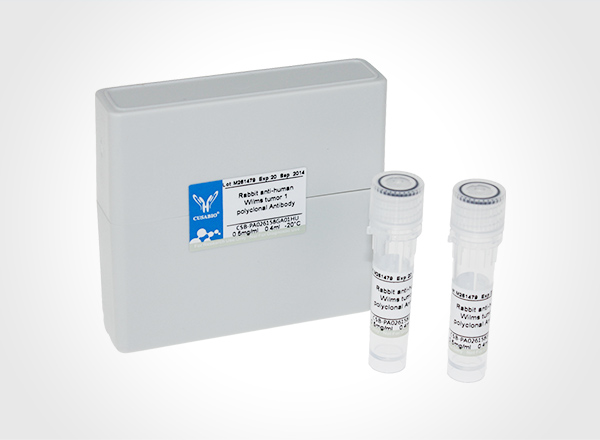
Liquid
Note: We will preferentially ship the format that we have in stock, however, if you have any special requirement for the format, please remark your requirement when placing the order, we will prepare according to your demand.
Upon receipt, store at -20°C or -80°C. Avoid repeated freeze.
Lead Time
Basically, we can dispatch the products out in 1-3 working days after receiving your orders. Delivery time maybe differs from different purchasing way or location, please kindly consult your local distributors for specific delivery time.
Note: All of our proteins are default shipped with normal blue ice packs, if you request to ship with dry ice, please communicate with us in advance and extra fees will be charged.
Usage
For Research Use Only. Not for use in diagnostic or therapeutic procedures.
Comparative analyses of the influenza-host protein interactomes identified PKP2 as a natural inhibitor of influenza A viruses polymerase complex.PMID:28169297
Results identified common and rare variants within plakophilin 2 protein (PKP2) to be associated with left ventricular mass (LVM).PMID:29288195
Our study describes various clinical parameters in ACM patients and a recessive plakophilin 2 mutation after a limited PKP2 gene sequencing.PMID:29961461
Authors show that the PKP2 gene encoding the desmosomal protein Plakophilin-2 is a novel direct transcriptional target of Wnt/beta-catenin in normal and colon cancer-associated fibroblasts.PMID:29044515
Human iPSC line was generated from patient-specific adipose tissue-derived mesenchymal multipotent stromal cells carrying two mutations in plakophilin-2 (PKP2) gene using non-integrative reprogramming method.PMID:29034900
The rare incidence of PKP2 mutation in sudden unexplained noctural death syndrome (SUNDS, 1%) supports the previous viewpoint that SUNDS is most likely an allelic disorder as Brugada syndromePMID:27122407
Up-regulation of plakophilin-2 (PKP2) is correlated with the progression of glioma. Study uncovers a potential role for PKP2 in the pathogenic process of glioma, suggesting that PKP2 may be a promising therapeutic target of glioma.PMID:28124385
Screening for CNVs in desmosome genes is useful to identify the genetic basis of disease in clinically suspected ARVC patients.PMID:28431057
a novel homozygous Plakophilin 2-gene mutation has a role in advanced cardiomyopathyPMID:29253866
An intronic mutation of c.2577+1G>T in the PKP2 gene causes a nonsyndromic form of Arrhythmogenic Right Ventricular Cardiomyopathy without cutaneous Involvements.PMID:28523642
Data show that fetal pMSCs (mesenchymal stromal cells) expressing the highest levels of desmoglein 2, desmocollin 3 and plakophilin 2, followed by maternal pMSCs, while bmMSCs expressed the lowest levels.PMID:28154962
Results show the involvement of plakophilin 2 protein (PKP2) in two siblings with severe cardiomyopathy with ventricular non compaction.PMID:27030002
PKP2 c.419C>T did not associate with heart failure, arrhythmias, or premature death, with ARVC or HCM/DCM, or with effects in vitro, suggesting that this is not a disease-causing variant.PMID:26264440
Family members - desmosomal mutation carriers who restricted exercise at or below the upper bound of the American Heart Association goal were less likely to be diagnosed and had no Ventricular Tachycardia.PMID:26321091
Extreme variability in clinical penetrance for a splice-site PKP2 mutation was found in a Bangladeshi family. Some family members were affected by arrhythmogenic right ventricular cardiomyopathy, and some are asymptomatic.PMID:25786693
Data suggest juxtamembrane regions/domains of desmocollin-2 (DSC2), plakophilin 2 (PKP2), and plakophilin 3 (PKP3) are involved in desmosome formation in epithelial cells; DSC2 participates in desmosome formation in absence of desmoglein 2 (DSG2).PMID:25972099
Plakofilin2 mutation plays an important role in the pathogenesis of Brugada syndrome.PMID:25889434
PKP2 regulates Wnt activity during adipogenic and cardiomyogenic differentiation in arrhythmogenic right ventricular cardiomyopathy.PMID:26995964
Currently, 13 genes have been associated with the disease but nearly 40 % of clinically diagnosed cases remain without a genetic diagnosis.PMID:25398255
A heterozygous pathogenic variant in the plakophilin-2 (c.2392A>G, p.T798A) gene was found in an arrhythmogenic LV cardiomyopathy patient and his deceased mother who had had arrhythmogenic cardiomyopathy affecting both ventricles.PMID:26260507
Six variants of uncertain clinical significance in the PKP2, JUP, and DSG2 genes showed a deleterious effect on mRNA splicing, indicating these are ARVD/C-related pathogenic splice site mutations.PMID:25087486
Exercise test is valuable for the diagnosis of ARVC in patients with PKP2 gene mutation.PMID:25936878
Case Report: PKP2/DSP mutations in patient with Brugada syndrome and ventricular tachycardia.PMID:25900994
The introduction of the PKP2 R735X mutation into mice resulted in an exercise-dependent arrhythmogenic right ventricular cardiomyopathy.PMID:25857910
PKP2 haploinsufficiency contributes to pathogenesis in arrhythmogenic cardiomyopathy.PMID:24704780
mutations in PKP2 are associated with a later age of onset of arrhythmogenic right ventricular cardiomyopathyPMID:24967631
PKP2 is a novel activator of the EGFR signaling pathway.PMID:25113560
Missense mutations in plakophilin-2 cause sodium current deficit and associate with a Brugada syndrome phenotype.PMID:24352520
The copy number variations analysis identified a heterozygous deletion of about 122 kb on chromosome 12p11.21, including the entire plakophilin-2 gene and shared by all affected family members.PMID:23486541
Downstream Hippo molecules STE20-like protein kinases 1/2, large tumor suppressor kinases 1/2, and Yes-associated protein (YAP, the effector of the pathway) are phosphorylated, offering novel mechanisms for arrhythmogenic cardiomyopathy pathogenesis.PMID:24276085
These data uncover a potential role for PKP2 upstream of beta1 integrin and RhoA in integrating cell-cell and cell-substrate contact signaling in basal keratinocytes.PMID:23884246
Of a total of 715 Sudden cardiac death cases, seven (1.0%) carried one of the ten mutations assayed: three carried KCNH2 R176W, one KCNH2 L552S, two PKP2 Q59L, and one RYR2 R3570W.PMID:23651034
PKP2 gene mutation is associated with arrhythmogenic cardiomyopathy in a large Dutch family.PMID:23270881
Results show that PKP2 mutations are insufficient to cause ARVD due to variable expression and incomplete penetrancePMID:23147395
haploinsufficiency is the most likely cause for the genesis of dominant arrhythmogenic right ventricular cardiomyopathy due to mutations in PKP2PMID:22781308
While many of the reported ARVC mutations are truncating mutations, the possibly damaging variant found in this family, is a missense alteration affecting a highly conserved residue 506 located in exon 7.PMID:22170284
The authors report on a pedigree of cases involving a mutation in the plakophilin 2 gene that was associated with the development of arrhythmogenic right ventricular cardiomyopathy.PMID:22035158
PKP2 mutations are not specific for arrhythmogenic right ventricular cardiomyopathy and may result in sudden unexpected death with negative autopsy.PMID:22019812
PKP2 gene upregulation is associated with bladder cancer invasion.PMID:22119253
PKP2A was shown to be the major isoform expressed in human heart tissue and PKP2B protein was undetectable; results strongly suggest that p.Arg490Trp and other variants located in PKP2 exon 6 may not be disease causingPMID:21378009
Mutant plakophilin-2 proteins were unable to disrupt established desmosomes when expressed in an E-cadherin-expressing epithelial cell model; they were unable to initiate de novo assembly of desmosomes in an N-cadherin-expressing epithelial cell model.PMID:19533476
Studies identified two mutations in DSG2, four in DSC2, two in DSP, four in JUP and seven in PKP2.PMID:20864495
Adherens junctions connecting cardiac myxoma cells show exactly such general acquisition of Pkp2.PMID:20693980
Data suggest that PKP2 may functionally link RhoA- and PKC-dependent pathways to drive actin reorganization.PMID:20554761
Reduced connexin43 expression and localization to the intercalated disk occurs in heterozygous human PKP-2 mutations, potentially explaining the delayed conduction and propensity to develop arrhythmias seen in this disease.PMID:18662195
Fifteen percent of Danish arrhythmogenic right ventricular cardiomyopathy/dysplasia patients carried PKP2 mutations.PMID:19955750
mutations in plakophylin-2 (PKP2) gene in ARVCPMID:19880068
Protein binding and functional characterization of plakophilin 2. Evidence for its diverse roles in desmosomes and beta -catenin signalingPMID:11790773
In 32 of 120 unrelated individuals with ARVC, we identified heterozygous mutations in PKP2, which encodes plakophilin-2, an essential armadillo-repeat protein of the cardiac desmosome.PMID:15489853
mutations in the desmosomal plakophilin-2 gene can cause arrhythmogenic right ventricular cardiomyopathyPMID:16415378
Show
More
Hide
All
Subcellular Location
Nucleus. Cell junction, desmosome. Note=Nuclear and associated with desmosomes.
Protein Families
Beta-catenin family
Tissue Specificity
Detected in heart right ventricle (at protein level). Widely expressed. Found at desmosomal plaques in simple and stratified epithelia and in non-epithelial tissues such as myocardium and lymph node follicles. In most stratified epithelia found in the des