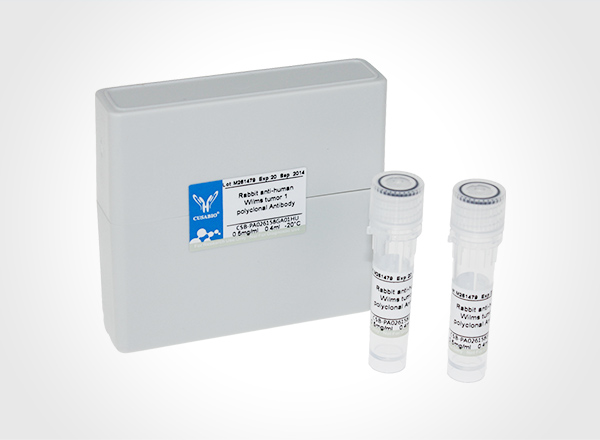
Liquid
Note: We will preferentially ship the format that we have in stock, however, if you have any special requirement for the format, please remark your requirement when placing the order, we will prepare according to your demand.
Upon receipt, store at -20°C or -80°C. Avoid repeated freeze.
Lead Time
Basically, we can dispatch the products out in 1-3 working days after receiving your orders. Delivery time maybe differs from different purchasing way or location, please kindly consult your local distributors for specific delivery time.
Note: All of our proteins are default shipped with normal blue ice packs, if you request to ship with dry ice, please communicate with us in advance and extra fees will be charged.
Usage
For Research Use Only. Not for use in diagnostic or therapeutic procedures.
Paired receptors consist of highly related activating and inhibitory receptors and are widely involved in the regulation of the immune system. PILRA is thought to act as a cellular signaling inhibitory receptor by recruiting cytoplasmic phosphatases like PTPN6/SHP-1 and PTPN11/SHP-2 via their SH2 domains that block signal transduction through dephosphorylation of signaling molecules. Receptor for PIANP.; (Microbial infection) Acts as an entry co-receptor for herpes simplex virus 1.
Gene References into Functions
Data suggest that, although PILRA exhibits essentially the same recognition of different glycopeptides, slight modifications of linker sugar cause significant changes in a wide area of the binding interface, resulting in a reduction of binding affinity; analogs/fragments of gpb were used in these studies. (PILRA = paired immunoglobin like type 2 receptor alpha; gpb = envelope glycoprotein B, Herpes simplex virus type 1)PMID:29046357
The interaction of NK cells with PILRalpha expressing targets lead to elevated IFNgamma secretion and cytotoxicity. In conclusion, PILRalpha is a novel NK activating ligand which binds and activates an unknown NK receptor expressed on a unique NK cell subset.PMID:27029068
Transcriptome wide association study results identified two novel genes as statistically significantly associated with nonobstructive azoospermia susceptibility: PILRA and ZNF676.PMID:29202958
PILRalpha exhibits large conformational change to recognize simultaneously both the sTn O-glycan and the compact peptide structure constrained by proline residuesPMID:24889612
These results contribute our knowledge of the biological functions of HBVDNAPTP1 and provide novel data to aid in the further analysis of the regulatory mechanism of this protein.PMID:24253495
We demonstrated that three residues (Y2, R95, and W108) presented on the surface of PILRalpha form the sialic acid binding site equivalent to those in siglecs but are arranged in a unique linear mode.PMID:24843130
The amino terminus of herpes simplex virus 1 gK is functionally and physically associated with the gB-PILRalpha protein complex and regulates membrane fusion of the viral envelope with cellular membranes during virus entry.PMID:23302878
The authors show that the human ocular and highly neurovirulent HSV-1 strain McKrae enters substantially more efficiently into cells via the gB-specific human paired immunoglobulin-like type-2 receptor-alpha (hPILR-alpha).PMID:22695228
Data show that PILRalpha/ligand interactions require conserved PILRalpha arginine (Arg)-133 (mouse) and Arg-126 (human).PMID:22396535
These results suggest that PANP is involved in immune regulation as a ligand of the PILRalpha.PMID:21241660
PILRalpha protein was successfully crystallized at 293 K using the sitting-drop vapour-diffusion method and the crystals diffracted to 1.3 A resolution.PMID:18097101
The results demonstrate that cellular receptors for both gB and gD are required for HSV-1 infection and that PILRalpha plays an important role in HSV-1 infection as a coreceptor that associates with gB.PMID:18358807
viral entry via PILRalpha appears to be conserved but that there is a PILRalpha preference among alphaherpesvirusesPMID:19244335
Insertional mutations of gB reduced cell fusion activity when PILRalpha was overexpressed much more than nectin-1.PMID:19457990
Show
More
Hide
All
Subcellular Location
[Isoform 1]: Cell membrane; Single-pass type I membrane protein.; [Isoform 2]: Cell membrane; Single-pass type I membrane protein.; [Isoform 3]: Secreted.; [Isoform 4]: Secreted.
Tissue Specificity
Predominantly detected in hemopoietic tissues and is expressed by monocytes, macrophages, and granulocytes, but not by lymphocytes. Also strongly expressed by dendritic cells (DC); preferentially by CD14+/CD1a- DC derived from CD34+ progenitors. Also expr