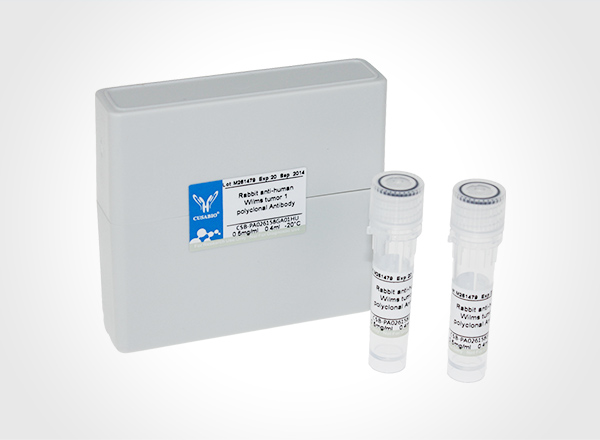
Upon receipt, store at -20°C or -80°C. Avoid repeated freeze.
Lead Time
Basically, we can dispatch the products out in 1-3 working days after receiving your orders. Delivery time maybe differs from different purchasing way or location, please kindly consult your local distributors for specific delivery time.
Note: All of our proteins are default shipped with normal blue ice packs, if you request to ship with dry ice, please communicate with us in advance and extra fees will be charged.
Usage
For Research Use Only. Not for use in diagnostic or therapeutic procedures.
Metalloprotease that is part of the quality control system in the inner membrane of mitochondria. Activated in response to various mitochondrial stress, leading to the proteolytic cleavage of target proteins, such as OPA1, UQCC3 and DELE1. Following stress conditions that induce loss of mitochondrial membrane potential, mediates cleavage of OPA1 at S1 position, leading to OPA1 inactivation and negative regulation of mitochondrial fusion. Also acts as a regulator of apoptosis: upon BAK and BAX aggregation, mediates cleavage of OPA1, leading to the remodeling of mitochondrial cristae and allowing the release of cytochrome c from mitochondrial cristae. In depolarized mitochondria, may also act as a backup protease for PINK1 by mediating PINK1 cleavage and promoting its subsequent degradation by the proteasome. May also cleave UQCC3 in response to mitochondrial depolarization. Also acts as an activator of the integrated stress response (ISR): in response to mitochondrial stress, mediates cleavage of DELE1 to generate the processed form of DELE1 (S-DELE1), which translocates to the cytosol and activates EIF2AK1/HRI to trigger the ISR. Its role in mitochondrial quality control is essential for regulating lipid metabolism as well as to maintain body temperature and energy expenditure under cold-stress conditions. Binds cardiolipin, possibly regulating its protein turnover. Required for the stability of the respiratory supercomplexes.
Gene References into Functions
differential stress-induced degradation of YME1L and OMA1 as a mechanism for sensitively adapting mitochondrial inner membrane protease activity and function in response to distinct types of cellular insults.PMID:26923599
Cleavage of the inner membrane fusion factor L-OPA1 is prevented due to the failure to activate the inner membrane protease OMA1 in mitochondria that have a collapsed membrane potential.PMID:24634514
OMA1 is cleaved to a short form (S-OMA1) by itself upon mitochondrial membrane depolarization; S-OMA1 is degraded quickly but could be stabilized by CCCP treatment or Prohibitin knockdown in cells.PMID:24719224
These findings demonstrate that (a) p53 and Oma1 mediate L-Opa1 processing, (b) mitochondrial fragmentation is involved in CDDP-induced apoptosis in OVCA and CECA cells, and (c) dysregulated mitochondrial dynamicsPMID:25112877
OMA1 controls OPA1 cleavage and function.PMID:20038677
These results provide evidence for different substrate specificities of m-AAA proteases composed of different subunits and reveal a striking evolutionary switch of proteases involved in the proteolytic processing of dynamin-like GTPases in mitochondria.PMID:17615298