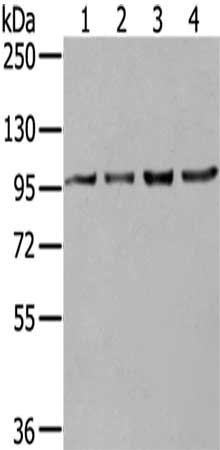
It differs from different batches. Please contact us to confirm it.
Buffer
-20°C, pH7.4 PBS, 0.05% NaN3, 40% Glycerol
Form
Liquid
Note: We will preferentially ship the format that we have in stock, however, if you have any special requirement for the format, please remark your requirement when placing the order, we will prepare according to your demand.
Upon receipt, store at -20°C or -80°C. Avoid repeated freeze.
Lead Time
Basically, we can dispatch the products out in 1-3 working days after receiving your orders. Delivery time maybe differs from different purchasing way or location, please kindly consult your local distributors for specific delivery time.
Note: All of our proteins are default shipped with normal blue ice packs, if you request to ship with dry ice, please communicate with us in advance and extra fees will be charged.
Usage
For Research Use Only. Not for use in diagnostic or therapeutic procedures.
Plays a role in the nuclear pore complex (NPC) assembly and/or maintenance. NUP98 and NUP96 are involved in the bidirectional transport across the NPC. May anchor NUP153 and TPR to the NPC. In cooperation with DHX9, plays a role in transcription and alternative splicing activation of a subset of genes. Involved in the localization of DHX9 in discrete intranuclear foci (GLFG-body).; (Microbial infection) Binds HIV-1 capsid-nucleocapsid (HIV-1 CA-NC) complexes and may thereby promote the integration of the virus in the host nucleus (in vitro). Binding affinity to HIV-1 CA-NC complexes bearing the capsid change ASN-74-ASP is reduced (in vitro).
Gene References into Functions
NHA9 (NUP98-HOXA9 fusion protein) deregulates the expression of key leukemic genes, including MEIS1-HOXA9-PBX3 complex, through the enhancer binding and the direct interaction of the fusion protein with HDAC and p300 transcriptional regulatorsPMID:28630438
human NUP98-IQCG fusion protein could induce fatal and transplantable acute myelomonocytic leukemia in a mouse modelPMID:26675333
Importantly, binding of Nup98 to DHX9 stimulates the ATPase activity of DHX9, and a transcriptional reporter assay suggests Nup98 supports DHX9-stimulated transcription.PMID:28221134
The second FG repeat domain of the NUP98 moiety of the NUP98-HOXA9 fusion protein is important for its cell immortalization and leukemogenesis activities. NUP98-HOXA9 interacts with mixed lineage leukemia (MLL) via this FG repeat domain and that, in MLL-null mice, NUP98-HOXA9-induced cell immortalization and leukemogenesis are severely inhibited.PMID:28210005
DYNLT1 interacts with nucleoporins and plays a role in the dysregulation of gene expression and induction of hematopoietic cell proliferation by the leukemogenic nucleoporin fusion, NUP98-HOXA9PMID:23840580
the mutation order in the NUP98-rearranged pediatric AML begins with the NUP98 rearrangement leading to epigenetic dysregulations then followed by mutations of critical hematopoietic transcription factors and finally, activation of the FLT3 signaling pathway.PMID:27694926
These results provide novel insight into the mechanisms underlying the aberrant capability of NUP98 oncoproteins to interact with APC/C(Cdc20) and to interfere with its function.PMID:27097363
Our results suggest that NA10HD increases the number of gamma-globin-transduced HSCs that engraft, leading to an elevated number of fetal hemoglobin-containing red cells.PMID:28190779
NUP98-HOXA9 ability to induce blood cell expansion is evolutionarily conserved.PMID:27838340
The study demonstrated the association of NUP98-IQCG with CRM1, and found that NUP98-IQCG expression inhibits the CRM1-mediated nuclear export of p65 and enhances the transcriptional activity of nuclear factor-kappaB. Moreover, IQCG could be entrapped in the nucleus by NUP98-IQCG, and the fusion protein interacts with calmodulin via the IQ motif in a calcium-independent manner.PMID:27864780
The results indicate that highly selective targeting of Nup98-fusion proteins to Hox cluster regions via prebound Crm1 induces the formation of higher order chromatin structures that causes aberrant Hox gene regulation.PMID:26740045
Despite the difference in localization, all tested Nup98 chimera provoked morphological alterations in the nuclear envelope (NE), in particular affecting the nuclear lamina and the lamina-associated polypeptide 2alpha.PMID:27031510
Overall, these results demonstrate a novel role for FOXK1 in regulating the expression of antiviral genes via Nup98, from insects to humans.PMID:25852164
deregulation of the retinoid/rexinoid signaling pathway has a major role and may represent a potential therapeutic target for NUP98-RARG-mediated transformationPMID:25510432
Acute myeloid leukemia can be reproduced in mice by transducing mouse mesenchymal stem cells with the human NUP98-NSD1 fusion and the FLT3-ITD mutated constracts.PMID:24951466
These data reveal an emergent Kap-centric barrier mechanism that may underlie mechanistic and kinetic control in the nuclear pore complex.PMID:24739174
Vesiculoviral matrix (M) protein occupies nucleic acid binding site at nucleoporin pair (Rae1 * Nup98).PMID:24927547
NUP98 oncoproteins predispose myeloid cells to oncogenic transformation or malignant progression by promoting whole chromosome instability.PMID:24371226
NUP98/JARID1A is a novel recurrent genetic abnormality in pediatric AMKLPMID:23531517
Data indicate increased levels of reactive oxygen species (ROS) were detected in bone marrow nucleated cells (BMNC) that express CD71 in in NUP98-HOXD13 (NHD13) transgenic mice, a murine model for myelodysplastic syndromes (MDS).PMID:23958061
support to the adoption of screening for NUP98-NSD1 in pediatric AML without otherwise favorable genetic markersPMID:23999921
The repeat domain of Nup98 is substantially more cohesive than repeat domains from other nucleoporins.PMID:23427268
Dominant negative Nup98 fusion proteins disrupt the transcriptional activity of wild-type Nup98 in the nucleoplasm to drive acute myeloid leukemia.PMID:23246429
Nup98 RNA interference significantly suppresses downstream mRNA expression in the ss-catenin pathway, while nuclear galectin-3 binds to ss-catenin to inhibit transcriptional activity.PMID:23541576
This work demonstrates for the first time that NUP98 dynamically associates with the human genome during differentiation, revealing a role of a nuclear pore protein in regulating developmental gene expression programs.PMID:23468646
The roles of NUP153 and nup98 in the integration and replication of HIV-1 in human Jurkat lymphocytes are reported.PMID:23523133
vesicular stomatitis virus M protein interacted efficiently with Rae1-Nup98 complexes associated with the chromatin fraction of host nuclei, consistent with an effect on host transcriptionPMID:23028327
NUP98/NSD1 fusions are rare in adult acute myeloid leukemia.PMID:22929522
Positive NUP98-NSD1 fusion is associated with acute myeloid leukemia.PMID:22945772
Nup98 functions as a potential tumor suppressor and regulates posttranscriptional expression of select p53 target genes.PMID:23102701
findings show that expression of NUP98-HOXD13 impairs class switch recombination and reduces the antibody-mediated immune response, in addition to its role in leukemiaPMID:22613470
Human Nup98 intereacted with Nup82 through a reciprocal exchange of loop structures. Strikingly, the same Nup98 groove promiscuously interacted with Nup82 and Nup96 in a mutually excusive fashion.PMID:22480613
the recurrent NUP98-CCDC28A is an oncogene that induces a rapid and transplantable myeloid neoplasm in recipient mice. They also provide additional evidence for an alternative leukemogenic mechanism for NUP98 oncogenes.PMID:22058212
The fusion genes combining NUP98 exon 11/12 with PSIP1 exon 8 may be implicated in the pathogenesis of myelodysplastic syndrome (MDS).PMID:22103895
RAE1 transgene may be directly involved in NUP98 fusion-mediated leukemogenesis.PMID:21467841
Structural chromosomal rearrangements of NUP98, primarily balanced translocations and inversions, are associated with wide array of hematopoietic malignancies; NUP98 is known to be fused to at least 28 different partner genes in patients. [REVIEW]PMID:21948299
NUP98/NSD1 identifies a previously unrecognized group of young AML patients, with distinct characteristics and dismal prognosis, for whom new treatment strategies are urgently needed.PMID:21813447
Ectopic expression of NA10 (Nup98-HoxA10) augments erythroid differentiation of human embryonic stem cells.PMID:21328509
Study identified mitotic phosphorylation of Nup98 as a rate-limiting step in mitotic nuclear pore complexes disassembly.PMID:21335236
NUP98/RARG gene rearrangement is associated with acute myeloid leukemia.PMID:20935257
results suggest high frequency of cell proliferation gene mutations may contribute to leukemogenesis in NUP98-related leukemia; simultaneous occurrence of FLT3-ITD and WT1 aberrations may have an important role in outcome of NUP98-related leukemiaPMID:20861915
characterized a novel recurrent chromosomal aberration, inv(11)(p15q23) in 2 patients with acute myeloid leukemia. This aberration is predicted to result in the expression of a NUP98-MLL fusion protein that is unable to interact with menin.PMID:20558618
Mapping tests further demonstrated that aa 22-53 in the N-terminal region of H5N1 virus NS2 and the glycine-leucine-phenylalanine-glycine (GLFG) repeat domain (aa 1-511) of human Nup98 are crucial for the interaction of these two proteins.PMID:20554795
Findings suggest new possibilities for misregulation by which Nup98 translocations may contribute to cellular transformation and leukemogenesis.PMID:20237156
present the crystal structure of human Rae1 in complex with the Gle2-binding sequence (GLEBS) of Nup98 at 1.65 A resolution. Rae1 forms a seven-bladed beta-propeller with several extensive surface loops.PMID:20498086
NUP98-DDX10 dramatically increases proliferation and results in leukemogenesis.PMID:20339440
Oxidative stress up-regulated the binding of Crm1 to Ran and affected multiple repeat-containing nucleoporins by changing their localization, phosphorylation, O-glycosylation, or interaction with other transport components.PMID:19828735
effects of NUP98-HOXA9 on gene transcription and cell transformation are mediated by two distinct mechanisms: promoter binding through homeodomain with direct transcriptional activation, and another depending on NUP98 moiety not involving DNA bindingPMID:19696924
These results are consistent with a specific proteolysis of Nup98 by 2A protease to prevent de novo mRNA traffic in poliovirus-infected cells.PMID:19789179