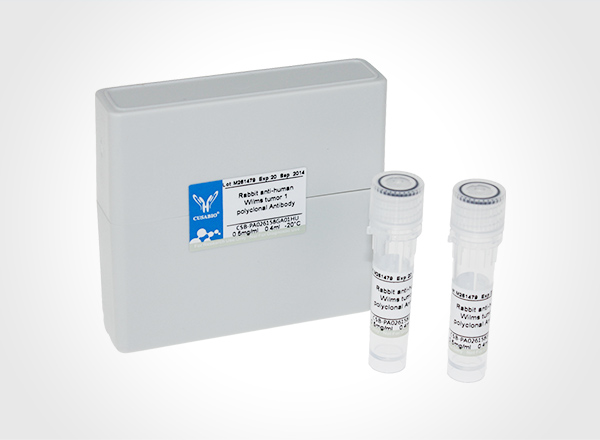
Liquid
Note: We will preferentially ship the format that we have in stock, however, if you have any special requirement for the format, please remark your requirement when placing the order, we will prepare according to your demand.
Upon receipt, store at -20°C or -80°C. Avoid repeated freeze.
Lead Time
Basically, we can dispatch the products out in 1-3 working days after receiving your orders. Delivery time maybe differs from different purchasing way or location, please kindly consult your local distributors for specific delivery time.
Note: All of our proteins are default shipped with normal blue ice packs, if you request to ship with dry ice, please communicate with us in advance and extra fees will be charged.
Usage
For Research Use Only. Not for use in diagnostic or therapeutic procedures.
Orphan nuclear receptor of retinal photoreceptor cells. Transcriptional factor that is an activator of rod development and repressor of cone development. Binds the promoter region of a number of rod- and cone-specific genes, including rhodopsin, M- and S-opsin and rod-specific phosphodiesterase beta subunit. Enhances rhodopsin expression. Represses M- and S-cone opsin expression.
Gene References into Functions
A diagnosis of autosomal recessive retinitis pigmentosa (ARRP) with cystic maculopathy, caused by compound heterozygous mutation in the gene NR2E3, was made.PMID:29193891
The patient presented characteristic symptoms, morphology and electrophysiological characteristics for S-cone deficiency syndrome and presented heterozygous for two mutations, one of which (c.790G>A; p.G264R in NR2E3), to our knowledge, has not been previously reported.PMID:27573156
A substitution in exon 2 of NR2E3, expressed the expected pluripotency markers, displayed in vivo differentiation potential to the three germ layers and had normal karyotypePMID:29034877
Photoreceptor-specific nuclear receptor (PNR/NR2E3) and Tailless homolog (TLX/NR2E1) are human orthologs of the NR2E group.PMID:28300834
The frameshift mutation found in patient 1, p.I307LfsX33, is a new causative mutation for ESCS; it is located in exon 6. This mutation truncates the 410 amino acids in the normal NR2E3 protein into 306 amino acids and causes the synthesis of a protein lacking more than half of the ligand-binding domain.PMID:27522502
Autosomal dominant retinitis pigmentosa due to p.Gly56Arg mutation in the NR2E3 genePMID:26910043
NR2E3 is a novel epigenetic regulator that helps to maintain a normal epigenetic status in response to benzo(a)pyrene mediated toxic injury. NR2E3 may be a potential target for cancer prevention.PMID:26149760
Study presents evidence that PNR could promote ERalpha-negative breast cancer metastasis through activation of IL-13Ralpha2-mediated signaling pathway.PMID:24747967
Direct sequencing of NR2E3 identified 3 previously described mutations and 4 novel mutations in Enhanced S-cone syndrome (ESCS) formsPMID:25079116
Molecular genetic studies helped to identify a novel p.D406G mutation in NR2E3 of the Goldmann-Favre syndrome (GFS) and vasoproliferative tumors of the retina affected members.PMID:24891813
Genetic screening confirmed the presence of two disease-causing mutations in the NR2E3 gene in each study patient, as well as identified a novel mutation (202 A > G, S68G).PMID:23604511
PNR/NR2E3 and related NRs such as TLX and COUPTFs can selectively associate with the developmental corepressor BCL11A via a conserved motif F/YSXXLXXL/Y within the RID1 domain.PMID:23975195
The diagnosis of enhanced S-cone syndrome was suggested by the uniquely abnormal electroretinographic pattern and was confirmed by the finding of homozygous NR2E3 mutations.PMID:23039133
we report novel mutations in the NR2E3 gene that were discovered in 2 cases with enhanced S-cone syndrome.PMID:23374571
Homozygous autosomal recessive retinitis pigmentosa-causing mutations have been found in three Indian families. These included a deletion-cum-insertion in NR2E3.PMID:22605927
The presence of a double concentric hyperautofluorescent ring of FAF may represent a highly penetrant early phenotypic marker of NR2E3-p.G56R-linked autosomal dominant retinitis pigmentosaPMID:22661467
NR2E3 is essential for expression of ESR1 in ER-positive breast cancer cells by binding directly to the proximal region of the ESR1 promoter.PMID:22174013
In HeLa cells, PNR stimulated tumor suppressor p53-responsive promoters in a tumor suppressor p53-dependent fashion and induced apoptosis in several cell types.PMID:22025681
The purpose of this study was to compare the nature and implications of mutations in NR2E3 in two subjects with enhanced S Cone Syndrome who have significantly different degrees of degenerative damage.PMID:21364904
This homozygous mutation is likely to affect binding to target DNA sites, resulting in a non-functional behavior of NR2E3 protein.PMID:20725840
In this study, NR2E3 mutations were found to be responsible for approximately 2.9% of overall retinitis pigmentosa (RP) in Chinese patients, NRL was not associated with RP.PMID:19933183
Helicoid subretinal fibrosis is another potential phenotypic manifestation of recessive NR2E3 mutation.PMID:20212206
DNA-binding domain mutations in NR2E3 affect in vivo dimerization and interaction with CRXPMID:19823680
A review of disease-associated NR2E3 mutations.PMID:19718767
In 16 ESCS patients with the most common NR2E3 mutation, R311Q, we documented an abnormal ratio of S to L/M cone function and progressive retinal degeneration. We studied the postmortem retina of an ESCS patient homozygous for NR2E3 R311QPMID:11773633
We found that enhanced S-cone syndrome, Goldmann-Favre syndrome and clumped pigmentary retinal degeneration can all have the same genetic basis.PMID:12963616
involved in regulating the expression of rod photoreceptor-specific genes at the transcriptional levelPMID:15190009
A role for NR2E3 in the rod developmental pathway is suggested.PMID:15277507
Fifteen different mutations were identified, including six not previously reported, in patients with Enhanced S Cone SyndromePMID:15459973
These experiments show that in mature vertebrate retina Nr2e3 is expressed exclusively in rods and that Nr2e3 functions as a repressor of cone-specific genes in rod photoreceptor cells.PMID:15634773
Nr2e3 is a dual-function transcriptional regulator that acts in concert with Crx to promote and maintain the function of rod photoreceptors.PMID:15689355
Our study suggests that the expression of these 2 mutants of NR2E3, acting as a dimer, is correlated with a mild form of ESCS (enhanced S-cone syndrome)PMID:16225923
We describe the localization and identification of the photoreceptor cell-specific nuclear receptor gene NR2E3 as a novel disease locus and gene for autosomal dominant retinitis pigmentosa.PMID:17564971
Gly56Arg mutation in NR2E3 accounts for approximately 1%-2% of adRP, making it one of the more common single mutations in autosomal dominant retinitis pigmentosa.PMID:17982421
NR2E3 gene mutational analyses were carried out in 103 unrelated subjects with different retinal diseases. A total of 14 different sequence variants were identified, including 3 mutations, 6 rare sequence variants and five polymorphismsPMID:18294254
The phenotype in enhanced S-cone syndrome is variable, both in fundus appearance and in the severity of the electrophysiological abnormalities.PMID:18436841
Functional analysis determined the dominant negative activity of the p.G56R mutant protein as the molecular mechanism of autosomal dominant retinitis pigmentosa (adRP).PMID:19006237
Two novel NR2E3 mutations are described that are associated with Goldmann-Favre syndrome and enhanced S-cone syndrome.PMID:19139342
Patients with NR2E3 mutations may manifest variable phenotypes. Moreover, patients who are homozygous for the same NR2E3 mutation have variable expression of retinal disease, suggesting the involvement of modifier genes.PMID:19273793
This study was undertaken to determine biochemical as well as functional consequences of reported sequence variants and disease-causing mutations in NR2E3.PMID:19898638
In a mouse model, Nr2e3 may function by regulating genes involved in cone cell proliferation. Mutations in this gene lead to retinal dysplasia and degeneration by disrupting normal photoreceptor cell topography as well as cell-cell interactions.PMID:11487564
Show
More
Hide
All
Subcellular Location
Nucleus.
Protein Families
Nuclear hormone receptor family, NR2 subfamily
Tissue Specificity
Eye specific; found solely in the outer nuclear layer of the adult neurosensory retina, where the nuclei of cone and rod photoreceptors reside.