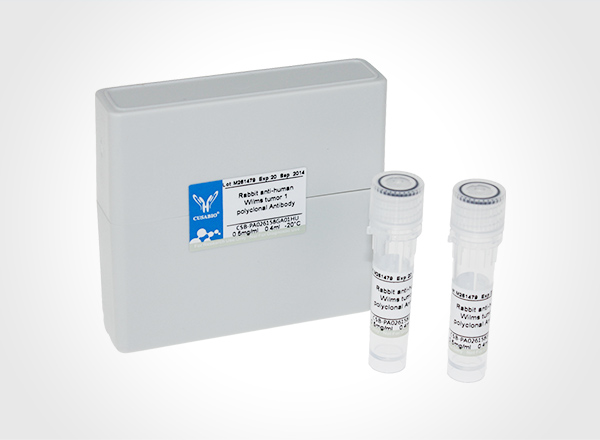
Liquid
Note: We will preferentially ship the format that we have in stock, however, if you have any special requirement for the format, please remark your requirement when placing the order, we will prepare according to your demand.
Upon receipt, store at -20°C or -80°C. Avoid repeated freeze.
Lead Time
Basically, we can dispatch the products out in 1-3 working days after receiving your orders. Delivery time maybe differs from different purchasing way or location, please kindly consult your local distributors for specific delivery time.
Note: All of our proteins are default shipped with normal blue ice packs, if you request to ship with dry ice, please communicate with us in advance and extra fees will be charged.
Usage
For Research Use Only. Not for use in diagnostic or therapeutic procedures.
Dual specificity protein kinase which acts as an essential component of the MAP kinase signal transduction pathway. Essential component of the stress-activated protein kinase/c-Jun N-terminal kinase (SAP/JNK) signaling pathway. With MAP2K7/MKK7, is the one of the only known kinase to directly activate the stress-activated protein kinase/c-Jun N-terminal kinases MAPK8/JNK1, MAPK9/JNK2 and MAPK10/JNK3. MAP2K4/MKK4 and MAP2K7/MKK7 both activate the JNKs by phosphorylation, but they differ in their preference for the phosphorylation site in the Thr-Pro-Tyr motif. MAP2K4 shows preference for phosphorylation of the Tyr residue and MAP2K7/MKK7 for the Thr residue. The phosphorylation of the Thr residue by MAP2K7/MKK7 seems to be the prerequisite for JNK activation at least in response to proinflammatory cytokines, while other stimuli activate both MAP2K4/MKK4 and MAP2K7/MKK7 which synergistically phosphorylate JNKs. MAP2K4 is required for maintaining peripheral lymphoid homeostasis. The MKK/JNK signaling pathway is also involved in mitochondrial death signaling pathway, including the release cytochrome c, leading to apoptosis. Whereas MAP2K7/MKK7 exclusively activates JNKs, MAP2K4/MKK4 additionally activates the p38 MAPKs MAPK11, MAPK12, MAPK13 and MAPK14.
Gene References into Functions
MKK4 is the major MAP2K, which activates JNK in acute liver injury. p38, the other downstream target of MKK4, does not contribute to liver injury from APAP or TNF/galactosamine.PMID:28661486
MKK4 activates non-canonical NFkappaB signaling by promoting NFkappaB2-p100 processing.PMID:28733031
This study provides compelling evidence for the pivotal roles of the ZPK/DLK and MKK4/MAP2K4-dependent mechanism in axotomy-induced motoneuron death in neonates.PMID:25100604
The loss of mkk4 and mkk7 locks damaged exocrine cells in a permanently de-differentiated state.PMID:24713432
Studies identify the dual-specific kinase MKK4 as a master regulator of liver regeneration. MKK4 silencing robustly increased the regenerative capacity of hepatocytes in mouse models of liver regeneration and acute and chronic liver failure.PMID:23582328
Distinct signaling properties of mitogen-activated protein kinase kinases 4 (MKK4) and 7 (MKK7) in embryonic stem cell (ESC) differentiation.PMID:22130668
MKK4/7 and JNK1/2 played regulatory role in cytoskeleton reorganization during vaccinia virus infection.PMID:22031940
These data support a model in which MKK4 activation at the metastatic site causes a cell-cycle arrest.PMID:21351092
Mitogen-activated protein kinase kinase 4 deficiency in cardiomyocytes causes connexin 43 reduction and couples hypertrophic signals to ventricular arrhythmogenesis.PMID:21454599
7,3',4'-Trihydroxyisoflavone, a metabolite of the soy isoflavone daidzein, suppresses ultraviolet B-induced skin cancer by targeting Cot and MKK4PMID:21378167
Results provide the first genetic demonstration that MKK4 is essential to mediate the oncogenic effect of Ras in vivo.PMID:20610622
Enhancement of erythropoietin-stimulated cell proliferation by Anandamide correlates with increased activation of the mitogen-activated protein kinases ERK1 and ERK2.PMID:11920199
Jun N-terminal kinase has a role in IL-4 inductionPMID:12368275
SEK1 appears to play a crucial role in hepatoblast proliferation and survival in a manner apparently different from NF-kappaB or c-Jun.PMID:12376107
MKK4 is one of three protein kinases which activate p38 MAPK in vitro.PMID:12893778
Disruption of MKK4 signaling reveals its tumor suppressor role in embryonic stem cells.PMID:15122334
MKK4 promotes cell survival by activating phosphatidylinositol 3-kinase through an NF kappa B/PTEN-dependent pathway.PMID:17158870
Differential employment of MKK4 and MKK7 by scaffold proteins Axin, Dvl, and Epstein-Barr virus latent membrane protein-1 (LMP-1) in mediating JNK activation was examined.PMID:17187786
the IKK-NF-kappaB pathway is crucial for maintaining cellular metallothionein-1 levels to counteract ROS accumulation, and when this pathway fails, excessive ROS leads to activation of the MKK4-JNK pathway, resulting in apoptosisPMID:17526490
SGK1 negatively regulates stress-activated signaling through inhibition of SEK1 functionPMID:17568772
MKK4 plays a central role in tumor necrosis factor (TNF)-induced apoptosis through the regulation of NF-kappa B-regulated gene products.PMID:17641059
Data demonstrate that MKK4 is an essential activator of JNK required for the normal development of the brain.PMID:17875933
Knockdown of MKK4 attenuated the myostatin-induced downregulation of MyoD and myogenin expression.PMID:18049864
These results suggest that HSP70 expression is up-regulated by SEK1 and down-regulated by MKK7 through distinct MAPK isoforms in mouse embryonic stem cells treated with cadmium chloride.PMID:18348256
Cardiac-specific deletion of mkk4 reveals its role in pathological hypertrophic remodeling but not in physiological cardiac growth.PMID:19265040
MKK4 is negatively regulated through a feedback loop involving the E3 ubiquitin ligase Itch, which has a fundamental role in the mechanism that controls MKK4 protein levels.PMID:19737936
Show
More
Hide
All
Subcellular Location
Cytoplasm. Nucleus.
Protein Families
Protein kinase superfamily, STE Ser/Thr protein kinase family, MAP kinase kinase subfamily
Tissue Specificity
Strong expression is detected in most of the central nervous system and in liver and thymus during early stages of development. While expression in nervous system increases over time, expression in fetal liver and thymus gradually decreases as embryogenes