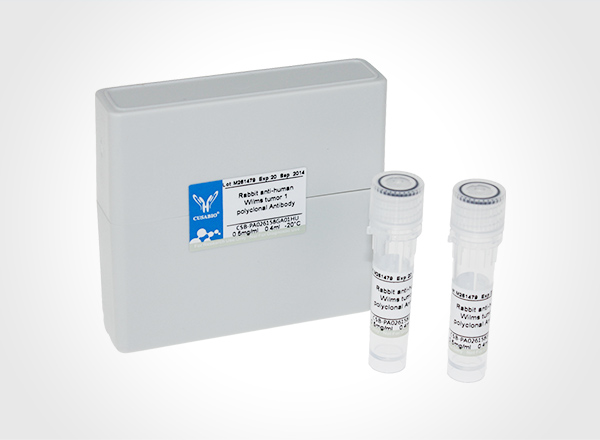
Liquid
Note: We will preferentially ship the format that we have in stock, however, if you have any special requirement for the format, please remark your requirement when placing the order, we will prepare according to your demand.
Upon receipt, store at -20°C or -80°C. Avoid repeated freeze.
Lead Time
Basically, we can dispatch the products out in 1-3 working days after receiving your orders. Delivery time maybe differs from different purchasing way or location, please kindly consult your local distributors for specific delivery time.
Note: All of our proteins are default shipped with normal blue ice packs, if you request to ship with dry ice, please communicate with us in advance and extra fees will be charged.
Usage
For Research Use Only. Not for use in diagnostic or therapeutic procedures.
Binds to the promoter region of genes encoding proteolipid proteins of the central nervous system. May play a role in the development of neurons and oligodendroglia in the CNS. May regulate a critical transition point in oligodendrocyte lineage development by modulating oligodendrocyte progenitor proliferation relative to terminal differentiation and up-regulation of myelin gene transcription.
Gene References into Functions
A novel missense variant affecting function, c.323C>T (p.(Ser108Leu)), was identified in MYT1, in a patient presenting with a severe form of OAVS. MYT1 overexpression downregulated all RA receptors genes in vitro.PMID:28612832
although depletion of MYT1 alone did not affect long-term cell growth, it potentiated with DNA damage to inhibit cell growth in clonogenic survival and tumor xenograft modelsPMID:23146904
present in brain in infancy and prenatally in infants with periventricular leukomalaciaPMID:12524179
These results suggesta potential role for Myt1 in the regeneration of oligodendrocyte lineage cells in response to demyelination.PMID:17330875
UVA-induced caspase-3 cleavage and DNA fragmentation were suppressed by the knockdown of human Myt1 in skin cancer cells.PMID:19204086
Show
More
Hide
All
Subcellular Location
Nucleus.
Protein Families
MYT1 family
Tissue Specificity
Mostly in developing nervous system. Expressed in neural progenitors and oligodendrocyte lineage cells. More highly expressed in oligodendrocyte progenitors than in differentiated oligodendrocytes.