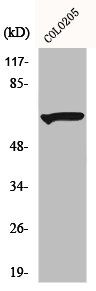
Synthesized peptide derived from the Internal region of Human Myotubularin.
Immunogen Species
Homo sapiens (Human)
Conjugate
Non-conjugated
Isotype
IgG
Purification Method
The antibody was affinity-purified from rabbit antiserum by affinity-chromatography using epitope-specific immunogen.
Concentration
It differs from different batches. Please contact us to confirm it.
Buffer
Liquid in PBS containing 50% glycerol, 0.5% BSA and 0.02% sodium azide.
Form
Liquid
Note: We will preferentially ship the format that we have in stock, however, if you have any special requirement for the format, please remark your requirement when placing the order, we will prepare according to your demand.
Upon receipt, store at -20°C or -80°C. Avoid repeated freeze.
Lead Time
Basically, we can dispatch the products out in 1-3 working days after receiving your orders. Delivery time maybe differs from different purchasing way or location, please kindly consult your local distributors for specific delivery time.
Note: All of our proteins are default shipped with normal blue ice packs, if you request to ship with dry ice, please communicate with us in advance and extra fees will be charged.
Usage
For Research Use Only. Not for use in diagnostic or therapeutic procedures.
Lipid phosphatase which dephosphorylates phosphatidylinositol 3-monophosphate (PI3P) and phosphatidylinositol 3,5-bisphosphate (PI(3,5)P2). Has also been shown to dephosphorylate phosphotyrosine- and phosphoserine-containing peptides. Negatively regulates EGFR degradation through regulation of EGFR trafficking from the late endosome to the lysosome. Plays a role in vacuolar formation and morphology. Regulates desmin intermediate filament assembly and architecture. Plays a role in mitochondrial morphology and positioning. Required for skeletal muscle maintenance but not for myogenesis. In skeletal muscles, stabilizes MTMR12 protein levels.
Gene References into Functions
Using exome sequencing to decipher family history in a healthy individual: Comparison of pathogenic and population MTM1 variants.PMID:30047259
Expression of several MTMR2 isoforms ameliorates the myopathic phenotype owing to MTM1 loss, with increased muscle force, reduced myofiber atrophy, and reduction of the intracellular disorganization hallmarks associated with myotubular myopathy.PMID:28934386
level of myotubes MTM1 mutations do not dramatically affect calcium homeostasis and calcium release mediated through the ryanodine receptor 1, though they do affect myotube size and nuclear content..mature muscles such as those obtained from patient muscle biopsies exhibit a significant decrease in expression of the ryanodine receptor 1, a decrease in muscle-specific microRNAs and a considerable up-regulation of HDAC4.PMID:28007904
In platelets, MTM1 is a highly active 3-phosphatase mainly associated to membranes and found on the dense granules and to a lesser extent on alpha-granules.PMID:27155155
Results confirm that the severe neonatal onset of myopathy in male infants is sufficient to address the direct molecular testing toward the MTM1 gene and, above all, suggest that the number of undiagnosed symptomatic female carriers is probably underestimatedPMID:27017278
This study demonistrated that MTM1 mutation releated to Centronuclear myopathy.PMID:25957634
mutations in SPEG cause a centronuclear myopathy phenotype as a result of its interaction with MTM1.PMID:25087613
Mutations in specific myotubularins such as MTM1 result in myotubular myopathy and Charcot-Marie-Tooth peripheral neuropathy. (Review)PMID:22403079
Large duplications in MTM1 may account for a number of Centronuclear myopathy cases that have remained genetically unresolved.PMID:22968136
Analysis of human XLMTM patient myotubes showed that mutations that disrupt the interaction between myotubularin and MTMR12 proteins result in reduction of both myotubularin and MTMR12PMID:23818870
data explain the basis for phenotypic variability among human patients with MTM1 p.R69C mutations and establish the Mtm1 p.R69C mouse as a valuable model for the disease, as its less severe phenotype will expand the scope of testable preclinical therapiesPMID:22068590
The patients of Myopathy had a novel heterozygous splice site mutation in the myotubularin gene, MTM1 (c.867+1G>T). Analysis of MTM1 cDNA revealed that the mutation resulted in aberrant splicing with variable exon skipping.PMID:22101172
A nonsense mutation Arg486STOP was identified in exon 7 of the MTM1 gene.PMID:21488203
Myotubularin regulates Akt-dependent survival signaling via phosphatidylinositol 3-phosphate.PMID:21478156
Sequence analysis of the entire coding region of the MTM1 gene identified a hemizygous deletion of the T nucleotide at position 431 in exon 6 (c.431delT [p.Leu144fs]), which results in frameshift at codon 144.PMID:20500434
mutations in MTM1 disrupted the MTM1-desmin complex, resulting in abnormal intermediate filament assembly and architecture in muscle cellsPMID:21135508
hemizygous mutations in the MTM1 gene including c.1261-10A>G in case, 1, c.70C>T (R24X) in case 2, and a previously unreported mutation, c.924_926delCTT(p. F308del), in case 3PMID:20358311
Shows that most MTM1 mutations including missense lead to a strong decrease in protein level : the associated myotubular myopathy is most probably due to total loss-of-functionPMID:11456308
The phosphatase activity of myotubularin MTM1 towards the 3-position of phosphatidylinositol 3-phosphate is conserved in homologous proteins MTMR2 and MTMR3PMID:11846405
Knocking-out MTM1 in mouse reproduces a myotubular myopathy phenotype and suggests a role for myotubularin in structural organization of muscle fibersPMID:12391329
Myotubularin MTM1 is implicated in intracellular trafficking of the glucose receptor GLUT4PMID:14500759
REVIEW : MTM1 and homologous proteins are mutated in several neuromuscular diseasesPMID:18429927
A phylogenetic study revealing co-evolution of myotubularins with PI 3-kinase class III complexPMID:18774718
Disruption of MTM1 in mouse leads to defects in triad structure, a proposed mechanism for the related muscle diseasePMID:19846786
Myotubularin MTM1 forms cytosolic needle-like structures upon stressPMID:20140253
Novel MTM1 antibodies for molecular diagnosis, and identification of novel deep intronic mutationsPMID:20434914
mutations in fifty patients with X-linked myotubular myopathy in the United StatesPMID:11793470
Localization to Rac1-induced cell membrane ruffles is dependent on the presence of a domain highly conserved in the myotubularin family. Myotubularin may dephosphorylate a subpool of PtdIns3P at the plasma membrane.PMID:12118066
REVIEW: the cellular mechanisms of PTEN and MTMR function and their role in the etiology of cancer and other human diseasesPMID:12495846
192 different mutations in the MTM1 gene have been described in 328 families.PMID:12522554
investigation of MTM1 and MTMR6 and finding that they use PtdIns(3,5)P2 in addition to PtdIns3P as a substrate in vitroPMID:12646134
Identification of myotubularin as the lipid phosphatase catalytic subunit associated with the 3-phosphatase adapter protein, 3-PAP.PMID:12847286
role of MTM1 in the production of phosphatidylinositol 5-phosphate in mammalian cells suggesting the lack of transformation of phosphatidylinositol 3,5-bisphosphate into PtdIns(5)P might be an important component in the etiology of myotubular myopathyPMID:14660569
myotubularin phosphatase physiologically functions in late endosomal trafficking and vacuolar morphology through interaction with PtdIns(3,5)P(2).PMID:14722070
We newly identified 26 unrelated Japanese patients with MTM1 mutations by genomic DNA and transcript analysis, including 12 novel mutations.PMID:15725586
Two families had a myopathy affecting only women, with asymmetric weakness, skeletal asymmetry, and an elevated hemidiaphragm. One family had a myotubularin stop codon mutation in exon 9; the other had a splice site mutation in exon 13.PMID:15883335
Patients with MTM1 missense mutations had larger myofiber diameters than those with truncation/deletion mutations. These data indicate that differences in myofiber size correlate with MTM1 mutation type and patient outcome.PMID:17537630
X-linked myotubular myopathy of baby boy has new mutation of mtm1.PMID:17621527
The diagnosis of myotubular myopathy was confirmed by genetic analysis revealing a novel frameshift mutation (1314-1315insT) of the myotubularin-coding MTM1 gene.PMID:17827085
Data show that an atypical, late-onset form of MTM1-related centronuclear myopathy has a new histological marker "Necklace fibers".PMID:19084976
A base pair change was detected in exon 11 of the MTM1 gene: c.1160C>A, which caused an amino acid change, p.S387Y. The father's gene was normal but the mother had the same mutation as her son and was thus a carrier.PMID:19129059
Expression of human myotubularin inhibited growth of S. pombe and induced a vacuolar phenotype similar to mutants of VPS34, a phosphatidylinositol 3-kinase (PI3K). Myotubularin directly dephosphorylates phosphatidylinositol 3-monophosphate (PtdIns3P)PMID:11001925
REVIEW: Myotubularin defines a large family of cooperating catalytically active and inactive phosphatases, conserved from yeast to human. Myotubularin homologs, MTMR2 and MTMR13, are mutated in autosomal recessive Charcot-Marie-Tooth neuropathies.PMID:12925573
Myotubularin loss-of-function mutations cause X-linked myotubular myopathy, a severe congenital myoopathy with predominance and hypotrophy of type I (slow) muscle fibersPMID:8640223
Heterozygous female carriers of MTM1 mutations who develop myopathic symptoms may present with limb girdle and facial weakness and may manifest a skewed pattern of X-chromosome inactivation.PMID:11552027
Myotubularin is the 2nd member of the PTP superfamily to utilize an inositol lipid as its physiologic substrate and activity toward PI(3)P may be common to all myotubularin family enzymes. Loss of PI(3)P phosphatase activity correlates with human disease.PMID:10900271