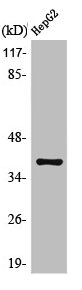
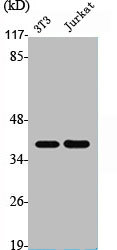
Synthesized peptide derived from the Internal region of Human Mcl-1.
Immunogen Species
Homo sapiens (Human)
Conjugate
Non-conjugated
Isotype
IgG
Purification Method
The antibody was affinity-purified from rabbit antiserum by affinity-chromatography using epitope-specific immunogen.
Concentration
It differs from different batches. Please contact us to confirm it.
Buffer
Liquid in PBS containing 50% glycerol, 0.5% BSA and 0.02% sodium azide.
Tested Applications
WB, IHC, ELISA
Storage
Upon receipt, store at -20°C or -80°C. Avoid repeated freeze.
Lead Time
Basically, we can dispatch the products out in 1-3 working days after receiving your orders. Delivery time maybe differs from different purchasing way or location, please kindly consult your local distributors for specific delivery time.
Note: All of our proteins are default shipped with normal blue ice packs, if you request to ship with dry ice, please communicate with us in advance and extra fees will be charged.
Usage
For Research Use Only. Not for use in diagnostic or therapeutic procedures.
Involved in the regulation of apoptosis versus cell survival, and in the maintenance of viability but not of proliferation. Mediates its effects by interactions with a number of other regulators of apoptosis. Isoform 1 inhibits apoptosis. Isoform 2 promotes apoptosis.
Gene References into Functions
enhanced ETS factor activity and the transcription of ETS family target genes related to spliceosome function and cell death induction via alternate MCL1 splicing, is reported.PMID:29118074
These results indicate that the outer membrane protein MCL1 is degraded by the VCP-UBXD1 complex and that the process is promoted by the presence of mutant Huntingtin.PMID:27913212
cMcl-1 overexpression appears to occur independently from MCL1 gene amplification in nonsmall cell lung cancer and correlates with adenocarcinoma in situ histologic type, lower tumor grade, smaller tumor size, nonrecurrent disease, and increased survival.PMID:29567880
hTERT contains a BH3-like motif, a short peptide sequence found in BCL-2 family proteins, and interacts with anti-apoptotic BCL-2 family proteins MCL-1 and BCL-xLPMID:29937479
RaRF cross-talks with MCL1 during retinoic acid (RA)-induced leukemic myeloblast differentiation. MCL1 is upregulated by RA treatment upon RaRF depletion in acute promyelocytic leukemia cells.PMID:28945224
the key role of Mcl1 in regulating apoptosis of melanoma cells induced by the steroid. These properties of 9(11)DHEP advocate its usage as supplements in human malignant melanoma chemoprevention.PMID:29845223
miR-29b suppressed cellular proliferation and promoted apoptosis of pulmonary artery smooth muscle cells, possibly through the inhibition of Mcl-1 and CCND2.PMID:29662889
The repression of MCL-1 renders leukemic cells highly sensitive to synergistic cell death induced by ABT-263 in a mouse model of BCR-ABL(+) B-ALL both in vitro and in vivo Furthermore, DHA synergizes with ABT-263 in human Ph(+) ALL cell lines, and primary patient-derived xenografts of Ph(+) ALL in culture. Our findings suggest that combining DHA with ABT-263 can improve therapeutic response in BCR-ABL(+) B-ALLPMID:28974549
Modulation of MEK/ERK-dependent Bim and Mcl-1 degradation critically mediates sensitivity and resistance of EGFR-mutant non-small cell lung cancer (NSCLC)cells to AZD9291 and hence is an effective strategy to overcome acquired resistance to AZD9291PMID:28765329
analysis of how a hydrophobic staple induces an unanticipated structural rearrangement in Mcl-1 upon bindingPMID:29339518
Data suggest that NEAT1 is highly expressed in dexamethasone-(DEX-)-resistant multiple myeloma (MM) cell lines; up-regulation of NEAT1 is tightly linked to poor prognosis in MM patients. During development of DEX resistance in MM cells, MIRN193a levels are down-regulated resulting in up-regulation of expression of target gene myeloid cell leukemia-1 (MCL1). (NEAT1 = nuclear paraspeckle assembly transcript 1)PMID:29205703
These results suggest that PKCeta utilizes the ERK signaling pathway to protect against ubiquitin-mediated proteasomal degradation of Mcl-1PMID:28939105
Mcl-1 is a disease-specific target of Cdk5, which associates with Cdk5 under basal conditions, but is not regulated by it.PMID:28751497
MYC and MCL1 cooperate in the maintenance of chemotherapy-resistant cancer stem cells in triple-negative breast cancer.PMID:28978427
Serum deprivation reduces the Mcl-1 mRNA level, which consequently decreases the Mcl-1 protein level and renders cells more susceptible to apoptosis induction via the formation of apoptosome. Mcl-1 protein is an important regulator of sensitivity of cancer cells to apoptotic stimuli upon serum deprivation.PMID:29203282
It is a potential therapeutic targets for gastric adenocarcinoma.PMID:29110251
Our findings suggest FBW7 mutational status and Mcl-1 stability as key determinants of response to Hsp90 inhibitors, which provides a rationale for using FBW7 genotype for potential patient stratification, and for drug combinations with Hsp90 inhibitors that can effectively overcome Mcl-1-mediated resistance.PMID:28619760
FBXO4 is the E3 ubiquitin ligase to interact with and promote Mcl-1 ubiquitination and degradation.PMID:28776569
MUC1-C Stabilizes MCL-1 in the Oxidative Stress Response of Triple-Negative Breast Cancer Cells to BCL-2 InhibitorsPMID:27217294
Deubiquitinating enzyme 13 (USP13) regulates myeloid cell leukemia sequence 1 protein (MCL1) stability in lung and ovarian cancer cells.PMID:29335437
High MCL1 expression is associated with renal cell carcinoma.PMID:27582546
Our studies not only define the essential role of Mcl-1 in chemoresistance, but also for the first time link a key pro-survival Bcl-2 family member with the NOX protein family, both of which have significant ramifications in cancer progression.PMID:28423654
Co-treatment with inhibitors to Mcl-1, PI3K, RAF or MEK restores mTOR inhibitor-induced apoptosis by antagonizing Mcl-1 or abrogating ERK activation in BRAFV600E cells.PMID:27351224
Together, these data suggest that Mcl-1 is a major contributor to BET inhibitor-resistance in HCC cells, and that combining drugs capable of down-regulating Mcl-1 may promote therapeutic potential in human HCC.PMID:29287727
Report the complexity in Mcl-1 phosphorylation/degradation in response to microtubule targeting agents in Hela cells.PMID:27738316
Data suggest that FBXW7, MCL1 and PLK1 may be relevant predictive markers of tumor progression and response to paclitaxel treatment.PMID:27409838
Synthesis of MCL1, an antiapoptotic protein known to play a role in cancer cell survival during cell division, depends on the function of MELK-elF4B signaling.PMID:27528663
Immunohistochemical analysis showed that the MCL-1 positive rate among myelodysplastic syndromes (MDSs) bone marrow CD34 positive cells significantly increased during transformation to overt leukaemia (OL). Additionally, MCL-1 positive cells were negative for cleaved caspase 3, which indicated that these cells avoided apoptosis.PMID:27020498
sequestration of Bim by Mcl-1 is a mechanism of intrinsic ABT-199 resistance and supports the clinical development of ABT-199 in combination with cytarabine or daunorubicin for the treatment of AML.PMID:27103402
Quinacrine and sorafenib inhibited expression of prosurvival MCL1.PMID:27307592
Mcl-1 suppression was determined to play a critical role in mediating this enhancing effect.PMID:26603262
The authors identified the apoptosis regulator Mcl-1 as a target that interacts with Chlamydia trachomatis Cdu1 and is stabilized by deubiquitination at the chlamydial inclusion.PMID:28347402
geraniin retarded ovarian cancer growth and reduced expression of phospho-p65 and Mcl-1. Collectively, geraniin elicits growth suppression in ovarian cancer through inhibition of NF-kappaB and Mcl-1 and may provide therapeutic benefits for this malignancy.PMID:28590547
Data show that Noxa-mediated MCL-1 phosphorylation and degradation is regulated by CDK2.PMID:27166195
UMI-77 alone or in combination with TRAIL untethered pro-apoptotic Bcl-2 proteins Bim and Bak from the sequestration of Mcl-1 and promoted the conformational activation of Bak.PMID:28337703
Our results demonstrate that in placenta accreta, miR-29a/b/c inhibits apoptosis of implantation site intermediate trophoblast cells by targeting MCL1.PMID:27871464
PTBP1 is a novel regulator of MCL1 mRNA by which it controls apoptotic response to antitubulin chemotherapeutics.PMID:27367564
our results provide new insights into the critical role of NCTD in suppressing Mcl-1 via epigenetic upregulation of miR-320d, resulting in PCa cell apoptosisPMID:28760656
knockdown of NAP1L1 suppresses IkappaBalpha degradation and nuclear transport of p65 subunit after treatment with TNF-a stimulation, leading to attenuation of the NF-kappaB transcriptional activity, whereas NAP1L4 knockdown remains silent.results of this study suggest that NAP1L1 downregulation renders the cell vulnerable to apoptotic cell death through attenuation of NF-kappaB transcriptional activity on the anti-apop...PMID:28687276
induction of MCL-1 by IL-6/IL-8 may surmount any direct down-regulation by miR-29b via its 3'-UTR.PMID:28190086
HB-EGF is implicated in DNA double strand breaks repair as silencing of HB-EGF increased gammaH2AX foci half-life as well as USP9X expression, two features that could be linked to the observed effect on Mcl-1.PMID:28970067
Augmentation of proteasome activity had a critical role in downregulation of Mcl-1 and c-FLIP expression at the post-translational level.PMID:28182008
These findings provide new insights into MCL-1 ligands, and the interplay between DRP-1 and the anti-apoptotic BCL-2 family members in the regulation of apoptosisPMID:28079887
the c-FLIP and NOXA/Mcl-1 axis participated in the synergistic effect of pemetrexed plus cisplatin in human choroidal melanoma cellsPMID:28863158
These results identify MCL-1 as a critical prosurvival protein for preventing beta-cell death and clarify the mechanisms behind its downregulation by proinflammatory cytokines.PMID:28667119
that inhibition of Mcl-1 expression by siRNA considerably enhanced Pevonedistat-triggered the activation of caspase-3, PARP cleavage and apoptosisPMID:28663057
Targeted Mcl-1 blockade using RNAi increased caspase-mediated cell death in ERalpha(+) breast cancer cells, resulting in sustained growth inhibition.PMID:28039357
Expression level of MCL-1 is upregulated in renal cell carcinoma.PMID:28692117
Study indicates that two distinct micro-environmental factors, CD40L and Mphis, signal via CCR1 to induce AKT activation resulting in translational stabilization of MCL-1, and hence can contribute to CLL cell survival.PMID:28192408
High MCL1 expression is associated with cisplatin-resistance in breast cancer.PMID:28423543