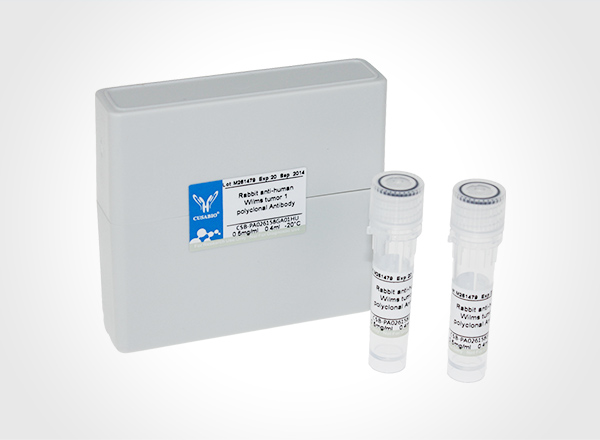
Liquid
Note: We will preferentially ship the format that we have in stock, however, if you have any special requirement for the format, please remark your requirement when placing the order, we will prepare according to your demand.
Upon receipt, store at -20°C or -80°C. Avoid repeated freeze.
Lead Time
Basically, we can dispatch the products out in 1-3 working days after receiving your orders. Delivery time maybe differs from different purchasing way or location, please kindly consult your local distributors for specific delivery time.
Note: All of our proteins are default shipped with normal blue ice packs, if you request to ship with dry ice, please communicate with us in advance and extra fees will be charged.
Usage
For Research Use Only. Not for use in diagnostic or therapeutic procedures.
Acts as soluble receptor for class I MHC antigens. Binds both classical and non-classical HLA class I molecules but with reduced affinities compared to LILRB1 or LILRB2. Binds with high affinity to the surface of monocytes, leading to abolish LPS-induced TNF-alpha production by monocytes.
Gene References into Functions
Mutations in the genes glucokinase regulatory protein (GCKR), RNase L (RNASEL), leukocyte immunoglobulin-like receptor 3 (LILRA3), and dynein axonemal heavy chain 10 (DNAH10) segregated with elevated HDLc levels in families, while no mutations associated with low HDLc.PMID:24891332
The homozygous LILRA3 deletion is associated with a higher susceptibility for HIV disease and with a faster disease progression.PMID:27755104
Letter: LILRA3 gene deletion is not involved in the giant cell arteritis and systemic sclerosis predisposition in Spanish patients.PMID:27462831
LILRA3 significantly reversed Nogo-66-mediated inhibition of neurite outgrowth and promoted synapse formation in primary cortical neurons through regulation of the ERK/MEK pathway.PMID:26826187
Experiments point towards a beneficial role for LILRA3 in virus infections, especially in ssRNA viruses, like HIV, that engage TLR8; however, the potentially beneficial role of LILRA3 is abrogated during a HIV infection.PMID:26969150
LILRA3 gene deletion was not associated with Multiple Sclerosis susceptibility and did not affect the age of disease onset, clinical subtype or disease severity.PMID:26871720
Evidence showed lack of significant association between LILRA3 deletion and multiple sclerosis pathogenesis. [meta-analysis]PMID:26274821
LILRA3 is a new susceptibility factor for systemic lupus erythematosus (SLE) and primary Sjogren's syndrome (pSS). It predisposes to certain phenotypes such as leucopenia, thrombocytopenia, autoantibody positivity and increased disease activity.PMID:24906639
The current study was conducted to investigate the association of rs103294 of LILRA3 with benign prostatic hyperplasia risk.PMID:23615473
ILT6 deletion polymorphism does not appear to be a lupus susceptibility gene in South Indian Tamils, but may behave as a genetic modifier of autoantibody phenotype by influencing the production of anti-Ro60 and anti-Ro52 autoantibodiesPMID:24899637
LILRA3 is an immunostimulatory molecule, whose deficiency is associated with higher frequency of B-non-Hodgkin's lymphoma.PMID:24363809
functional LILRA3 is a novel genetic risk factor for rheumatoid arthritis (RA), especially in males. It appears to highly predispose to ACPA-positive RA and confers an increased risk of disease severity in patients with early RA.PMID:24757135
Data did not indicate any association of LILRA3 deletion with multiple sclerosis (MS) susceptibility, however, patients negative for the deletion may begin to suffer from MS significantly earlier than patients who are positive.PMID:23238213
LILRA1 and LILRA3 generally display a greater binding preference for binding to HLA-C free heavy chain, particularly following removal of beta2-microglobulin by acid treatment.PMID:21270408
These results suggest that LILRA3 may play a role in chronic inflammatory conditions such as rheumatoid arthritis.PMID:20595277
A deletion of LILRA3 gene was found in a minority of British populationPMID:12651072
Six alleles characterised, of which four will encode unique peptides, one of which is likely to directly influence ligand binding.PMID:12750859
Multiple sclerosis associates with LILRA3 deletion.PMID:19421224
ILT6 deficiency may be a genetic risk factor for Sjogren's syndrome.PMID:19790059
Show
More
Hide
All
Subcellular Location
Secreted.
Tissue Specificity
Detected in B-cells, and at lower levels in natural killer (NK) cells. Detected in peripheral blood monocytes and lung.