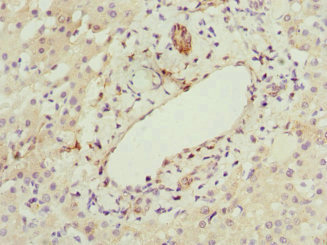
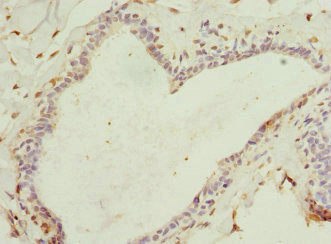
HBV X interacting protein antibody; HBV X-interacting protein antibody; HBX interacting protein antibody; HBX-interacting protein antibody; hbxip antibody; HBXIP_HUMAN antibody; Hepatitis B virus X interacting protein antibody; Hepatitis B virus X-interacting protein antibody; LAMTOR5 antibody; Late endosomal/lysosomal adaptor MAPK and MTOR activator 5 antibody; MGC71071 antibody; Ragulator complex protein LAMTOR5 antibody; XIP antibody
Raised in
Rabbit
Species Reactivity
Human
Immunogen
Recombinant Human Ragulator complex protein LAMTOR5 protein (1-91AA)
Immunogen Species
Homo sapiens (Human)
Conjugate
Non-conjugated
Clonality
Polyclonal
Isotype
IgG
Purification Method
Antigen Affinity Purified
Concentration
It differs from different batches. Please contact us to confirm it.
Buffer
PBS with 0.02% sodium azide, 50% glycerol, pH7.3.
Form
Liquid
Note: We will preferentially ship the format that we have in stock, however, if you have any special requirement for the format, please remark your requirement when placing the order, we will prepare according to your demand.
Upon receipt, store at -20°C or -80°C. Avoid repeated freeze.
Lead Time
Basically, we can dispatch the products out in 1-3 working days after receiving your orders. Delivery time maybe differs from different purchasing way or location, please kindly consult your local distributors for specific delivery time.
Note: All of our proteins are default shipped with normal blue ice packs, if you request to ship with dry ice, please communicate with us in advance and extra fees will be charged.
Usage
For Research Use Only. Not for use in diagnostic or therapeutic procedures.
As part of the Ragulator complex it is involved in amino acid sensing and activation of mTORC1, a signaling complex promoting cell growth in response to growth factors, energy levels, and amino acids. Activated by amino acids through a mechanism involving the lysosomal V-ATPase, the Ragulator functions as a guanine nucleotide exchange factor activating the small GTPases Rag. Activated Ragulator and Rag GTPases function as a scaffold recruiting mTORC1 to lysosomes where it is in turn activated. When complexed to BIRC5, interferes with apoptosome assembly, preventing recruitment of pro-caspase-9 to oligomerized APAF1, thereby selectively suppressing apoptosis initiated via the mitochondrial/cytochrome c pathway. Down-regulates hepatitis B virus (HBV) replication.
Gene References into Functions
Data show that hepatitis B X-interacting protein (HBXIP) modulated Methyltransferase-like 3 (METTL3) by inhibiting miRNA let-7g, which down-regulated the expression of METTL3 by targeting its 3'UTR.PMID:29174803
Those findings highlight the potential role of SIRT2 in HBV and HBV-mediated HCC by interaction with HBx.PMID:29366781
HBXIP can modulate the etoposide sensitivity of MCF-7 cell lines.PMID:29309885
deacetylation of MST1 mediated by HBXIP-enhanced HDAC6 results in MST1 degradation in a CMA manner in promotion of breast cancer growth.PMID:26657153
high level of expression of HBXIP is associated with the progression of non-small-cell lung cancer and may be a useful biomarker for poor prognostic evaluation and a potential molecular therapy target for patients with non-small-cell lung cancerPMID:28718367
HBXIP is able to depress the gluconeogenesis in hepatoma cells by suppressing PCK1 to promote hepatocarcinogenesis, involving miR-135a/FOXO1 axis and PI3K/Akt/p-FOXO1 pathway.PMID:27609066
we conclude that the oncoprotein HBXIP contributes to the abnormal lipid metabolism in breast cancerPMID:26980761
HBXIP can function as a mediator protein for DNA damage response signals to activate the G2/M checkpoint to maintain genome integrity and prevent cell death.PMID:28103177
promotes cisplatin resistance and regulates CD147 via Sp1 in ovarian cancerPMID:28056551
The mRNA levels of ACSL1 were positively associated with those of HBXIP in clinical breast cancer tissues. Thus, we conclude that the oncoprotein HBXIP is able to up-regulate ACSL1 through activating the transcriptional factor Sp1 in breast cancer.PMID:28132807
Data indicate that hepatitis B virus X-interacting protein (HBXIP) over-expression appears to associate with cervical cancer progression, and may potentially be used as a cervical cancer biomarker for the early diagnosis, prognostic evaluation and therapeutic target for cervical cancer.PMID:28093193
Multivariate analysis indicated that HBXIP, in addition to the clinical stage, was a significant independent prognostic factor in patients with ovarian cancer.PMID:28388957
Expression of HBXIP was significantly increased in UCB tissues. Data showed that suppression of HBXIP induced cell cycle arrest and increased cell apoptosis in T24 cells. Also, suppression of HBXIP also decreased T24 and PC3 cell proliferation, migration, and invasion. More importantly, It was found that inhibition of HBXIP reduced the tumorigenesis in vivo, suggesting that HBXIP plays an important role in progression.PMID:27831760
Upon HBV infection, cellular mechanisms involving SETDB1-mediated H3K9me3 and HP1 induce silencing of HBV cccDNA transcription through modulation of chromatin structure.PMID:26143443
Thus, we conclude that the oncoprotein HBXIP up-regulates FGF4 through activating transcriptional factor Sp1 to promote the migration of breast cancer cells. Therapeutically, HBXIP may serve as a novel target in breast cancer.PMID:26828265
Results support a model in which the HBXIP/Hotair/LSD1 complex serves as a critical effector of c-Myc in activating transcription of its target genes, illuminating long-standing questions on how c-Myc drives carcinogenesis.PMID:26719542
highly expressed HBXIP accelerates the MDM2-mediated degradation of p53 in breast cancer through modulating the feedback loop of MDM2/p53, resulting in the fast growth of breast cancer cells.PMID:26229107
Our study suggested that high HBXIP is associated with the progression of breast cancer. HBXIP could be a valuable prognostic marker as well as a potential molecular therapy target for breast cancer patients.PMID:25178941
HBXIP promotes the migration of breast cancer cells through modulating microtubule acetylation mediated by GCN5.PMID:25686500
Dta show that HBXIP was able to stimulate the activity of Skp2 promoter via transcription factor Sp1 thus promoting the migration of ovarian cancer cells.PMID:24788380
Hepatitis B protein HBx accelerates hepatocarcinogenesis with partner survivin through modulating tumor suppressor miR-520b and oncoprotein HBXIP.PMID:24886421
HBXIP facilitates the proliferation of hepatoma cells by up-regulating SCG3 via E2F1 and miR-509-3p modulation.PMID:24882622
The oncoprotein HBXIP enhances angiogenesis and growth of breast cancer through modulating FGF8 and VEGF.PMID:24464787
HBXIP nuclear import requires interaction with c-Fos and phosphorylation of both proteins in breast cancer cellsPMID:23667255
conclude that the oncoprotein HBXIP as a co-activator of TF II D transactivates Lin28B promoter via directly binding to TBP to upregulate the expression of Lin28B in promotion of proliferation of breast cancer cellsPMID:23494474
knockdown of HBXIP rescued the inhibition of HBV that occurred after the loss of miR-501 in HepG2.2.15 cells, suggesting that miR-501 induced HBV replication partially by targeting HBXIP.PMID:23266610
HBXIP promotes the proliferation of breast cancer cells via upregulating PDGFB.PMID:23537647
oncoprotein HBXIP is able to activate the transcriptional coregulatory protein LMO4 through transcription factor Sp1 in promotion of proliferation of breast cancer cells.PMID:23291272
found that HBXIP was able to stimulate the promoter of Skp2 through binding to the -640/-443 region in Skp2 promoter involving activating E2F transcription factor 1PMID:23352642
Study identified HBXIP and C7orf59 as two additional Ragulator components that are required for mTORC1 activation by amino acids.PMID:22980980
HBXIP up-regulates S100A4 through activating S100A4 promoter involving STAT4 and inducing PTEN/PI3K/AKT signaling to promote growth and migration of breast cancer cells.PMID:22740693
overexpression of HBXIP increased HepG2 cell-induced endothelial cells migration, proliferation, and angiogenesis, which may be related to increasing phosphorylation of endothelial NO synthase in HUVECs.PMID:22209835
Data suggest that HBXIP upregulates CD46, CD55 and CD59 through p-ERK1/2/NF-kappaB signaling to protect breast cancer from complement-dependent cytotoxicity.PMID:22293503
The different structure forms of HBx protein influence their intracellular distribution in hepatocellular carcinoma HepG2 cellsPMID:21651858
miR-520b is involved in regulating breast cancer cell migration by targeting HBXIP and IL-8 via a network in which HBXIP promotes migration by stimulating NF-kappaB-mediated IL-8 expression.PMID:21343296
The x gene of HBV (HBx) is the most common open reading frame integrated into the host genome in hepatocellular carcinoma and the integrated HBx is frequently mutated in hepatocellular carcinoma.PMID:20811532
Hepatitis B virus pX interacts with HBXAPPMID:11788598
Elevated levels of GDN/PN1 and XIP mRNAs induced by Allitridi provide valuable molecular evidence for elucidating garlic's efficacies against neurodegenerative and inflammatory diseases.PMID:11925594
Survivin-HBXIP complexes, but neither survivin nor HBXIP individually, bind pro-caspase-9, preventing its recruitment to Apaf1, and thereby selectively suppressing apoptosis.PMID:12773388
HBXIP up-regulates LTA expression in hepatocytes.PMID:15955450
HBXIP sensitizes HepG2 cells to UV light-induced DNA damage.PMID:16055925
suppressor of var1, 3-like 1 protein interacts with HBXIP, previously identified as a cofactor of survivin in suppression of apoptosisPMID:16176273
The codon-38 change in genotype C is an independent risk factor for the development of HCC and may serve as a useful molecular marker for predicting the clinical outcomes in patients infected with HBV.PMID:17050029
One of the functions of HBXIP is its involvement in cell proliferationPMID:17303008
Hepatitis B virus X protein stimulates the mitochondrial translocation of Raf-1 via oxidative stressPMID:17428866
HBXIP is a critical target of viral HBx for promoting genetic instability through formation of defective spindles and subsequent aberrant chromosome segregation.PMID:18032378
HBXIP significantly stimulated the transcription and expression of telomerase reverse transcriptase and increased the activity of telomerasePMID:18158869
the overexpression of survivin in the majority of NSCLCs together with the abundant or upregulated expression of HBXIP and XIAP suggest that tumours are endowed with resistance against a variety of apoptosis-inducing conditions.PMID:19885569
Show
More
Hide
All
Subcellular Location
Lysosome. Cytoplasm, cytosol.
Protein Families
LAMTOR5 family
Tissue Specificity
Highly expressed in skeletal and cardiac muscle, followed by pancreas, kidney, liver, brain, placenta and lung. Elevated levels in both cancerous and non-cancerous liver tissue of patients with chronic HBV infection compared with hepatic tissue without HB