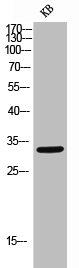
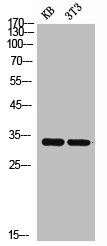
5133400O11Rik antibody; CD305 antibody; D7Bwg0421e antibody; hLAIR1 antibody; LAIR 1 antibody; LAIR-1 antibody; LAIR1 antibody; LAIR1 protein antibody; LAIR1_HUMAN antibody; Leukocyte associated Ig like receptor 1 antibody; Leukocyte associated immunoglobulin like receptor 1 antibody; Leukocyte-associated immunoglobulin-like receptor 1 antibody
Raised in
Rabbit
Species Reactivity
Human
Immunogen
Synthesized peptide derived from the Internal region of Human CD305.
Immunogen Species
Homo sapiens (Human)
Conjugate
Non-conjugated
Isotype
IgG
Purification Method
The antibody was affinity-purified from rabbit antiserum by affinity-chromatography using epitope-specific immunogen.
Concentration
It differs from different batches. Please contact us to confirm it.
Buffer
Liquid in PBS containing 50% glycerol, 0.5% BSA and 0.02% sodium azide.
Tested Applications
WB, ELISA
Storage
Upon receipt, store at -20°C or -80°C. Avoid repeated freeze.
Lead Time
Basically, we can dispatch the products out in 1-3 working days after receiving your orders. Delivery time maybe differs from different purchasing way or location, please kindly consult your local distributors for specific delivery time.
Note: All of our proteins are default shipped with normal blue ice packs, if you request to ship with dry ice, please communicate with us in advance and extra fees will be charged.
Usage
For Research Use Only. Not for use in diagnostic or therapeutic procedures.
Functions as an inhibitory receptor that plays a constitutive negative regulatory role on cytolytic function of natural killer (NK) cells, B-cells and T-cells. Activation by Tyr phosphorylation results in recruitment and activation of the phosphatases PTPN6 and PTPN11. It also reduces the increase of intracellular calcium evoked by B-cell receptor ligation. May also play its inhibitory role independently of SH2-containing phosphatases. Modulates cytokine production in CD4+ T-cells, down-regulating IL2 and IFNG production while inducing secretion of transforming growth factor beta. Down-regulates also IgG and IgE production in B-cells as well as IL8, IL10 and TNF secretion. Inhibits proliferation and induces apoptosis in myeloid leukemia cell lines as well as prevents nuclear translocation of NF-kappa-B p65 subunit/RELA and phosphorylation of I-kappa-B alpha/CHUK in these cells. Inhibits the differentiation of peripheral blood precursors towards dendritic cells.
Gene References into Functions
These findings demonstrate that C1q and it's globular region interact with CD33 to activate its inhibitory motifs, while the collagen-like region does not. Whole C1q is required to crosslink CD33 and LAIR-1 and concurrently activate CD33/LAIR-1 inhibitory motifs.PMID:28325905
Human decidua mesenchymal stem cells may modulate the function of decidual natural killer cells via the interaction between collagen and LAIR1.PMID:28677766
results suggest that P. falciparum has acquired multiple RIFINs to evade the host immune system by targeting immune inhibitory receptors, as LAIR1 and LILRB1PMID:29186116
LAIR1 is used for immune evasion of Plasmodium falciparum by associating with RIFIN.PMID:29186116
We suggest that LAIR1 and LAIR2 genetic variants are associated with regulation of gene expression and variable pemphigus foliaceus susceptibility, and show indirect association of LAIR2 differential mRNA expression with pemphigus foliaceus pathogenesis.PMID:26721477
A LAIR1 insertion generates broadly reactive antibodies against malaria variant antigens;findings illustrate, with a biologically relevant example, a novel mechanism of antibody diversification by interchromosomal DNA transpositionPMID:26700814
C1q-mediated repression of human monocytes is regulated by LAIR-1PMID:25247291
The LAIR1-SHP-1-CAMK1-CREB pathway sustains the survival and self-renewal of AML stem cells.PMID:25915125
These data suggest that LAIR-1 has a relevant impact on EOC progression and may be helpful for a better understanding of molecular pathogenesis of cancer.PMID:25660999
LAIR1 expression is a reliable and inexpensive marker capable of independently predicting time to first treatment in newly diagnosed unselected patients with chronic lymphocytic leukemia.PMID:24415628
The expression of LAIR -1 on pDCs of juvenile systemic lupus erythematosus patients was significantly lower than that of control patients.PMID:24399813
a novel pathway for the immunomodulatory functions of SP-D mediated via binding of its collagenous domains to LAIR-1.PMID:24585933
positive association between concentrations of amniotic fluid sLAIR-1 and neonatal lung compliancePMID:24386309
LAIR-1 may play an important role in immune imbalance in children with immune thrombocytopenia.PMID:24750832
Studies indicate that Megakaryocyte maturation is accompanied by up-regulation of glycoprotein VI and down-regulation of leukocyte-associated immunoglobulin-like receptor-1.PMID:20713462
differential role in T-cells and macrophages in patients with rheumatoid arthritisPMID:24380839
C1q is a functional ligand for LAIR-1 restricting immune cell differentiation and activation.PMID:23093673
Loss of LAIR-1 function is associated with systemic lupus erythematosusPMID:22355402
tumor-expressed collagens can bind and trigger immune inhibitory signaling via LAIR-1, suggesting that collagens indeed may affect tumor immune evasion.PMID:21955987
Data show that pDCs isolated from peripheral blood of systemic lupus erithematosus (SLE) patients express lower levels of LAIR-1 while displaying slight but consistent expression of NKp44.PMID:21151495
These results suggest that LAIR-1 is a likely candidate for an early marker of megakaryocytes differentiation, and provide initial evidence indicating that LAIR-1 serves as a negative regulator of megakaryocytopoiesis.PMID:21216234
The expression of LAIR-1 is up-regulated in tumor patients, which may contribute to cancer immune escape.PMID:18394348
unanticipated mechanism of collagen recognition common to LAIR-1 and GPVIPMID:20007810
LAIR-1 exerts inhibitory functions on antigen-specific effector T cellsPMID:12072189
NK cells derived from a boy with CAEBV showed decreased cytotoxic function and impaired IFN-gamma secretion. In addition, the NK cells lacked expression of the broadly expressed NK receptor, LAIR-1.PMID:12757266
Collagens are functional ligands for LAIR-1 and directly inhibit immune cell activation in vitro.PMID:16754721
Regulated expression of LAIR-1 and the subsequent change in the threshold for activation may be a mechanism to modulate inhibition of the immune system.PMID:17330824
in cell lines, LAIR-1, which is not expressed on platelets but is present on most hematopoietic cells, inhibits GPVI responses to collagen but not convulxinPMID:17764536
A receptor that potentially is able to regulate multiple steps of an immune response.[REVIEW]PMID:18063695
LAIR-2 prevents binding of human LAIR-1 to collagens and LAIR-1 cross-linking in vitro, suggesting that the protein has an immunoregulatory function in vivo.PMID:18209062
both constitutive and sIgM-induced phosphorylation of p38 and JNK is inhibited by LAIR-1 through an ITIM-dependent signal; this inhibitory signal is missing when LAIR-1 is not expressed as occurs in HR CLL.PMID:18288129
Human collagen II peptides II-17, -30 and -56 and collagen III peptides III-1, -30, -38, -44, -45, and -51 specifically interacted with hLAIR-1 expressed on K562 cells.PMID:19345263
Mutation of a single residue, arginine 65, dramatically decreases the binding of LAIR-1 to collagens.PMID:19380792
Show
More
Hide
All
Subcellular Location
Cell membrane; Single-pass type I membrane protein.
Tissue Specificity
Expressed on the majority of peripheral mononuclear cells, including natural killer (NK) cells, T-cells, B-cells, monocytes, and dendritic cells. Highly expressed in naive T-cells and B-cells but no expression on germinal center B-cells. Abnormally low ex